
Chinese manufacturers like BYD and Dongfeng currently dominate over 80 percent of global electric truck sales, presenting a formidable challenge to Tesla’s international expansion. This dominance has forced the American automaker to accelerate its transition from low-volume testing to a fully realized industrial operation. The recent inauguration of the dedicated Semi manufacturing facility in Sparks, Nevada, represents the culmination of years of engineering hurdles and logistics delays that previously hindered the truck’s market entry. As of 2026, the facility serves as the cornerstone of a strategy to revolutionize the Class 8 trucking sector, which has long been reliant on diesel engines. By moving beyond limited pilot programs, the company aims to demonstrate that electric heavy-duty vehicles can sustain the rigorous demands of long-haul freight while significantly reducing operational costs. This shift is not merely about launching a new product but about establishing a new standard for the entire transportation industry.
Scaling the Manufacturing Footprint
Production: Vertical Integration Strategies
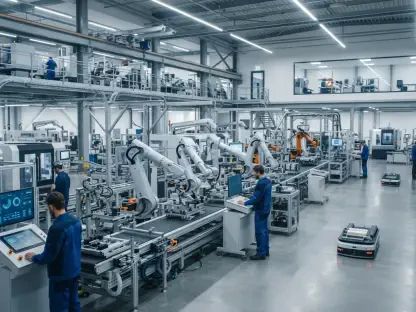
The Sparks facility operates on a philosophy of extreme vertical integration, a departure from the traditional model where truck manufacturers function as final assemblers for various third-party systems. At this site, the company produces its own battery packs, drive axles, and complex high-voltage wiring harnesses, ensuring that every critical component is optimized for the specific demands of a heavy-duty electric powertrain. By bringing the production of cooling modules and vehicle seating in-house, the firm minimizes its dependence on external vendors who may struggle to meet the unique specifications required for such a high-torque application. This approach allows for rapid iterative improvements to the hardware without waiting for external supply cycles to catch up. Such a level of control over the manufacturing stack is intended to mitigate the risks of part shortages while simultaneously lowering the cost per unit through streamlined logistics and reduced markups from specialized sub-suppliers.
Capacity: High-Volume Output Capabilities
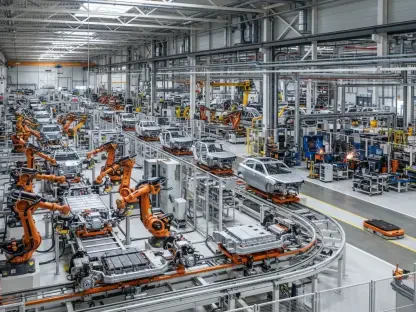
The assembly line in Nevada is engineered to achieve a production rate of approximately 1,000 trucks per week, translating to an annual capacity of 50,000 units. This figure is significant because it aligns with the ambitious goals set during the truck’s initial unveiling, yet it highlights the current gap between installed capacity and operational reality. While the facility is designed for high-volume output, only about 880 first-generation Semis are currently operational on the road, reflecting the immense challenge of scaling complex machinery. The factory is capable of producing the Standard, Long Range, and European variants on a single line, providing the flexibility needed to address different market segments. However, the true test lies in whether the manufacturing process can maintain consistency and quality at such high speeds. Achieving this level of output is essential for the company to transition the Semi from a niche experiment into a dominant force within the heavy-duty logistics market.
Real-World Adoption and the Competitive Landscape
Validation: Data-Driven Performance Metrics
Real-world validation has become the primary metric for success, with early adopters providing critical data on the truck’s performance under commercial pressure. PepsiCo’s pilot fleet, which has accumulated roughly 2.36 million miles, suggests that the efficiency and range metrics promised by the manufacturer are largely holding up in daily use. These results have encouraged other major logistics players, such as US Foods and DHL, to integrate the Semi into their own distribution networks. Furthermore, the logistics alliance ZET SCALE has signaled strong confidence by placing an order for 2,500 electric Class 8 trucks, positioning Tesla as its primary supplier for zero-emissions transport. This momentum indicates that while the production ramp-up was delayed, the appetite from corporate clients remains robust as they strive to hit internal sustainability targets. The ability to provide consistent range and payload capacity in varying environments is what will ultimately convince the broader market to abandon diesel.
Rivalries: Shifting Competitive Dynamics
The competitive landscape has undergone a dramatic transformation, characterized by the collapse of previous rivals and the rise of international pressure. Nikola, once considered a formidable challenger in the zero-emissions trucking space, filed for Chapter 11 bankruptcy in early 2025 following financial crises and legal troubles. This exit has left a significant vacuum in the domestic market, as traditional manufacturers like Freightliner and Mack have been slower to commit to dedicated, high-volume electric truck facilities on the scale seen in Nevada. However, this domestic advantage is offset by the burgeoning dominance of manufacturers in China, who benefit from lower battery costs and superior manufacturing scalability. These international firms are capable of undercutting prices on a global scale, making the Nevada factory’s efficiency critical for maintaining a competitive edge. Tesla now finds itself in a race not just against traditional internal combustion engines, but against a global shift in manufacturing power.
Navigating the Path to Market Seniority
Barriers: Infrastructure and Adoption Challenges
Despite the impressive infrastructure in Nevada, a notable disconnect exists between production capacity and the current readiness of the broader market. Analysts suggest that delivering the full 50,000-unit capacity in the near term remains a daunting task due to the lag in specialized charging infrastructure. The implementation of the Megawatt Charging System is vital for making electric long-haul trucking viable, yet the deployment of these high-power stations has not yet matched the pace of vehicle production. Furthermore, the high initial investment required for fleets to transition away from diesel poses a barrier for smaller, more conservative trucking companies. For the Semi to dominate, the company must not only build the trucks but also spearhead the creation of a reliable, high-speed charging network across major freight corridors. Without this ecosystem, the factory’s massive output may outpace the ability of the industry to absorb and utilize these vehicles effectively in daily operations.
Evolution: Economic Viability and Sector Roadmap
The transition to high-volume manufacturing provided a definitive answer to skeptics who doubted the feasibility of heavy electric freight. Success in the next phase required a dual focus on expanding the Megawatt Charging System and optimizing the battery density for long-haul routes. By establishing a self-sustaining business model that no longer relied on green-energy subsidies, the program moved toward long-term financial viability. Fleet operators were encouraged to adopt a phased approach, beginning with short-haul regional routes before expanding into transcontinental logistics as the charging network matured. Future developments focused on integrating autonomous driving software specifically tuned for the unique dynamics of Class 8 vehicles to further reduce operational costs. Ultimately, the industry shifted toward electrification not through regulation alone, but because the economics of the Nevada-produced Semi finally surpassed those of traditional diesel alternatives. The path forward depended on maintaining this technological lead.