
Textile integrity during repeated washing and stretching remains a critical engineering challenge for developers of wearable electronics and flexible strain sensors. Despite these technical hurdles, the global textile and apparel industry has entered a period of unprecedented transformation, moving away from the labor-intensive practices that once defined the sector for generations. Historically, this industry relied heavily on the intuitive experience of human operators and manual oversight to manage the complex lifecycle from raw fiber production to garment construction. Traditional manufacturing environments often suffered from siloed information systems where data remained disconnected, leading to reactive quality control processes that only addressed issues after production was already complete. The transition toward Industry 4.0 has sparked a structural shift, replacing these legacy methods with a connected, data-driven ecosystem. The Internet of Things acts as the nervous system of this modern landscape, enabling physical machinery to sense, communicate, and participate in complex digital decision-making. By integrating cyber-physical systems and artificial intelligence, the industry is effectively moving toward a model of high-level transparency and operational efficiency that was previously unattainable. This digital migration ensures that every stage of production is monitored and optimized in real-time, reducing waste and enhancing the overall quality of the finished product in a highly competitive global market.
The Architectural Foundation: Sensing and Digital Monitoring
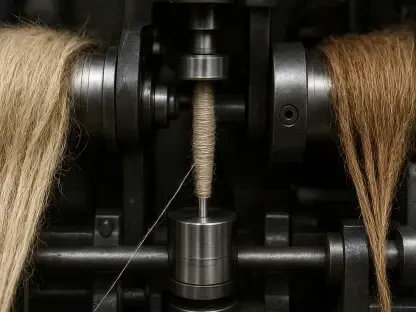
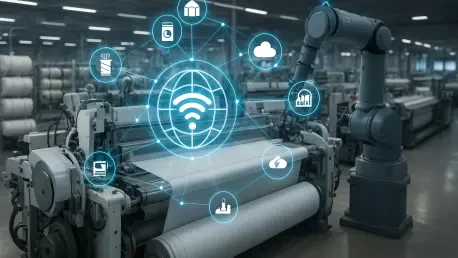
The fundamental structure of digital integration in modern textile mills is built upon the sensing layer, which bridges the physical gap between heavy machinery and digital monitoring platforms. Specialized sensors are now deployed throughout every square foot of the production floor to track variables such as vibration, acoustic signatures, and mechanical wear on high-speed equipment. In the delicate processing of raw fibers, where environmental factors can dictate the quality of the final yarn, temperature and humidity sensors ensure that the atmosphere remains within strict optimal parameters. This constant stream of environmental data prevents material degradation and maintains the structural integrity of the fibers during high-speed spinning and weaving operations. By monitoring the “health” of the machinery alongside the state of the raw materials, manufacturers can achieve a level of precision that eliminates much of the guesswork associated with traditional textile engineering.
Beyond the stationary machinery on the factory floor, the sensing layer has recently been integrated directly into the fabrics themselves, creating a new category of industrial and consumer products. The development of smart textiles involves embedding conductive fibers, carbon nanotubes, and textile-based electrodes directly into the yarns during the knitting or weaving process. This innovation allows garments to support communication and actuation without the need for bulky, external hardware that would otherwise compromise the wearer’s comfort. These smart fabrics function as sophisticated digital interfaces while retaining the essential physical qualities of clothing, such as breathability, flexibility, and moisture-wicking capabilities. This convergence of material science and digital technology ensures that the textile medium is no longer a passive covering but an active component of the digital ecosystem, capable of gathering data on the fly while maintaining its primary purpose as wearable apparel.
Converting Raw DatThe Intelligence Layer of Textile Production
The true value of a connected factory lies not in the mere collection of information but in the intelligence layer where raw data streams are transformed into actionable insights through advanced analytics. Machine learning models are now capable of identifying subtle patterns in machine behavior that remain invisible to even the most experienced human technicians. For example, a slight increase in the thermal signature of a spindle motor or an irregular vibration frequency in a loom can be flagged instantly by the system. This allows for the prediction of component failures before they occur, shifting the industry from a reactive maintenance model to a proactive, predictive one. This intelligence is increasingly managed through Digital Twins, which are virtual replicas of physical assets used to simulate and optimize complex manufacturing processes in a risk-free digital environment before any physical changes are implemented.
By utilizing these sophisticated digital replicas, manufacturers can adjust specific process parameters in real-time to prevent quality deviations that would otherwise result in significant financial losses. This convergence of sensing and intelligence allows for a truly “closed-loop” system where the control software can recommend or even implement changes to a machine’s operation autonomously based on the data it receives. This reduces the heavy reliance on end-of-shift reports and empowers floor supervisors to make immediate, data-backed corrections that save both time and expensive raw materials. The ability to simulate various production scenarios within the Digital Twin environment also allows for more aggressive experimentation with new fiber blends or weaving patterns, as the system can accurately forecast the physical outcome and mechanical stress on the equipment without wasting a single inch of physical fabric.
Operations and Efficiency: Revolutionizing the Factory Floor
IoT applications are fundamentally changing the spinning, weaving, and knitting stages of production by providing continuous, millisecond-by-millisecond tracking of spindle speeds and yarn tension. In the past, a single broken thread in a massive weaving loom could go unnoticed for long periods, leading to significant fabric waste and machine downtime that ate into profit margins. Today, connected systems detect these anomalies instantly, triggering automated pauses or adjustments that allow for immediate intervention by technicians. This level of granular monitoring has drastically reduced the downtime associated with mechanical errors and has streamlined the workflow on the factory floor. By ensuring that every spindle is operating at peak efficiency, manufacturers can maximize their output while maintaining a high level of consistency across large batches of material.
Quality management has undergone a similar transformation through the ubiquitous use of high-resolution cameras and sophisticated computer vision algorithms. These IoT-enabled inspection systems monitor fabrics at incredible speeds as they roll off the production line, identifying microscopic defects like mispicks, slubs, or subtle shade variations with much higher accuracy than manual visual inspection. Because this quality data is linked directly to the specific machine conditions at the exact moment of production, manufacturers can quickly identify the root cause of a defect, such as a misaligned needle or an inconsistent dye feed. This feedback loop allows for the prevention of recurring errors in subsequent batches, ensuring that only the highest quality products reach the distribution stage. This automated oversight has effectively set a new standard for precision in an industry that was once prone to high rates of human error.
Predictive maintenance represents perhaps the most significant financial benefit of the IoT revolution within the textile sector. By analyzing thermal patterns and high-frequency vibration data, artificial intelligence can forecast with high confidence when a specific motor, bearing, or belt is likely to fail during the next production cycle. This allows maintenance teams to perform necessary repairs during scheduled breaks or shift changes, preventing the catastrophic failures that halt entire production lines and lead to expensive emergency repairs and missed delivery deadlines. The shift toward this data-driven maintenance strategy has extended the lifespan of expensive capital equipment and has transformed the role of the maintenance technician from a “firefighter” who responds to crises into a strategic analyst who manages the health and longevity of the factory’s physical assets.
Traceability and Sustainability: Ensuring Ethical Accountability
Modern consumers and global regulatory bodies increasingly demand transparency regarding the ethical and environmental footprint of the clothing they purchase. IoT provides the necessary technical infrastructure for this traceability through the widespread use of RFID tags and encrypted QR codes. These digital tools allow every bale of raw cotton or roll of synthetic fabric to be tracked from its point of origin through every stage of the supply chain to the final retail shelf. This ensures that claims regarding sustainable materials, organic certifications, or fair-labor practices can be authenticated with hard data rather than just marketing promises. This level of transparency is becoming a competitive advantage for brands that can prove their commitment to ethical sourcing through a verifiable digital paper trail that is accessible to both auditors and the end consumer.
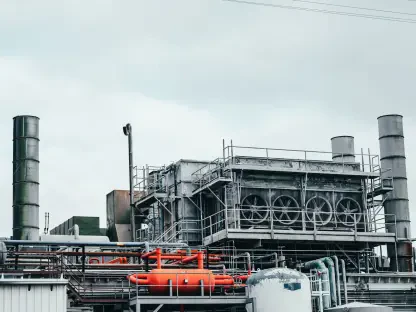
Resource management is a critical concern in the “wet processing” stages of textile production, such as dyeing and finishing, which are notorious for their high consumption of water and energy. IoT-enabled meters now provide granular, real-time data on utility usage across different production shifts and specific product batches, highlighting precisely where inefficiencies exist. This visibility allows factory managers to test conservation strategies, such as water recycling or heat recovery, using Digital Twins before implementing them on the floor. By ensuring that sustainability goals are met without compromising the quality of the output, these connected systems are helping the industry reduce its overall environmental impact. The ability to correlate energy usage with specific production runs also allows for more accurate cost accounting, enabling firms to price their products more effectively in a fluctuating global market.
The integration of IoT also facilitates a “right-first-time” approach to dyeing by using specialized sensors to monitor chemical dosing and water pH levels in real-time. By adjusting the dye concentration during the actual process based on the measured absorbency of the fibers, manufacturers can virtually eliminate the need for re-dyeing, which is a major source of chemical waste and excessive energy consumption. This not only reduces the toxic chemical load released into local water systems but also significantly lowers the energy required for heating massive quantities of water and drying the finished fabrics. As environmental regulations tighten globally from 2026 to 2030, these efficiency gains are proving to be essential for maintaining both regulatory compliance and the social license to operate in regions with scarce water resources.
Smart Garments: The Transition from Passive Fabric to Interactive Platforms
The transition from passive garments to interactive digital platforms is one of the most technologically demanding frontiers of the modern textile industry. By embedding micro-electronics and flexible, biocompatible sensors directly into the structure of the fabric, manufacturers are creating wearables capable of monitoring complex physiological signals without the need for skin-contact patches or bulky devices. These garments can track heart rates, respiration levels, body temperature, and even muscle activity, turning everyday clothing into a powerful tool for health and performance monitoring. This evolution represents a fundamental shift where the garment itself becomes an active participant in the user’s well-being, providing a constant stream of data that can be used for everything from professional athletic training to chronic disease management.
In the healthcare sector, smart textiles offer a non-invasive and dignified way to provide continuous monitoring for patients and the elderly, allowing them to maintain their independence while remaining under medical supervision. Similarly, in hazardous industrial environments, these connected textiles can monitor the vitals and exact locations of employees to ensure occupational safety and facilitate rapid emergency response. The sports and fitness industry has also embraced this technology to provide athletes with real-time haptic feedback, such as a subtle vibration in a sleeve to correct a golf swing or a lifting posture. Current research is focusing on multimodal systems where sensing, computation, and communication are fully integrated into the textile structure, ensuring that the electronics do not interfere with the garment’s essential aesthetic appeal or its primary function as a comfortable piece of clothing.
Overcoming Obstacles: Addressing Infrastructure and Durability Challenges
Despite the clear and documented benefits of digital transformation, the textile industry faces significant hurdles in achieving full integration, particularly regarding the vast amount of legacy infrastructure still in use today. Many factories in the global south still operate with older machinery that lacks modern digital interfaces, making the process of retrofitting sensors both a costly and technically demanding endeavor. Furthermore, as production environments become more connected and reliant on external networks, they face increased risks from sophisticated cyberattacks and industrial espionage. This necessitates the implementation of robust data governance frameworks and standardized security protocols to protect sensitive production data and intellectual property from unauthorized access or manipulation.
Another major challenge involves the long-term durability of smart textiles, as embedded electronics must be able to withstand the rigors of repeated machine washing, intense stretching, and exposure to human perspiration. Ensuring “textile integrity” is essential for consumer adoption, as users will not accept smart garments that are uncomfortable, difficult to clean, or prone to electrical failure after only a few months of use. Additionally, there is a growing and urgent need for a workforce that possesses a unique blend of traditional textile expertise and modern data science skills. Educational programs are being redesigned to bridge this gap, training the next generation of textile engineers to manage the complex interplay between physical material science and digital system architecture in an increasingly automated production environment.
The Road Ahead: Edge Intelligence and Autonomous Systems
The trajectory of the industry points toward a future defined by increased autonomy and the widespread adoption of Edge Intelligence, where data processing occurs directly on the machine or within the garment itself rather than in a remote cloud server. This shift reduced latency and allowed for instantaneous response times, which was critical for both high-speed manufacturing adjustments and life-saving medical applications. Researchers also made significant strides in self-powered systems, developing energy-harvesting textiles that converted the wearer’s physical motion or body heat into electricity. These breakthroughs promised to make smart garments truly sustainable by eliminating the need for bulky batteries and frequent charging, further blurring the line between traditional apparel and advanced electronic devices.
The transition demonstrated that digital integration was no longer merely an option for forward-thinking firms but a prerequisite for operational survival in a competitive global landscape. Leaders in the sector recognized that the true value of IoT resided not in the hardware itself, but in the organizational ability to interpret and act upon the massive influx of real-time data. To remain relevant, manufacturers had to commit to a strategy of continuous technological evolution, investing in both their physical infrastructure and the digital literacy of their workforce. The successful firms were those that viewed sustainability and efficiency not as competing goals, but as complementary outcomes of a well-implemented IoT strategy. As the industry moved forward, the focus shifted from simply making clothes to engineering intelligent textile systems that served the diverse needs of a connected global population.