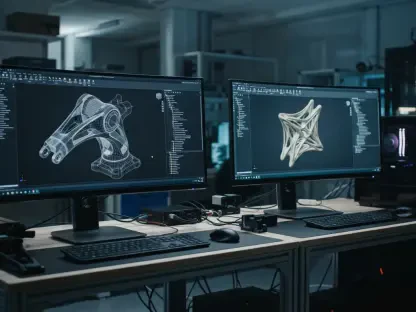

Firefighters at Travis Air Force Base are now utilizing digital blueprints and raw filament to create specialized tools that are often unavailable or prohibitively expensive on the commercial market. This initiative represents a profound shift in how emergency services manage their logistical requirements, moving away from a total reliance on external vendors toward a model of self-sufficiency. By integrating additive manufacturing into their daily workflow, the department has effectively bypassed the traditional constraints of government procurement. Engineer Tylor Roberts, who transitioned his personal interest in 3D printing into a professional utility, has shown that specialized skills within a workforce can be leveraged to solve complex institutional problems. This evolution allows the station to address unique operational gaps that were previously overlooked by standard equipment catalogs. The transition highlights a broader trend where technology empowers local agencies to become their own manufacturers, ensuring they remain agile in an environment that demands rapid responses.
Maximizing Operational Efficiency and Fiscal Health
Economic Benefits: Reducing Costs through On-Site Fabrication
The immediate financial impact of this program is most visible in the significant reduction of external procurement costs. Historically, the department relied on third-party vendors to produce high-quality station signage and equipment labels, which frequently resulted in inflated prices and lengthy delivery windows. By bringing this production in-house, the facility now only incurs the cost of raw filament and electricity, effectively removing the labor markups and shipping fees associated with commercial contracts. These saved funds are not simply left idle; instead, they are redirected toward purchasing critical life-safety equipment that might otherwise have been budget-prohibitive. This shift in fiscal management proves that even small-scale manufacturing units can yield substantial returns on investment for public safety organizations. Furthermore, the ability to control every aspect of production ensures that the final products meet the exact specifications required for the demanding environment of a military fire station, reducing the frequency of replacement.
Operational Agility: Bypassing Traditional Procurement Hurdles
Beyond the direct monetary savings, the adoption of 3D printing provides an unprecedented level of operational flexibility that traditional supply chains cannot match. In the fire service, the loss or failure of a specialized tool can lead to decreased readiness, and waiting for a replacement through military logistics channels can take weeks or even months. With an on-site lab, the department can move from a digital blueprint to a physical, functional tool in just a few hours. This “just-in-time” manufacturing capability allows the crews to maintain their fleet with minimal downtime, adapting to new equipment requirements or regulatory changes as they arise. This speed of action is particularly vital when dealing with unique hardware that is not readily available in commercial warehouses. By eliminating the administrative hurdles of the standard bidding process, the fire department has created a streamlined workflow that prioritizes mission readiness and rapid problem-solving, ensuring that the firefighters have the resources they need when they are needed.
Custom Engineering and Community Connection
Tailored Solutions: Optimizing Fire Apparatus Storage
The physical layout of modern fire engines is incredibly dense, often requiring every square inch of space to be utilized efficiently. However, standard equipment mounts and storage bins are rarely designed to accommodate the wide variety of specialized gear carried by different units. The 3D printing lab has addressed this challenge by allowing for the creation of bespoke brackets and organizational components tailored to the specific dimensions of the department’s apparatus. These custom-engineered solutions ensure that every tool is securely fastened during transit yet remains instantly accessible during an emergency, reducing the wear and tear that occurs when items are loosely stored. Furthermore, the ability to design niche tools for specific applications allows the department to solve problems that commercial manufacturers have not yet addressed. This level of customization ensures that the equipment works for the firefighter, rather than forcing the firefighter to adapt their techniques to fit the limitations of generic hardware designs.
Community Outreach: Creating Unique Public Engagement Tools
The influence of additive manufacturing extends beyond the bay doors and into the realm of public relations and community engagement. During events like Fire Prevention Week, the department has historically distributed mass-produced toys and promotional items to local children to foster goodwill and education. By utilizing their internal 3D printing capabilities, the station now produces its own fire-related games and branded memorabilia, which are unique to Travis Air Force Base. This approach significantly lowers the cost of outreach materials while providing a more memorable experience for the community. The ability to customize these items with specific logos or local landmarks creates a stronger connection between the emergency responders and the citizens they serve. This use of technology demonstrates that innovation is not just about technical efficiency, but also about finding creative ways to build relationships and communicate the department’s identity. It transforms a standard administrative expense into an opportunity for creative expression that resonates with both the staff and the public.
Implementing a Sustainable Innovation Framework
Strategic Integration: Auditing Talent and Securing Buy-In
For other emergency service agencies to successfully replicate the success seen at Travis Air Force Base, a clear strategic framework is required. The first phase of this process involved a thorough audit of internal talent to identify personnel who already possessed a background or interest in digital design and manufacturing. Leveraging these existing skills significantly reduced the learning curve and ensured that the program was led by individuals with a genuine passion for the technology. However, technical expertise alone was insufficient; securing leadership buy-in was critical to the project’s long-term viability. Proponents of the program presented a data-driven business case that focused on return on investment and mission readiness, convincing decision-makers that the initial equipment costs would be quickly offset by long-term savings. This collaborative approach between the rank-and-file innovators and the administrative leadership created a culture where experimental technology was viewed as a strategic asset rather than a passing trend or a hobbyist distraction.
Future Resilience: Documentation and High-Performance Materials
The maturation of the program relied on rigorous documentation and a commitment to using high-performance materials suitable for the rigors of the field. The department maintained detailed records of every printed item, comparing the cost of in-house production against the quotes provided by external vendors. This evidence supported the case for further upgrades and expanded the scope of the printing lab. Additionally, the transition toward heat-resistant and impact-resistant filaments ensured that the printed tools were not mere prototypes, but durable components capable of surviving the harsh environments of fire suppression operations. Ultimately, the integration of 3D printing at Travis Air Force Base proved that innovation could be achieved through ingenuity and strategic foresight. The initiative established a new standard for localized manufacturing in the public sector, providing the fire service with the autonomy to solve its own problems in real time. These actions moved the department toward a unified vision of modernization that balanced fiscal responsibility with a relentless focus on improving emergency response capabilities.