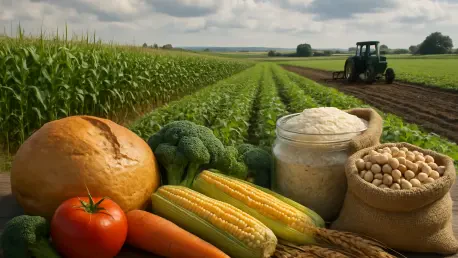

The Canadian government has officially set in motion a comprehensive three billion dollar national food security strategy designed to stabilize domestic supply chains and insulate citizens from the volatile fluctuations of the global commodities market. This initiative represents a massive shift in how the nation approaches its agricultural foundations, moving away from short-term relief toward a permanent, resilient framework. The strategy allocates significant funding toward the modernization of existing farming practices while simultaneously addressing the urgent need for climate-adaptive technologies that can withstand unpredictable weather patterns. By centralizing resources through a federal-provincial partnership, the government aims to ensure that every region has the capacity to produce and distribute essential food items even during periods of intense international instability. This legislative package also includes provisions for safeguarding the economic viability of rural communities, recognizing that food security is inherently tied to the strength of the domestic supply.
Agricultural Resilience: Technological Innovation and Precision
Precision agriculture takes center stage in this federal roadmap, with nearly eight hundred million dollars earmarked for the integration of artificial intelligence and advanced sensor networks across the prairies. These technologies allow for the hyper-specific application of fertilizers and pesticides, which not only reduces the environmental footprint of large-scale farming but also significantly lowers overhead costs for producers. In provinces like Saskatchewan and Alberta, autonomous drone fleets are being deployed to map soil health in real-time, providing data that helps farmers make informed decisions about irrigation and planting schedules. This digital transformation is expected to increase total crop yields by approximately fifteen percent over the next years, creating a critical buffer against the rising costs of energy and raw materials. Furthermore, the strategy encourages the adoption of vertical farming techniques in urban centers, transforming vacant industrial spaces into productive hubs.
Beyond hardware, the funding supports the development of a robust biotechnology sector focused on engineering specialized seed varieties that are capable of thriving in extreme conditions. Researchers are currently working on wheat and canola strains that offer higher resistance to drought and heat, ensuring that the breadbasket of the nation remains productive despite the changing climate. This scientific push is being paired with massive investments in agricultural education and training programs to ensure that the workforce is capable of operating sophisticated machinery and interpreting complex data sets. By fostering a culture of innovation, Canada is positioning itself as a global leader in sustainable food production, exporting not just grain but also the high-tech solutions used to grow it. The strategy also addresses the critical issue of labor shortages by incentivizing the development of robotic harvesting systems that can handle delicate produce without the need for manual intervention.
Logistical Networks: Infrastructure and Regional Stability
A significant portion of the budget is dedicated to overhauling the logistical networks that connect remote northern communities to the southern agricultural heartland. Residents in these areas have historically faced astronomical food prices due to the high cost of transportation and the perishability of fresh goods. The new strategy addresses this disparity by funding the construction of local greenhouse projects and modular hydroponic systems that operate independently of the national power grid. These local production sites are designed to provide a steady supply of nutrient-dense produce, reducing the reliance on expensive air-freight deliveries that are often disrupted by winter weather. Additionally, the government is investing in state-of-the-art cold-storage facilities at key transport junctions to extend the shelf life of goods and minimize waste during the distribution process. This focus on localized resilience ensures that food security is a standard maintained across all territories.
Stakeholders recognized that the success of this initiative depended on the immediate integration of private sector expertise and public policy goals. Organizations shifted their focus toward building diverse partnerships that prioritized long-term sustainability over immediate profit margins. Legislators finalized the frameworks for these grants, ensuring that small-scale innovators had equal access to capital alongside major industry players. Moving forward, businesses looked to diversify their supply sources and invested in localized production technologies to mitigate future risks. Consumers participated by favoring domestic products, which bolstered the local economy and reduced the carbon footprint associated with long-distance shipping. Public agencies monitored the progress of the greenhouse projects and adjusted funding based on real-time performance data. The strategy established a blueprint for other nations, emphasizing that food security required a proactive and well-funded approach.