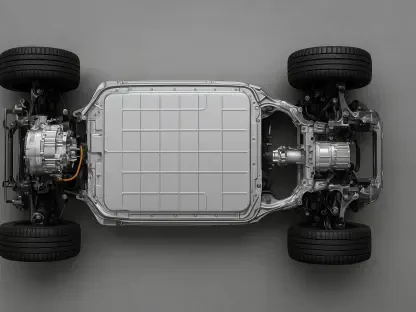

The journey from a digital blueprint to a street-legal prototype is fraught with financial pitfalls that can stall even the most promising automotive innovations before they ever reach the testing track. While established manufacturers benefit from economies of scale, startups operate in an environment where every dollar spent on a single component must be justified by its contribution to functional validation. Traditional manufacturing methods, which often rely on permanent molds or specialized casting, create a significant barrier to entry due to the high upfront capital requirements associated with hard tooling. By integrating computer numerical control machining into the early development stages, these agile companies can effectively bypass the massive investments typically required for low-volume production runs. This shift not only preserves vital capital but also allows engineering teams to focus on refining their designs through empirical testing rather than speculative modeling. As the industry moves toward 2026 and beyond, the ability to produce physical parts with speed and precision has become the primary differentiator for successful market entry in the competitive vehicle sector.
Economic Obstacles in Traditional Automotive Prototyping
The primary financial burden for any new automotive venture lies in the creation of the first physical iterations, where the cost per unit is at its highest point in the production cycle. For instance, processes like injection molding or die casting require the fabrication of steel or aluminum molds that can cost tens of thousands of dollars before a single part is even produced. For a startup needing only ten or twenty units for crash testing or thermal validation, these fixed costs are often insurmountable, leading to a situation where development cycles are stretched thin or compromised. When a design needs an adjustment after the first test, traditional tooling becomes a liability, as modifying a hard mold is both expensive and time-consuming. This rigid approach to manufacturing forces engineers to be overly cautious, which can ultimately stifle the very innovation that gives a startup its competitive edge. By contrast, moving away from fixed tooling allows for a more fluid and responsive engineering process.
Beyond the immediate costs of hardware, the logistical complexity of a fragmented supply chain presents a significant risk to the financial stability of emerging vehicle manufacturers. Managing a diverse network of specialized vendors for machining, sheet metal fabrication, and secondary finishing processes requires a level of oversight that many small teams cannot sustain. Each hand-off between facilities introduces a new opportunity for communication errors, shipping delays, and quality control discrepancies that can derail a project timeline. The cumulative cost of transport, coupled with the administrative overhead of coordinating multiple purchase orders, often exceeds the actual manufacturing cost of the components themselves. Furthermore, the lack of transparency in lead times across a distributed supply chain makes it difficult for project managers to predict when a prototype will be ready for assembly. This unpredictability creates a ripple effect, where delays in the machine shop lead to idle time for engineers and technicians, further draining the company’s limited cash reserves.
Engineering Advantages of Precision Machining Technologies
Computer numerical control machining provides a critical technical advantage by utilizing a software-driven subtractive process that converts raw blocks of material directly into finished components. Unlike additive manufacturing, which may struggle with structural integrity, this method allows for the use of production-grade materials such as high-strength aluminum alloys, stainless steel, and titanium. These materials are essential for automotive applications where parts must endure high-stress environments, extreme temperatures, and mechanical fatigue during rigorous safety evaluations. Because the process is highly repeatable and achieves incredibly tight tolerances, engineers can trust that the prototype they are testing is a faithful representation of the final production part. This level of fidelity is vital for verifying the performance of engine components, suspension mounts, and structural brackets that must interface perfectly with other systems. Achieving this level of precision without the need for expensive molds ensures that technical validation is both accurate and affordable.
The inherent digital flexibility of modern machining platforms allows for rapid design iterations that would be impossible with traditional manufacturing methods. When a simulation reveals a potential point of failure or an opportunity for weight reduction, the engineering team can simply update the digital computer-aided design file and initiate a new production run almost immediately. There is no penalty for rebuilding physical tools or re-tooling a production line, which reduces the interval between design phases from months to just a few days. This agility is particularly valuable in the current landscape, where the pressure to bring electric and autonomous vehicles to market faster than ever before is constant. By shortening the feedback loop between physical testing and design optimization, startups can arrive at a finalized, market-ready product with significantly fewer resources. This rapid prototyping cycle not only improves the final quality of the vehicle but also demonstrates a level of operational efficiency that is highly attractive to potential investors and stakeholders.
Maximizing Runway Through Flexible Partnerships
To maintain a lean operational profile, automotive startups must prioritize manufacturing partnerships that align with their specific need for low-volume, high-complexity production. Selecting a shop that offers a no minimum order quantity policy is a fundamental strategy for preserving capital, as it allows companies to purchase only the exact number of parts required for a specific validation stage. This approach prevents the accumulation of expensive, obsolete inventory that occurs when manufacturers are forced to meet high volume requirements for a design that is still subject to change. By only producing what is necessary, a startup can keep its runway clear for further research and development activities. Furthermore, this flexibility enables a more dynamic response to testing results; if a component fails during a field trial, the company can immediately pivot to a new design without having to write off a large stock of useless parts. This financial discipline is essential for surviving the pre-revenue phase of development.
The transition toward consolidated supply chains was identified as a critical next step for maintaining momentum in the engineering phase. Successful developers established clear protocols for auditing potential partners based on their ability to provide end-to-end fabrication and finishing services. They also prioritized the integration of real-time data sharing between design teams and machine shops to further compress the development timeline. These organizations focused on building resilient production frameworks that could adapt to shifting regulatory requirements without incurring massive overhead. By moving away from fixed tooling early in the process, they secured the ability to pivot rapidly in response to consumer feedback and testing results. The strategic focus remained on maximizing the efficiency of every prototype run to ensure that capital was preserved for the final stages of market entry. Ultimately, these measures allowed startups to achieve technical milestones that were previously reserved for industry incumbents.