
Ensuring that a camera from one vendor can communicate seamlessly with navigation software from another remains a persistent hurdle in the defense industrial base. As the theater of conflict evolves toward high-speed, multi-domain operations, the reliance on isolated robotic platforms has become a strategic liability. Modern defense requires a shift toward integrated networks where autonomous agents, ranging from aerial swarms to subsurface vessels, function as a cohesive unit. This transition necessitates a departure from traditional procurement models where hardware was the primary focus, moving instead toward a software-centric architecture that prioritizes interoperability. Without a shared environment to test these disparate systems, the military risks deploying technology that fails under the pressure of real-world complexity. Consequently, the development of Digital Proving Grounds has become a vital priority for maintaining a competitive edge in 2026, providing the necessary infrastructure to validate these intricate systems.
Overcoming Traditional Testing Limitations
The Shift: Physical to Virtual Validation
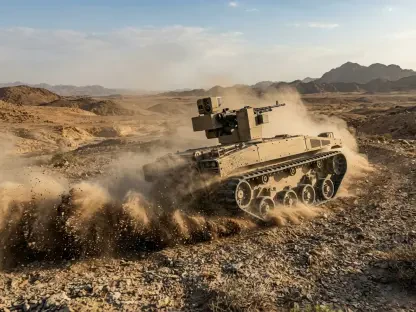
Historically, military validation of hardware has been a slow and laborious process, centered on periodic live exercises at physical ranges. These events are often prohibitively expensive, requiring the mobilization of personnel, logistics, and multi-million dollar platforms, with costs often exceeding hundreds of thousands of dollars per vehicle per session. Because of these financial and logistical constraints, major field tests are frequently limited to just a few occurrences per year. This infrequent cadence creates a significant bottleneck for software-driven autonomous systems, which require constant iteration and testing to refine their decision-making algorithms. In a physical environment, software developers are forced to wait months to see if a minor code update functions correctly in a real-world setting. This delay prevents the rapid prototyping necessary to keep pace with modern technological advancements, leaving the defense sector vulnerable to more agile adversaries who may iterate their software more frequently.
Breaking the Bottleneck: Modern Live Exercises
When disparate components from multiple vendors are brought together for the first time during a live exercise, the event often devolves into a discovery session rather than a validation of mission readiness. Engineers frequently spend the first few days of a high-stakes exercise troubleshooting basic communication protocols or wiring issues, rather than testing the tactical capabilities of the autonomous swarm. This lack of pre-integration results in “unforced errors” that could have been identified and resolved in a simulated environment weeks earlier. By shifting the bulk of this troubleshooting to a virtual space, Digital Proving Grounds ensure that when platforms finally arrive at a physical range, they are already integrated and ready for high-level tactical evaluation. This approach maximizes the value of every live exercise hour, transforming them from hardware troubleshooting sessions into sophisticated demonstrations of strategic capability. It allows commanders to focus on the operational utility of the systems rather than the basic functionality of the sensors.
Software-in-the-Loop: Foundations of Readiness
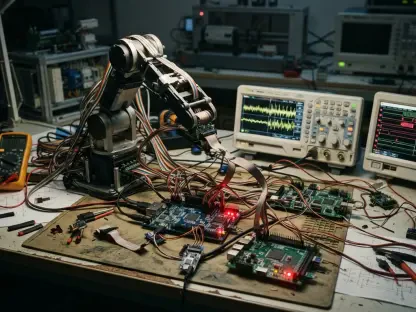
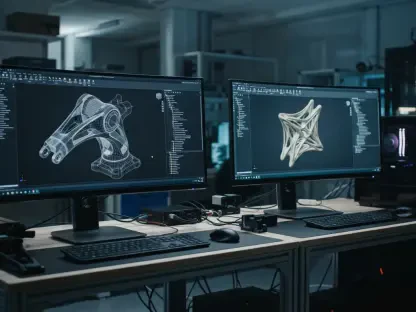
To achieve a high level of confidence in autonomous systems, Digital Proving Grounds utilize a structured hierarchy of simulation fidelity, beginning with Software-in-the-Loop testing. This foundational layer allows developers to run their code within a shared digital environment where integration issues can be caught and corrected daily. By simulating the sensor inputs and environmental conditions that an autonomous agent would encounter, developers can stress-test their algorithms across thousands of scenarios that would be impossible to replicate in the physical world. As the software matures, the framework transitions to Hardware-in-the-Loop testing, where physical components like flight controllers or navigation units are plugged into the simulator. This critical step ensures that the digital logic actually functions when executed on the specific processors and hardware it is intended to run on. This bridge between pure digital code and physical reality is essential for identifying latency issues or hardware limitations that might not be apparent in a software-only simulation, providing a realistic check.
Hardware-in-the-Loop: Bridging the Reality Gap
The pinnacle of this tiered approach is the Live-Virtual-Constructive model, which blends real-world platforms with virtual assets in a single, cohesive exercise. This hybrid methodology is particularly effective for testing the command-and-control infrastructure of massive autonomous swarms without the logistical nightmare of deploying hundreds of physical vehicles. For instance, a dozen live drones can be programmed to interact with hundreds of simulated “constructive” agents, allowing commanders to observe how the entire group coordinates its movements and shares data. This capability is vital for stress-testing the scalability of communication networks and ensuring that the software can handle the data load of a large-scale conflict. By simulating these complex interactions in 2026, the military can explore diverse tactical formations and adversarial countermeasures in a safe and repeatable manner. This results in a more robust understanding of how autonomous systems will perform in contested environments, where communication may be degraded or sensor data may be intentionally manipulated by the enemy.
Accelerating the Development Cycle
Real-World Application: The VREX Case Study
A concrete example of this digital transformation is the Virtual Readiness and Experimentation program, which has pioneered the use of Digital Proving Grounds to achieve collaborative autonomy. In this program, the government acts as a neutral evaluator, providing a common digital space where various vendors can integrate their specialized drones and sensors. The challenge involves coordinating assets across different domains, such as aerial scouts, surface vessels, and subsurface robots, to work as a unified team. By utilizing a common simulation architecture, these disparate systems can be synchronized far in advance of any physical deployment. This neutrality is key, as it prevents vendor lock-in and encourages competition among providers to deliver the best software solutions. The VREX environment allows the military to verify that a drone from one manufacturer can pass mission data to a vessel from another, ensuring that the final “system of systems” is truly interoperable. This collaborative framework is essential for building the diverse autonomous fleets required for modern multi-domain operations.
Collaborative Autonomy: Multi-Domain Integration
One of the most significant advantages of the VREX program is the implementation of the “find-fix-fly” loop, which dramatically compresses the development cycle for autonomous software. In a traditional testing environment, identifying a software bug during a field test would often require grounding the vehicle and sending the data back to the lab for analysis, a process that could take weeks. Within the Digital Proving Ground, however, teams can identify a logic error, correct the code, and re-test the solution virtually within a single hour. This rapid iteration allows for the constant refinement of autonomous behaviors, enabling the software to evolve at a pace that matches the speed of modern technological change. By the time a system is cleared for a live flight, it has already undergone thousands of hours of virtual seasoning, significantly reducing the risk of failure. This agility ensures that the military can field advanced capabilities faster than ever before, maintaining a technological lead in a landscape where software updates can be as critical as physical armor or firepower in 2026.
The Feedback Flywheel: Continuous Improvement
Unlike physical tests, which often provide only a snapshot of performance on a specific day, Digital Proving Grounds possess a “cumulative memory” that grows with every simulation run. Every time a virtual agent encounters an obstacle or fails to meet a mission objective, that data is recorded and integrated back into the testing library. This creates a vast repository of edge cases and environmental variables that can be used to challenge future iterations of the software. Instead of repeating the same basic tests, the system can automatically generate increasingly difficult scenarios based on past performance, ensuring that the autonomy software is constantly pushed to its limits. This approach creates a virtuous cycle where the system becomes demonstrably more intelligent and reliable over time. As the library of validated behaviors expands, future programs can draw upon this wealth of institutional knowledge, significantly reducing the development time for new autonomous platforms. This data-driven strategy ensures that the military is not starting from scratch with each new project.
Delivering Reliability: Actionable Tactical Success
The successful deployment of autonomous systems required a fundamental shift in how the military approached software validation and integration. To maintain this momentum, leadership prioritized the expansion of Digital Proving Grounds into every major procurement program, ensuring that virtual testing was not an afterthought but a core requirement. These efforts moved the defense sector away from slow, manual processes toward a continuous digital flywheel of insight and improvement. By 2026, the transition to software-defined autonomy was largely complete, enabling the rapid fielding of swarms that functioned with precision and reliability. Moving forward, the focus shifted toward enhancing the cyber resilience of these digital twins and ensuring that the simulated environments remained accurate reflections of an ever-changing global battlespace. The military also worked to integrate real-time sensor data from the field back into the simulation to create a “living” model of operational reality. This ongoing commitment to digital infrastructure ensured that the warfighter possessed the most advanced, reliable, and trusted autonomous tools.