
A significant hurdle for the widespread adoption of biopolymers remains the price premium they command over their fossil-based counterparts in the current global market. This economic reality persists even as the textile industry intensifies its efforts to decouple synthetic fiber production from a long-standing dependency on fossil fuels. The transformation is not merely a response to regulatory pressure but a strategic realignment toward renewable feedstocks that promise to drastically reduce the environmental footprint of garment manufacturing. Leading this transition is the Italian yarn producer Fulgar, whose showcase at the Performance Days exhibition in Munich served as a catalyst for high-level discussions on the technical viability of biosynthetics. By focusing on renewable alternatives, the industry aims to address the deep-seated ecological concerns associated with traditional petroleum-derived polyamides. This movement represents a fundamental shift in how materials are sourced and perceived by a global market.
Pioneering Renewable Raw Materials: The Castor Oil Innovation
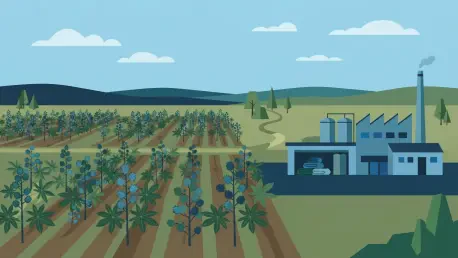
Fulgar has successfully established itself as a frontrunner in the sustainable yarn market through the development of specialized products like EVO, which stands as a 100% bio-based polyamide. The production of this high-performance fiber relies on a sophisticated blend of castor oil and industrial corn, specifically selected because these crops thrive in arid regions where food crops typically struggle to survive. This deliberate sourcing strategy directly addresses a major ethical concern within the bio-based economy: the potential competition for arable land between industrial manufacturing and global food security. By utilizing non-food-grade crops, the company demonstrates that the transition to green chemistry can be achieved without compromising the resources needed to feed a growing population. Furthermore, this approach highlights how regional biodiversity can be harnessed to create a resilient supply chain that operates independently of petroleum market shifts.
Technical Superiority: Performance Advantages of Hybrid Yarns
In addition to fully bio-based options, the industry is actively exploring hybrid models such as Q-GEO, a yarn that incorporates nearly 50% renewable content while maintaining extreme durability. This particular innovation represents a critical shift in industrial philosophy, where bio-based materials are no longer viewed simply as eco-friendly substitutes but as superior technical components. Q-GEO offers functional advantages that frequently surpass those of traditional synthetics, including 50% higher moisture absorption, significantly improved breathability, and natural flame-retardant properties. These technical milestones prove that moving away from fossil fuels does not require a sacrifice in material performance or aesthetic quality. These innovations are particularly well-suited for the rigorous demands of modern activewear and high-end technical apparel, where performance is non-negotiable. By integrating these bio-derived molecules, manufacturers are redefining the standards of synthetic fibers.
Industrial Challenges: Economic Viability and Scale
Despite the clear technical success of these advanced fibers, several systemic challenges remain that continue to hinder their widespread adoption across the broader consumer market. A primary obstacle is economic viability, as the specialized refining processes for biopolymers currently keep production costs higher than those of conventional plastics. To transition from high-end niche sportswear into the mass-market fashion sector, the industry must achieve significant economies of scale from 2026 to 2028 to narrow this cost gap and make green fibers accessible. Furthermore, the availability of raw materials remains a potential bottleneck for global scaling. Ensuring a stable and responsibly managed supply chain of feedstock is essential to guarantee that the green transition does not inadvertently create new environmental or social pressures in agricultural regions. Strategic partnerships are becoming necessary to stabilize the supply and lower the entry price for brands looking to pivot away from oil.
Verification Systems: Ensuring Transparency and Accountability
Transparency and rigorous certification have become essential pillars for the growth and credibility of the biosynthetic sector. As legal and consumer scrutiny regarding environmental claims reaches an all-time high, organizations like ISCC PLUS provide the necessary verification to ensure that bio-based labels are supported by credible scientific data rather than vague marketing language. This push for accountability helps prevent the pervasive issue of greenwashing and builds lasting trust between manufacturers, apparel brands, and the end consumer. By establishing clear, standardized protocols for the origin and percentage of renewable content, the industry ensures that its sustainability efforts are both measurable and authentic. This systematic approach to certification also facilitates smoother compliance with emerging international regulations regarding product circularity. As the market matures, the ability to track a fiber from its source to the final garment will become a baseline requirement.
Consumer Strategy: Linguistic Clarity in Sustainable Textiles
A critical component of this industrial evolution is the push for linguistic clarity and much better consumer education regarding material science. There is a concerted effort among textile experts to clearly distinguish between terms like bio-based, biodegradable, and organic, as these concepts are often incorrectly used interchangeably. Understanding that a fiber can be derived from plant sources without necessarily being compostable is vital for maintaining market integrity and preventing consumer disillusionment. By clarifying these specific definitions, leaders in the textile sector hope to empower brands to make more informed decisions about their material choices and communicate the true benefits of their products to an increasingly conscious public. Education initiatives are now focusing on the entire lifecycle of the fiber, helping stakeholders understand that the source of the carbon is just as important as the end-of-life plan. Clear communication effectively bridges the gap between science and retail.
Systemic Integration: Achieving Long-Term Resource Efficiency
The transition toward a bio-based textile economy required a holistic approach to resource management and circular thinking that prioritized efficiency. Fulgar’s manufacturing process, for instance, utilized only specific portions of the corn kernel for yarn production, which allowed the remainder to be diverted toward food and animal feed. This strategy maximized the utility of the raw material and minimized waste at the very start of the supply chain, setting a new standard for industrial synergy. Moving forward, the industry considered the successful integration of renewable feedstocks into established synthetic technologies as the most viable path for reducing the environmental impact of global production. Stakeholders focused on expanding bio-refinery capacities and investing in regional sourcing to decentralize the supply chain. These actions established a framework where performance and sustainability functioned as a single objective. The sector ultimately realized that long-term resilience depended on moving beyond oil.