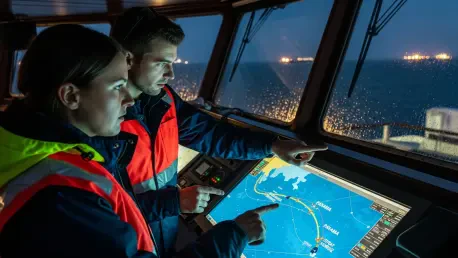

Lead/Introduction
Captains have started paying millions of dollars not for fuel or cargo, but to outrun risk itself as Hormuz flashes red and the Panama Canal sells time to the highest bidder. The detour looks simple on a map—swing west, cut through the locks, sprint across the Pacific—but the economics behind that turn sharpen with every headline and every uptick in oil.
A few months ago, a fuel carrier reportedly wired an extra $4 million to leapfrog the queue, redirecting from Europe to Singapore as local inventories tightened. Others bid more than $3 million for expedited transit, absorbing fees that would have sounded outrageous last year. In a market straining to keep schedules, minutes compound into millions.
Nut Graph
This story matters because a single chokepoint near Iran has pushed global shipping to reprice time, risk, and certainty in real time. The Strait of Hormuz remains a vital artery for oil and refined products, yet the threat matrix around it has turned routine passages into strategic gambles.
The Panama Canal, often a background player in energy flows, now operates as a shock absorber. Standard tolls still hover around $300,000 to $400,000, but the fast-track auctions have surged to roughly $425,000 on average, with exceptional outliers in the multimillion-dollar tier. In a world where Brent vaulted from roughly $66 to above $107 a barrel, a day saved can outweigh a million paid.
Body
On bridge decks and in risk committees, the math has shifted. Insurance premiums for transiting Hormuz, security contingencies, and reputational exposure recalibrate the cost of “cheap” routes. With higher oil prices magnifying the value of early delivery, a guaranteed Panama slot becomes a hedge against both conflict and volatility. “In this tape, certainty is the cheapest fuel,” a risk manager said.
Auction dynamics at the locks translate urgency into prices. Typical add-ons that once cleared near $250,000 to $300,000 now trend around $425,000, yet officials stress these are discretionary bids, not a new toll regime. “No physical backlog,” a canal spokesperson said. “These premiums reflect last-minute demand.” The baseline holds, but the ceiling moves when cargo owners blink first.
Outliers, like the $4 million sprint to Singapore, reset expectations without rewriting the rulebook. Traders say such bids surface when regional cracks widen and refining margins reward early barrels. “When prompt scarcity hits, five days can pay for themselves,” one analyst noted, pointing to spikes that travel through freight, storage, and retail prices.
Oil’s rally raises the stakes. Brent above $107 a barrel inflates the time-value of cargo, so each delay carries a richer opportunity cost. That has pulled more vessels toward Panama, even as officials insist capacity remains intact. The canal collects a windfall, but it also inherits geopolitical risk: Panama condemned Iran’s seizure of a Panama-flagged MSC vessel, a stark reminder that registry exposure travels with the flag.
From the market’s vantage, these premiums telegraph stress, not permanence. “This is a pressure valve, not a structural reset—yet,” said a shipping economist. Still, the behavior change is evident: shippers pre-file for slots, maintain dual passage plans, and authorize rapid bids tied to real-time cargo values. Supply chains now swing on live auctions rather than fixed timetables.
Conclusion
The reshuffle around Hormuz had clarified a playbook: score routes by security risk, time-value of cargo, insurance exposure, and likely auction bands; cap bids to the marginal value of days saved; and align reroutes with regional stock data and crack spreads. Carriers had prepared dual voyage plans and pre-filed for slots to lock in certainty when screens turned volatile.
Policy steps also stood out. Maritime security coordination and transparent auction reporting reduced rumor-driven spikes, while registry oversight mitigated fallout from regional seizures. If tensions persisted, auction pressure and fuel logistics would have intensified further, but the market’s message had been consistent: in a high-price, high-risk tape, the canal’s costly shortcut functioned as the least expensive promise of arrival.