
The relentless expansion of global e-commerce has forced modern logistics providers to confront the physical limitations of aging urban warehouses that were never designed for the velocity of twenty-first-century trade. These brownfield sites, characterized by low ceiling clearances, irregular floor plans, and outdated load-bearing capacities, represent a significant portion of the available industrial inventory in high-demand markets. As land costs in metropolitan hubs continue to escalate, the economic imperative has shifted from acquiring new acreage to extracting maximum utility from existing square footage. This transition marks the end of traditional material handling and the rise of a tech-forward logistics era.
Specialized warehouse automation consultants have emerged as essential architects of this transformation, bridging the gap between historical infrastructure and modern performance requirements. By reevaluating the economic value of outdated industrial real estate, these experts demonstrate that structural rigidities are no longer terminal defects but rather variables that can be managed through intelligent design. The focus is no longer on how much floor space a building occupies, but on how efficiently its entire volume can be utilized to meet the needs of a hyper-connected consumer base.
The Evolution of Industrial Facilities and the Rise of Brownfield Automation
Legacy industrial sites often present a paradox where their prime geographic locations are offset by severe structural inadequacies. Many of these facilities were built during eras when manual labor was inexpensive and pallet-jack navigation dictated warehouse geometry. Consequently, the transition to high-throughput logistics requires a departure from these antiquated models. The shift toward automation in brownfield environments is not merely an upgrade of equipment but a fundamental reimagining of how goods move through a constrained space.
Market players are increasingly turning to specialized consultants to navigate the complexities of retrofitting. These consultants analyze the specific limitations of a site, such as pillar placement or uneven flooring, to determine which technological interventions will yield the highest density. By integrating advanced robotics into these older footprints, the economic profile of the property changes, turning a depreciating asset into a high-performance fulfillment center that rivals modern greenfield developments in efficiency.
Market Dynamics and the Technological Shift Toward Fluid Infrastructure
Emergent Technologies and the Transition to Adaptive Robotics
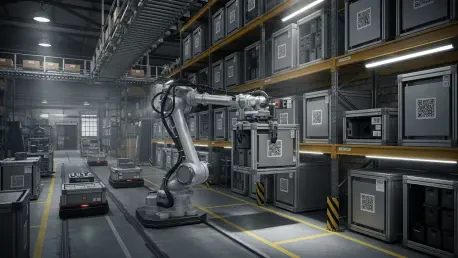
The move from fixed conveyor systems to fluid infrastructure represents a significant milestone in industrial engineering. Traditional conveyors are notoriously rigid, often acting as permanent barriers that bifurcate warehouse floors and limit operational agility. In contrast, Simultaneous Localization and Mapping (SLAM) technology allows Autonomous Mobile Robots (AMRs) to navigate complex environments without the need for fixed tracks or magnetic tape. This flexibility is crucial for legacy sites where the floor plan may be too restrictive for bulky, permanent installations.
Equipped with Lidar and sophisticated sensor arrays, these autonomous units enable a facility to adapt its workflow in real time. If a specific zone becomes congested, the orchestration software reroutes the fleet, maintaining a steady throughput that manual operations could never sustain. This fluidity allows for a more granular use of space, as robots can operate in tighter corridors and navigate around structural obstacles that would impede traditional forklifts or fixed machinery.
Economic Projections and the Expanding Logistics Automation Market
Current market data indicates a rapid acceleration in the adoption of high-density storage solutions across North America. From 2026 to 2028, the logistics automation sector is projected to experience a compound annual growth rate that reflects both the scarcity of industrial land and a persistent shortage of manual labor. This growth is particularly pronounced in the robotics sector, where the cost of entry is decreasing even as the capabilities of the hardware expand.
Performance indicators consistently show that automated cubed facilities outperform manual legacy operations by significant margins. While a manual warehouse might struggle with inventory accuracy and retrieval times, an automated system provides near-perfect visibility and a drastically reduced footprint. As land costs remain high, the ability to pack more inventory into the same square footage becomes the primary driver of profitability, making automation an economic necessity rather than a luxury.
Overcoming Structural Limitations Through Advanced Engineering Strategies
The most pervasive challenge in brownfield sites is the existence of dead space, which typically refers to the unused vertical volume above traditional racking. By converting horizontal footprints into high-density volumetric storage, facilities can increase their capacity without expanding their physical walls. Strategic deployment of cube storage systems, such as AutoStore, allows inventory to be stacked in dense grids that utilize every available inch of vertical space.
Furthermore, the implementation of orchestration software is vital for mitigating operational deadlocks in these dense environments. In tight spaces, the risk of navigational bottlenecks increases, but intelligent software manages the movement of robotic fleets to ensure seamless coordination. A phased integration strategy is often employed to minimize disruption, allowing the facility to remain active while sections are gradually transitioned to automated workflows, thereby protecting immediate revenue streams.
Navigating the Regulatory and Safety Framework of Automated Workspaces
Retrofitting older buildings with modern digital infrastructure introduces a unique set of compliance challenges. Safety standards, such as those governed by ISO and OSHA, must be strictly adhered to, especially concerning human-robot collaboration. Ensuring that autonomous units can safely operate alongside human workers requires rigorous testing and the implementation of standardized safety protocols. These measures not only protect the workforce but also play a critical role in reducing insurance premiums by lowering the frequency of workplace accidents.
Digital infrastructure upgrades are equally complex, as older buildings often lack the electrical capacity or connectivity required for sophisticated Warehouse Management Systems (WMS). Addressing these gaps involves significant investment in data security and high-speed networking to ensure that the facility’s central nervous system remains resilient against cyber threats. Compliance in these areas is non-negotiable, as it forms the foundation upon which a reliable and scalable automated ecosystem is built.
The Next Frontier for High-Density Industrial Environments
The integration of artificial intelligence and machine learning is set to redefine predictive logistics. These technologies allow warehouses to become self-optimizing, as the software learns from historical data to anticipate demand surges and pre-position inventory. This evolution is particularly relevant for urban micro-fulfillment centers, which are rising in response to the intense pressures of last-mile delivery. By locating automated hubs closer to the end consumer, companies can meet the expectations for near-instant fulfillment.
Potential disruptors, including 5G-enabled edge computing and modular robotics, will further enhance the capabilities of legacy sites. These advancements allow for faster communication between devices and more flexible hardware configurations that can be scaled up or down based on seasonal needs. As consumer preferences continue to trend toward speed and customization, the ability of a facility to scale its operations through technology will be the ultimate measure of its long-term viability.
Strategic Recommendations for Future-Proofing Legacy Operations
The comprehensive analysis of the industrial landscape suggested that the successful revitalization of legacy sites depended on the deliberate decoupling of operational function from fixed infrastructure. It was determined that the most resilient facilities were those that prioritized adaptability, utilizing modular robotics and intelligent software to bypass the physical constraints of their aging skeletons. This approach allowed operators to maintain high throughput and precision, even within buildings that were once considered obsolete.
The financial imperative of the past few years indicated that prioritizing long-term return on investment over immediate capital expenditure was the most sustainable path forward. Expert consultancy played a pivotal role in these transformations, providing the technical and strategic oversight necessary to navigate the complexities of brownfield integration. Ultimately, the transition from manual workflows to intelligent, automated ecosystems proved to be the definitive strategy for ensuring that legacy operations remained competitive in a rapidly evolving global market.