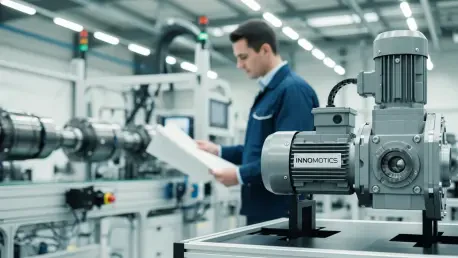

Global industrial landscapes in 2026 are increasingly defined by the necessity for highly optimized drive systems that can withstand the rigors of continuous operation while maintaining peak efficiency. Selecting a geared motor is no longer a matter of simply matching horsepower; it requires a comprehensive understanding of how mechanical force, electrical control, and environmental resistance intersect within a specific application. Chuangjuman Transmission System (Hangzhou) Co., Ltd. has recognized this shift and introduced a sophisticated support program designed to demystify the selection process for INNOMOTICS Geared Motors. By moving away from generic catalog choices and toward a data-driven application review, the program ensures that every piece of equipment is perfectly tailored to its operational environment. This approach mitigates the risk of costly downtime and equipment failure, which remain primary concerns for facility managers who are tasked with scaling production-line expansion and modernization projects. The complexity of modern machinery, particularly in the manufacturing and process industries, necessitates a more structured path from initial application data to final purchasing review. Whether integrating new machinery or replacing legacy drives, industrial buyers must account for a vast array of variables, including torque, output speed, mounting configuration, and operating duty cycles. The current initiative provides a framework where technical confirmation and product-category comparison occur before any financial commitments are made, fostering a more reliable and cost-effective procurement experience for engineering and maintenance teams across the sector.
1: Overview of the 2026 Selection and Replacement Initiative
The 2026 initiative launched by Chuangjuman focuses on bridging the gap between theoretical specifications and real-world mechanical demands. Industrial buyers frequently encounter challenges when trying to translate their physical workload into the technical language of motor frames, gear ratios, and service factors. This program addresses those difficulties by establishing a rigorous evaluation protocol that prioritizes the intended use of the machinery over mere product codes. By integrating product supply with deep technical guidance, the support structure allows procurement officers to match INNOMOTICS Geared Motors to the specific torque and speed profiles required for their unique applications. This is particularly vital for projects involving the modernization of aging infrastructure, where direct replacements may no longer be available or where newer, more efficient technologies offer a better long-term return on investment. The focus remains on helping customers navigate the vast portfolio of industrial drive products, which includes everything from standard speed reducers to massive industrial gearboxes. By providing a clear roadmap for equipment selection, the initiative reduces the likelihood of over-specification, which wastes capital, or under-specification, which leads to premature component failure and unexpected maintenance costs in high-pressure manufacturing environments.
Sustainability and operational reliability have become the twin pillars of industrial procurement in the current year, and this support program reflects those priorities by emphasizing environmental durability. In many modern facilities, drive systems must operate in harsh conditions, such as extreme temperatures, high humidity, or dusty atmospheres, which can significantly degrade performance if not properly accounted for during the selection phase. The 2026 program places a heavy emphasis on matching the mechanical construction of the geared motor to these external stressors. This involves reviewing not just the internal gearing and motor windings, but also the seals, coatings, and cooling methods that protect the unit. By conducting a thorough application review before the purchase, buyers can ensure that the selected INNOMOTICS drive will perform consistently over its intended lifecycle. Furthermore, the program assists in the replacement planning of legacy drives, helping teams identify critical spare requirements and maintain the technical records necessary for future upkeep. This holistic view of the drive system ensures that the selected solution is compatible with both the existing mechanical interface and the modern digital control systems that govern today’s automated production lines, creating a more cohesive and efficient industrial ecosystem.
2: The Four Phases of the Selection Process
To ensure absolute technical accuracy during the procurement journey, the selection process is divided into four distinct phases that guide the buyer from initial concept to final installation. The first phase involves application definition, which is perhaps the most critical step in the entire sequence. During this stage, the purchaser is required to describe the driven machine in detail, outlining the specific type of motion needed, the total daily runtime, and the characteristics of the load, such as whether it is steady or subject to sudden impacts. This phase also considers the physical workspace, noting any constraints that might influence the size or orientation of the motor and gearbox. By gathering this data early, engineers can form a clear picture of the mechanical stressors the drive will face. Following this, the second phase moves into product-category comparison. Here, experts analyze the collected data to determine if the requirement is best met by a fully integrated geared motor or if a different configuration, such as a standalone motor paired with a separate heavy-duty gearbox, would provide superior performance. This level of scrutiny prevents the common mistake of choosing a drive based on price alone, ensuring that the final selection is the most technically sound option for the given task.
The latter half of the selection process focuses on the finer details of engineering and long-term asset management. The third phase involves verifying the technical and sales details to ensure that the physical dimensions and electrical specifications perfectly align with the machinery and the facility’s power grid. This includes a review of shaft diameters, flange sizes, and mounting hole patterns, as well as confirmation of shipping timelines to keep projects on schedule. By double-checking these parameters before the order is finalized, procurement teams avoid the frustration of receiving equipment that cannot be installed without expensive modifications. Finally, the fourth phase shifts the focus toward planning for upgrades and long-term use. For facilities looking to replace older systems, this stage involves comparing legacy units with modern INNOMOTICS alternatives to identify improvements in energy efficiency or torque density. It also includes the organization of backup parts and the creation of a maintenance schedule based on the drive’s operating profile. This forward-looking approach ensures that once the drive is commissioned, the facility has a clear plan for maintaining its performance and managing its eventual replacement, thereby maximizing the total value of the investment throughout its operational life.
3: Critical Factors for Equipment Selection
Achieving a perfect match between a geared motor and its application requires a deep dive into several mechanical and operational variables that are often overlooked during a casual selection process. One of the primary factors is the shaft and mounting style, which must be precisely compatible with the driven equipment. Whether the application requires a solid shaft for direct coupling, a hollow shaft for space-saving mounting, or a specific flange or foot mount, these physical interfaces define the structural integrity of the drive connection. Incorrect mounting can lead to misalignment, which introduces vibration and accelerates wear on both the gearbox and the machine. Additionally, the location of the wiring box and the direction of the cable entries must be considered to ensure that the motor can be easily integrated into the existing electrical infrastructure without requiring complex conduit runs. These mechanical details, while seemingly minor, are essential for a smooth installation process and long-term serviceability. The selection process must also account for the necessary direction of rotation, as reversing units or those with specific clockwise or counter-clockwise requirements must be identified before production to avoid operational errors during commissioning.
Beyond the basic mechanical footprint, the operational requirements of the system dictate the inclusion of various add-ons and electrical specifications that enhance performance and safety. Buyers must evaluate the need for specialized components such as electromagnetic brakes for load holding, encoders for precise speed and position feedback, or internal heaters to prevent condensation in cold environments. In applications with high thermal loads, forced cooling fans may be necessary to maintain safe operating temperatures. Furthermore, the electrical interaction between the motor and its controller is a critical consideration. The selection must verify that the motor’s voltage, frequency, and insulation class are compatible with the facility’s power supply and any variable frequency drives being used. Efficiency standards also play a significant role, as choosing a motor with a high IE rating can lead to substantial energy savings over thousands of hours of operation. Finally, maintenance-related factors such as the type of lubrication used, the installation angle for proper oil flow, and the accessibility of the unit for future repairs are all documented. By addressing these factors holistically, the selection program ensures that the chosen INNOMOTICS Geared Motor is not just functional, but optimized for its specific role within the industrial system.
4: Requirements for Automated Storage and Retrieval Systems
Automated storage and retrieval systems represent one of the most demanding environments for industrial drive technology, requiring a unique combination of speed, precision, and high-frequency motion. In these settings, stacker cranes and shuttle systems must move large volumes of goods with millimetric accuracy, placing extreme stress on the geared motors that drive both horizontal travel and vertical lifting. The selection process for these applications focuses heavily on dynamic performance, specifically how the unit handles rapid acceleration and deceleration patterns. Because these machines often complete hundreds of cycles per hour, the drive must be capable of managing frequent starts, stops, and reversals without overheating or losing positioning accuracy. The torque required to initiate movement from a dead stop, especially when lifting heavy pallets, must be carefully calculated to ensure the motor has sufficient overhead. Precision in hitting stop locations is equally vital, as any drift in the drive system can lead to misalignment with storage racks, potentially causing damage to products or the automated infrastructure itself. Consequently, the integration of high-performance braking systems and feedback devices that sync perfectly with the warehouse control system is a non-negotiable requirement.
In addition to dynamic motion, the environmental and safety aspects of automated warehousing introduce further layers of complexity to the selection process. Many storage facilities, particularly those in the food and pharmaceutical sectors, operate at low temperatures or in environments where noise levels must be strictly controlled for the comfort of nearby personnel. Geared motors used in these areas must be specified with low-temperature lubricants and specialized seals to prevent leaks and ensure smooth operation. Rust protection is another consideration for facilities with varying humidity levels, necessitating durable coatings and corrosion-resistant components. From a safety perspective, the drive system must include reliable brake triggers and emergency stop functions that can hold a vertical load securely in the event of a power failure. The selection program also accounts for the physical layout of the warehouse, ensuring that the drives are compact enough to fit within narrow aisles while remaining accessible for service. By addressing these specific challenges, the 2026 support initiative helps warehouse operators select drive solutions that provide the high throughput and reliability needed to maintain competitive logistics operations. This comprehensive approach ensures that the automated system operates at peak efficiency with minimal risk of mechanical failure or positioning errors.
5: Range of Available Drive Solutions
The diversity of modern industrial machinery requires a broad range of drive architectures to accommodate different spatial constraints and performance goals. The 2026 program provides access to a comprehensive portfolio of solutions, ranging from individual low-voltage motors for standard tasks to massive high-voltage systems for the most power-intensive industrial processes. For many applications, the core of the system is the integrated motor-and-reducer package, which provides a compact and efficient way to deliver torque. These units are available in various styles, including helical, parallel-shaft, and bevel designs, each offering unique advantages. Helical gears are known for their quiet operation and high efficiency, while parallel-shaft units are ideal for applications where the drive must remain narrow to fit alongside a conveyor or machine frame. Bevel geared motors, on the other hand, allow for right-angle transmission, which is often necessary when the motor must be mounted perpendicular to the driven shaft. This variety ensures that regardless of the installation geometry, there is a configuration that fits the available space without compromising on torque delivery or mechanical stability.
Beyond integrated units, the program also covers specialized solutions for more complex or hazardous environments. This includes motors designed for use in explosive atmospheres, where spark prevention and flameproof enclosures are mandatory for safety. For applications requiring variable speed control, advanced frequency drives are paired with the motors to provide precise regulation of motion, which is essential for tasks like tension control in winding machines or flow regulation in large pumping systems. Separate gear reduction units and standalone three-phase alternating current motors are also available for facilities that prefer a modular approach, allowing for easier replacement of individual components. In heavy-duty industries such as mining or bulk material handling, the portfolio includes massive gearboxes capable of transmitting immense amounts of power under the most grueling conditions. By offering such a wide array of options, the initiative allows buyers to evaluate the entire transmission system as a whole, rather than treating each component as an isolated purchase. This holistic perspective is essential for creating a drive system where every part, from the frequency inverter to the output shaft, is perfectly synchronized to achieve the highest possible level of operational performance.
6: Verification Steps for Swapping Old Equipment
Replacing legacy equipment in an established factory is a task fraught with technical pitfalls, as modern drive units may not always align perfectly with the footprint or performance characteristics of older machinery. To mitigate these risks, a detailed ten-step verification process is employed to ensure that any new INNOMOTICS Geared Motor functions as a seamless replacement for the outgoing unit. The first phase of this process focuses on documenting the essential electrical and mechanical data of the existing motor, including its nominal power, voltage, and efficiency rating. It is also vital to identify the exact gear ratio and the required twisting force, or torque, that the current system provides. Simply matching the motor’s horsepower is often insufficient, as differences in internal gearing can lead to variations in output performance. By verifying these baseline parameters, engineers can ensure that the new unit will provide the same, or improved, mechanical output without overloading the machine or the electrical circuit. This step is particularly important when upgrading to high-efficiency motors, which may have different torque-speed curves than the older units they are replacing.
Once the performance data is secured, the verification process shifts to the physical interface and the historical operating profile of the drive. This involves taking precise measurements of shaft sizes, lengths, and connection interfaces to ensure a perfect mechanical fit. The mounting angle and oiling requirements must also be confirmed, as modern gearboxes may have different lubrication needs depending on their orientation. Electrical connections, including the brake voltage and the type of sensors used for speed or position feedback, must be matched to the existing control system to avoid complex rewiring. Furthermore, the physical space around the installation site is reviewed to ensure there is enough room for the new unit and for technicians to perform future service. Finally, the replacement plan considers any changes in how the machine is currently used compared to when it was first installed. If the machine now runs for longer hours or handles heavier loads, the replacement drive can be specified with a higher service factor to reflect this increased demand. By gathering all necessary blueprints, certificates, and internal approval forms, the facility ensures that the replacement project is grounded in accurate data, leading to a faster installation and a more reliable outcome for the production line.
7: The Five Dimensions of Project Suitability
To guarantee long-term value and operational success, every drive selection is evaluated across five critical dimensions of suitability. The first dimension is operational matching, which focuses on the core mechanical task. This involves a rigorous analysis to ensure that the torque and speed provided by the geared motor meet the machine’s actual workload, including its peak starting requirements and any variable load conditions. The second dimension is physical matching, which confirms that the physical attributes of the drive—such as the shafts, flanges, and overall dimensions—will fit within the available space and connect correctly to the driven equipment. Without this physical alignment, even the most powerful motor is useless. The third dimension, electrical matching, involves checking the compatibility of the motor with the facility’s power grid and control architecture. This includes verifying voltage levels, cooling requirements, and the motor’s performance when paired with variable frequency drives. These first three dimensions ensure that the drive will work correctly from the moment it is turned on, but the final two dimensions are what ensure it continues to work for years to come.
The fourth and fifth dimensions focus on the lifecycle and administrative aspects of the drive system. Durability matching considers the long-term cost of ownership by evaluating energy consumption, the required intervals for oil changes and seal replacements, and the potential financial impact of downtime. A drive that is more expensive upfront but offers higher efficiency and longer service intervals often provides the best value over time. Finally, record-keeping matching ensures that the facility is prepared for the future. This involves making sure that all technical drawings, performance certificates, and installation manuals are organized and accessible. Having these records ready is essential for troubleshooting issues, ordering the correct spare parts, and eventually planning for the next generation of equipment. By evaluating a project through all five of these lenses, industrial buyers can move beyond simple price comparisons and make decisions that support the overall health and productivity of their facility. This multidimensional approach transforms the procurement of INNOMOTICS Geared Motors from a one-time transaction into a strategic investment in the plant’s operational resilience.
8: Primary Industrial Applications
The 2026 support program is specifically tailored to sectors where drive reliability is the heartbeat of the production process, and any failure can lead to cascading delays across the supply chain. In the world of logistics and material handling, belt conveyors and transport systems rely on geared motors to move goods continuously over long distances. These applications require drives that are both energy-efficient and capable of maintaining constant speeds under varying loads. Similarly, automated warehouse cranes and lifts, as previously discussed, demand high-performance units that can handle the stress of thousands of precise movements every day. In more specialized industrial settings, such as chemical processing or food production, the focus shifts to hoisting and precision positioning tools, where safety and accuracy are paramount. Blending vats and processing agitators also present unique challenges, as the drive must deliver high torque at low speeds while resisting the corrosive or wash-down environments common in these industries. By focusing on these specific applications, the initiative ensures that the selected drives are equipped with the necessary protection levels and mechanical features to thrive in their specific environment.
Beyond the movement of goods and materials, the program also supports heavy industrial processes like metal and steel production. In these facilities, roller tables and assembly lines operate under intense heat and mechanical strain, requiring gear motors that are built for extreme durability. Bagging machinery and packaging lines in the manufacturing sector also benefit from the program, as these high-speed operations require drives that can respond quickly to control signals and maintain high throughput without frequent maintenance. For mining and bulk material handling, the focus is on massive equipment that requires high torque in a compact space, where the reliability of the drive system is essential for the safety of the entire operation. Whether a facility is expanding its existing lines or modernizing older equipment, the 2026 program provides a structured way to evaluate these diverse needs. By matching the right drive architecture to the specific demands of the application, Chuangjuman helps industrial enterprises achieve a more stable and productive manufacturing environment, ensuring that their critical machinery remains operational even under the most demanding production schedules.
9: Strategic Action Plan for Industrial Buyers
When the planning for 2026 projects commenced, industrial buyers recognized that a successful drive implementation depended on a proactive and detailed strategic action plan. The process began with a clear outline of the machine’s purpose and the specific motion requirements it needed to achieve. By documenting the required speed, force, and daily runtime early in the planning phase, engineering teams created a solid foundation for all subsequent technical decisions. This was followed by a thorough check of the environmental conditions at the installation site, which allowed for the selection of appropriate protective coatings and sealing systems. Buyers were encouraged to take detailed photographs of existing equipment labels and gather historical blueprints, which proved invaluable when trying to match new components to legacy systems. This initial phase of data collection was essential for avoiding the common errors that often arise from incomplete or inaccurate information. By identifying the need for extra features like integrated brakes or specialized cooling fans before the order was placed, procurement teams ensured that the final equipment was fully equipped to handle its operational role without needing field modifications.
As the procurement process moved forward, the focus shifted to the practicalities of delivery and long-term maintenance. The strategic plan required a careful comparison of the benefits of all-in-one geared motor units versus separate modular components, allowing teams to optimize their budgets while maintaining technical integrity. Ensuring that all paperwork and technical sign-offs were in order before the equipment arrived helped to streamline the internal approval process and avoid delays. Coordination with the setup team’s schedule was also a priority, ensuring that the new drives could be installed and commissioned with minimal impact on production. To safeguard against unexpected downtime, many organizations decided to keep backup units for their most critical systems on-site, a practice that significantly improved their operational resilience. Finally, the successful implementation of the plan was marked by the systematic saving of all approved technical files into a centralized database. This archive of drawings, certificates, and specifications became a vital resource for future maintenance teams, providing a clear roadmap for the continued care and eventual upgrade of the facility’s drive assets, thereby securing the long-term success of the project.