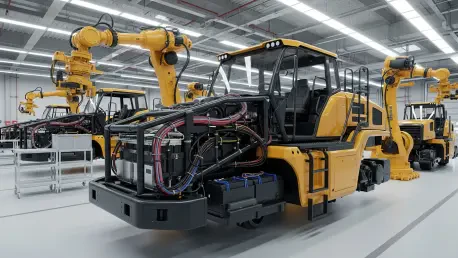

The global industrial landscape is currently navigating a profound transformation where traditional mechanical engineering meets high-speed digital infrastructure and automated systems. This evolution is defined by the emergence of “connected equipment,” which allows fleet operators to harness real-time telemetry data to optimize fuel efficiency and predictive maintenance schedules. Such technological leaps are occurring alongside a rigorous global push for clean energy and stringent emissions standards, forcing a massive replacement cycle for aging diesel-powered units. While these shifts require substantial capital expenditure, they have created a long-term revenue potential that has redefined the sector’s valuation. As heavy machinery companies transition toward electric and autonomous platforms, they are becoming less like simple manufacturers and more like high-tech solution providers. This pivot is essential for navigating a marketplace that increasingly demands both sustainability and performance. The synergy between hardware and software is no longer optional but a core requirement for any firm looking to survive the current innovation cycle.
Resilience and Market Leadership in the Industrial Sector
Strategic Wins and Dominance of Industry Titans
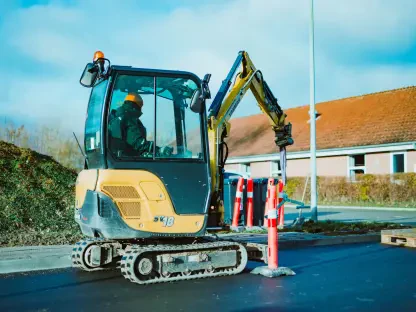
Caterpillar continues to solidify its position as the preeminent force in the global construction and mining equipment market, delivering a performance that many analysts found staggering during the opening months. The company reported a massive $17.42 billion in revenue, representing a twenty-two percent year-over-year increase that far surpassed initial Wall Street projections. This success was not merely a byproduct of favorable market conditions but rather a result of disciplined execution across its diverse portfolio of excavators, dozers, and mining trucks. Demand from the mining sector, specifically for materials critical to the battery supply chain, provided a significant tailwind that Caterpillar was uniquely positioned to capture with its new line of electric-drive haulers. Investors responded to these figures with notable enthusiasm, driving the stock price up significantly as the company reinforced its reputation for operational consistency. This growth demonstrates how established leaders can utilize their scale to squeeze efficiency out of every production cycle.
Beyond the traditional heavyweights, Douglas Dynamics emerged as a compelling example of how specialized equipment manufacturers can thrive through strategic diversification. Originally recognized primarily for its snowplow manufacturing, the company has successfully transitioned into a broader leadership role within the ice management and work truck attachment space. During the first quarter, Douglas Dynamics reported the strongest overall results among its peer group, characterized by a nearly twenty percent jump in revenue and a subsequent hike in its full-year guidance. This dual achievement of exceeding earnings estimates while raising future expectations signaled to the market that the company possesses significant pricing power and market share dominance. By expanding its product lineup to include comprehensive ice control solutions, it has effectively insulated itself from the seasonal fluctuations that once defined its business model. This strategic pivot illustrates the importance of innovation even in niche segments of the modern economy.
Identifying Growth Barriers and Future Strategic Priorities
While industry leaders celebrated substantial gains, several firms encountered structural headwinds that prevented them from fully capitalizing on the current infrastructure boom. Lindsay, for instance, faced significant challenges that resulted in declining revenue and a failure to meet investor expectations regarding its core irrigation and infrastructure segments. Other manufacturers, such as Terex and Astec, reported impressive top-line growth figures but struggled immensely to translate those gains into bottom-line profits for their shareholders. This discrepancy highlights a growing concern within the sector: the difficulty of managing rapidly fluctuating material costs and internal efficiency barriers in a high-demand environment. As steel prices and energy costs remain volatile, the ability to maintain healthy operating margins has become the primary differentiator between successful firms and those struggling to keep pace. Managing these complex logistics requires a level of administrative and operational precision that many companies are still perfecting.
Stakeholders in the heavy machinery sector recognized that the path forward required a dual focus on technological integration and supply chain resilience. Manufacturers that invested heavily in electrification and autonomous operation platforms positioned themselves to meet the strict regulatory requirements of the 2026 to 2028 period. It became clear that simply producing robust iron was no longer sufficient; the equipment needed to be part of a larger, data-driven ecosystem. Moving forward, firms must prioritize the standardization of digital interfaces to ensure cross-brand fleet compatibility, which remains a primary demand from end-users in the construction and mining sectors. Additionally, the shift toward modularity will reduce the impact of localized component shortages, ensuring that production lines remained active during global trade disruptions. Ultimately, the industry’s long-term health will depend on its ability to offer “Equipment-as-a-Service” models that provide consistent value beyond the initial point of sale.