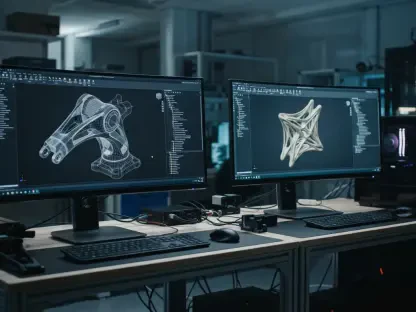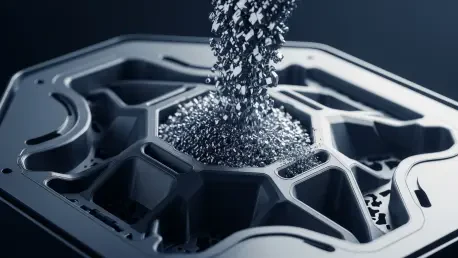

Modern combat scenarios have shifted dramatically, necessitating defensive structures that move far beyond the static, heavy steel plates of the previous generation to provide agility and safety. The traditional approach to vehicle protection often relied on adding thicker, heavier armor plating, which inevitably compromised the maneuverability and speed of security vehicles in critical environments. However, the emergence of advanced additive manufacturing is fundamentally altering this paradigm by allowing engineers to create protective components that were previously impossible to fabricate through cutting or welding. By leveraging specialized steel powders and sophisticated 3D printing techniques, defense firms are now able to prioritize complex, organic geometries that offer superior ballistic resistance while simultaneously reducing overall weight. This technological leap represents a departure from standard protection methods, as the industry begins to embrace a more nuanced, data-driven approach to structural integrity and tactical survival.
Technical Innovation: Material Science and Performance
Additive Manufacturing: The Shift to Metal Powder
The core of this material transition is centered on the development of specialized steel powders like Armox 500 AM, which stands as the first protection-grade powder designed specifically for the additive manufacturing industry. This material enables a process known as Design for Additive Manufacturing, where the primary focus is on the geometry of the component rather than the inherent thickness of the base metal. In conventional manufacturing, engineers are often restricted by the physical limitations of milling machines and welding torches, which generally favor flat or simple curved surfaces. With metal powders, however, the design envelope expands to include internal lattice structures and varying densities that can dissipate energy more effectively than a solid block. This shift ensures that every gram of steel is placed exactly where it is needed most, maximizing the ballistic efficiency of every square inch. As a result, components are not just lighter but are also inherently stronger.
Building on this material foundation, the ability to print steel components layer by layer allows for the integration of multiple functions into a single, unified piece of hardware. This integration eliminates the need for complex assembly processes that often introduce vulnerabilities into an armored system’s structure. When dealing with high-velocity projectiles, even the smallest gap or weak weld can lead to catastrophic failure, making the monolithic nature of 3D-printed parts a significant advantage for vehicle crew safety. Furthermore, the specialized steel powder maintains its ballistic properties throughout the printing process, ensuring that the finished part meets rigorous military and civilian protection standards. This level of consistency is difficult to achieve with traditional methods when working with complex shapes that require extensive heating and cooling cycles. By standardizing the use of these advanced powders, manufacturers can now produce reliable armor on a much larger scale than was possible.
Design Breakthroughs: The Hollow Gimbal System
One of the most significant breakthroughs in this field is the redesign of the traditional gunport gimbal, a critical component that allows occupants to return fire while remaining under protection. Traditionally, these units were machined from solid steel billets, resulting in heavy, cumbersome spheres that were difficult to maneuver and offered limited secondary protection. The 3D-printed alternative, however, features a revolutionary hollow internal geometry designed specifically to act as a ballistic trap for incoming rounds. If a projectile manages to enter the port, the internal “ball” mechanism is engineered to catch and contain the energy of the impact, preventing the round from penetrating the vehicle cabin. This secondary safety layer provides an unprecedented level of security for personnel operating in high-threat environments where fire-fights are often fluid and unpredictable. By utilizing the freedom of design offered by additive manufacturing, engineers have turned a simple pivot point into a life-saving mechanism.
This hollow design does more than just trap projectiles; it also significantly reduces the total mass of the unit, with early models showing a weight reduction of approximately thirty percent. In the world of armored vehicle design, every pound saved translates directly into better fuel efficiency, reduced wear on the suspension system, and improved overall vehicle handling. For security forces operating in urban environments or off-road conditions, the ability to maintain agility without sacrificing ballistic performance is often the difference between success and failure. The gimbal’s reduced weight also makes it much easier for the operator to manipulate the weapon system from inside the vehicle, allowing for faster response times and greater precision. This improvement in ergonomics is a direct result of moving away from the “bigger is better” philosophy of traditional armor and toward a focus on smart, geometry-driven engineering. As these 3D-printed gimbals become more common, they will likely become standard on most armored platforms.
Strategic Implementation: Future Scaling and Standards
The integration of 3D-printed components into armored vehicle defense marked a pivotal shift in how security forces approached tactical protection and vehicle performance. Industry leaders recognized that the limitations of traditional manufacturing were no longer acceptable in an era where speed and precision defined the modern battlefield. As companies moved to adopt standardized additive manufacturing processes, they successfully reduced vehicle weight while simultaneously enhancing the safety features of critical internal systems. This progress paved the way for more actionable solutions, such as the modular replacement of damaged components in remote field locations using portable printing units. These insights provided a clear roadmap for the next decade of defense innovation, ensuring that manufacturers remained ahead of emerging threats through smarter engineering practices and a commitment to maintaining high ballistic standards across diverse mobile platforms.
Strategic expansion into the global security market required the democratization of these manufacturing techniques for use in everyday protective fleets and civilian-to-military vehicle conversions. It was determined that the most effective path forward involved the mass production of specialized metal powders to satisfy the rising demand for lightweight armor in various logistical sectors. By 2028, the industry established a framework where bespoke protective housings for sensitive radar and camera systems became the new global benchmark for vehicle survivability. This transition allowed for the rapid up-armoring of standard transport vehicles, ensuring that high-value assets remained protected in increasingly volatile environments. The successful deployment of these systems validated the long-term viability of additive technology as a cornerstone of modern defense strategy, ultimately shifting the focus of military procurement toward flexible, geometry-based protection solutions.