
The transformation of the United Arab Emirates from a global energy supplier into an advanced industrial powerhouse represents a fundamental shift in how resource-rich nations approach long-term economic stability and technological independence. Instead of simply exporting crude oil and natural gas to international markets, the country is now aggressively reinvesting its capital into localized manufacturing frameworks that turn raw feedstocks into high-value specialized products. This sovereign industrial strategy is designed to insulate the domestic economy from the unpredictable volatility of global supply chains while creating a self-sustaining ecosystem that supports everything from infrastructure to aerospace. By prioritizing the development of complex chemical hubs and advanced materials research facilities, the state is effectively laying the groundwork for a future where national security is defined by industrial self-sufficiency. This move signifies a departure from the traditional rentier model toward a diverse, high-tech manufacturing economy.
Scaling Downstream Integration Through Chemical Manufacturing
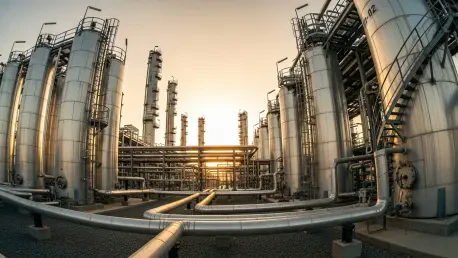
Central to this industrial evolution is the massive expansion of the Ta’ziz chemical hub in Al Ruwais Industrial City, a project that has recently gained significant momentum through a massive ten billion dollar partnership with Alpha Dhabi Holding. This joint venture between ADNOC and ADQ is not merely an incremental upgrade but a structural overhaul of the nation’s downstream capabilities, aiming to produce a wide array of industrial chemicals that were previously imported. By targeting a total production capacity of nearly five million tons per annum by 2028, the facility is positioning itself as a cornerstone of the regional economy. The recent finalization of over twenty-eight billion dollars in long-term sales and feedstock agreements underscores the global confidence in this localized approach. This scale of investment demonstrates a commitment to building a chemical infrastructure that can compete with established global hubs while securing the raw materials necessary for domestic growth.
The specific focus of this expansion involves the production of fourteen additional industrial chemicals, including styrene, polystyrene, and linear alpha-olefins, which are vital for several high-growth sectors. These materials serve as the building blocks for the automotive, packaging, and construction industries, allowing the UAE to create a vertically integrated supply chain that starts at the gas well and ends with a finished industrial product. By localizing the production of epoxy resins and other specialized polymers, the nation reduces its reliance on foreign suppliers and minimizes the logistical risks that have plagued international trade in recent years. Furthermore, the integration of these chemical streams into the local manufacturing base encourages the establishment of satellite industries that can utilize these raw materials on-site. This approach effectively converts natural gas into a diversified portfolio of high-margin assets, ensuring that the economic value remains within the country’s borders.
Advancing Materials Science with Graphene Production
While the expansion of bulk chemicals provides the foundation for growth, the UAE is also venturing into the frontier of materials science through the establishment of the Sharjah Graphene Park. This ambitious project, spearheaded by a memorandum of understanding between Dana Gas and Levidian, aims to utilize specialized microwave plasma technology to transform methane into two highly valuable outputs: clean hydrogen and solid graphene. The implementation of this “Loop” technology represents a significant leap forward in the monetization of underutilized gas resources, offering a way to generate industrial value while simultaneously addressing decarbonization goals. With initial investments projected to exceed fifty million dollars, the park is designed to function as a regional supply base for graphene, a material that is increasingly critical for the next generation of energy storage solutions and high-performance polymers. This facility will eventually transition from producing the material to manufacturing the proprietary technology itself.
The strategic importance of graphene cannot be overstated, as its unique physical properties allow for significant advancements in sectors ranging from electronics to aerospace engineering. By creating a domestic source for this “wonder material,” the Sharjah Graphene Park enables local manufacturers to innovate without the constraints of international scarcity or export controls from other nations. The phased rollout of this project ensures that the necessary infrastructure is established first, followed by a scaling of production that can meet both domestic and international demand. This move into advanced materials signifies a shift from traditional manufacturing toward high-value, research-intensive industries that define modern economic power. Moreover, the production of hydrogen as a byproduct aligns with the broader national objective of transitioning toward cleaner energy sources while maintaining industrial productivity. This dual-output model maximizes the efficiency of existing gas assets, turning them into a springboard for cutting-edge technological development.
Securing Economic Resilience through Localized Supply Chains
The synthesis of these chemical and material initiatives formed a comprehensive strategy that effectively decoupled the national industrial growth from the whims of international supply chain fluctuations. By focusing on import substitution and the monetization of downstream gas streams, the government successfully insulated the broader economy from the inflationary pressures often associated with imported industrial components. This approach allowed for the creation of a more resilient domestic market, where local manufacturers enjoyed stable access to the essential inputs required for large-scale infrastructure projects and high-tech assembly lines. The integration of advanced manufacturing hubs like Ta’ziz and the specialized research capabilities in Sharjah created a synergistic effect that attracted further international investment and expertise. These developments moved the nation beyond the role of a simple energy provider, establishing it as a critical node in the global manufacturing network. The focus remained on ensuring that every cubic foot of gas contributed to localized industrial output.
Stakeholders recognized that the path to sovereign power required a relentless focus on both physical infrastructure and intellectual property, leading to the rapid adoption of localized technology production. This shift was characterized by the successful transition from importing hardware to manufacturing it domestically, which served as a blueprint for other resource-dependent nations seeking to diversify. The implementation of advanced plasma technologies and large-scale chemical processing plants provided the necessary evidence that economic complexity could be achieved through strategic planning and targeted capital allocation. Moving forward, the focus shifted toward expanding these capabilities into emerging fields such as biotechnology and advanced robotics, ensuring that the industrial base remained adaptable to future shifts in the global economy. By prioritizing the creation of a self-contained industrial ecosystem, the leadership established a framework that guaranteed long-term economic security and technological relevance. These actions finalized the move toward a sovereign industrial power that prioritized resilience above all else.