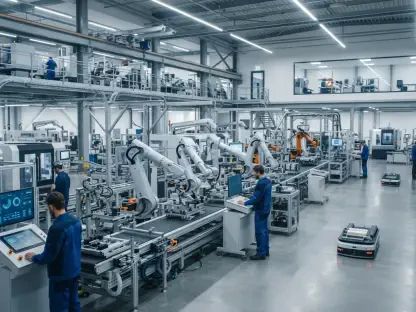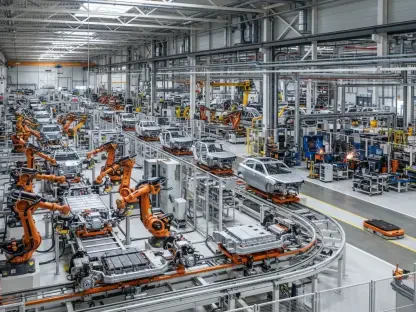

The rapid evolution of autonomous systems has transformed the modern industrial landscape from a collection of manual workflows into a highly synchronized network of mobile robotic solutions. Between 2018 and the current year, annual shipments of these units increased dramatically, growing from 30,000 to over 200,000 units. This rapid expansion, characterized by a 32% compound annual growth rate, has shown few signs of deceleration, with industry projections suggesting that half a million units will be shipped annually by the end of the current decade. Historically, manufacturers from China dominated the landscape, but shifting economic conditions and intense domestic competition recently forced a dramatic change in their corporate strategy. These vendors pivoted toward international markets, particularly the United States, to maintain their growth trajectories. By 2025, the presence of Chinese-made mobile robots in the American market surged to 36%, representing a massive leap from the 1% market share recorded just seven years prior.
The Federal Communications Commission’s Regulatory Pivot
National Security and the Covered List
The influx of foreign technology prompted the United States government to integrate trade and security policies to protect the national supply chain from potential vulnerabilities. The primary mechanism for this intervention is the Federal Communications Commission’s “Covered List,” which identifies specific equipment deemed an unacceptable risk to national security. Following a precedent established in 2025 involving foreign-produced drones, the Commission expanded these restrictions in July 2026 to include “advanced robotic devices” and “foreign-produced connected power inverters.” This shift represents a broader effort to secure critical infrastructure from data breaches or unauthorized remote access. By placing mobile robotics under the same level of scrutiny as telecommunications equipment, regulators signaled that autonomous movement and data harvesting are now viewed as high-stakes security concerns. This policy change has fundamentally altered how international robotics companies approach the American domestic market.
The implementation of these rules effectively standardizes how the government evaluates the risk profiles of autonomous hardware entering the domestic workforce. Rather than focusing solely on the brand name, the FCC developed a rubric based on the capabilities of the hardware and its potential for network exploitation. This move was necessitated by the increasing complexity of robotic systems that rely on cloud-based processing and real-time data transmission to navigate complex warehouse environments. Consequently, the regulation acts as a gatekeeper, ensuring that any device capable of mapping sensitive internal facilities meets stringent security requirements. Industry experts noted that this transition marks a departure from traditional trade tariffs toward a more sophisticated model of technological containment. For global manufacturers, this means that success in the United States now depends as much on cybersecurity compliance as it does on mechanical reliability or price competitiveness.
Defining Technical Boundaries for Robotic Equipment
The ruling established a specific technical framework to determine which machines fall under these new restrictions to ensure clarity for manufacturers and end-users. A device is classified as an “advanced robotic device” if it is a ground-based mobile unit weighing over 4.4 pounds, possesses network speeds of at least 200 kbps, and uses software for navigation or data collection. This definition effectively covers the vast majority of autonomous mobile robots and automated guided vehicles used in modern logistics and material handling. By setting clear weight and speed thresholds, the Commission avoided over-regulating smaller, less capable hobbyist devices while maintaining a firm grip on industrial-grade machinery. These criteria were designed to capture any equipment capable of transporting significant payloads or transmitting high-resolution environmental data back to foreign servers, which remains a primary concern for the Department of Commerce.
While the new rules cast a wide net across the mobile sector, the FCC provided specific exemptions for stationary technology to avoid over-regulating the entire automation industry. Fixed industrial robot arms, such as SCARA, delta, and articulating robots, remain exempt from these specific requirements if they are intended for medical or industrial use within a localized environment. Additionally, the mandate does not apply to consumer vehicles, underwater drones, or mobility devices already regulated by the FDA, such as advanced motorized wheelchairs. This distinction highlights the government’s focus on mobile, connected platforms that operate autonomously in shared workspaces or critical logistics hubs. By carving out these exceptions, the regulatory body ensured that essential manufacturing processes and healthcare services would not be unnecessarily disrupted by the new security protocols. However, any stationary device that gains mobility features in future iterations will likely face immediate reassessment.
Navigating the Impact on Global Industry Stakeholders
Operational Hurdles for Current and Future Fleets
The immediate effect of the ruling depends largely on the current status of a vendor’s equipment and its existing certification within the American market. For companies that already have authorized robots deployed in domestic warehouses, the risk of an immediate operational shutdown is relatively low. The FCC established a grace period lasting until January 2029, allowing these existing models to receive essential firmware and software updates, including critical security patches. This provision was vital for maintaining the stability of current logistics operations, as it prevents a sudden technological vacuum in the supply chain. However, this window of time also serves as a countdown for facility managers to begin evaluating alternative solutions or ensuring that their current vendors can achieve long-term compliance. The pressure is now on operators to conduct thorough audits of their fleets to identify which units will become obsolete once the grace period officially expires.
The outlook for future deployments is much more challenging due to the emergence of “Conditional Approval” requirements for equipment from restricted regions. To bypass the restrictions on the Covered List, vendors must now seek specific authorization from the Department of War, a process currently defined by a significant lack of transparency. There are no established timelines or clear criteria for success, making it difficult for foreign manufacturers to plan long-term hardware refreshes or introduce next-generation models to the United States. This uncertainty has created a chilling effect on new procurement contracts, as American companies are hesitant to invest in technology that might not receive the necessary permits. Consequently, the burden of proof has shifted entirely to the manufacturers, who must now demonstrate that their data architectures are completely isolated from foreign influence. This administrative barrier acts as a significant deterrent for companies that cannot provide full visibility into their software source code.
Strategic Adaptation and Supply Chain Resilience
The ruling created several significant grey areas that are causing concern for system integrators and warehouse operators across the country. For instance, it remains unclear how much a device must be modified before it is considered a “new model” requiring a fresh round of security authorization. Furthermore, the “domestic end product” test leaves uncertainty regarding robots assembled in neutral countries like Mexico or Vietnam that still rely heavily on Chinese-made sensors or battery packs. These complexities forced companies to reconsider their global sourcing strategies, as a single restricted component could potentially disqualify an entire robotic platform from the American market. The ambiguity surrounding these definitions led to a surge in legal and technical consultations as firms scrambled to interpret the finer points of the mandate. This climate of uncertainty pushed many organizations to adopt a more conservative approach to technology adoption, prioritizing long-term compliance over immediate cost efficiency.
Industry leaders ultimately moved toward a strategy of regulatory resilience to mitigate the risks associated with the new FCC mandates. Decision-makers prioritized the selection of vendors who demonstrated a clear pathway through the security review process and offered transparent documentation regarding component sourcing. This transition encouraged manufacturers to accelerate the localization of their supply chains, moving assembly and critical sensor production away from restricted regions to ensure commercial viability in the North American sector. Organizations also invested heavily in secondary security audits to verify that their existing fleets did not inadvertently violate the updated connectivity standards. By shifting the focus from short-term cost savings to long-term operational stability, the market successfully adapted to the more stringent regulatory climate. These actions provided a blueprint for future infrastructure projects, ensuring that the integration of mobile robotics remained a secure and sustainable component of the global logistics network.