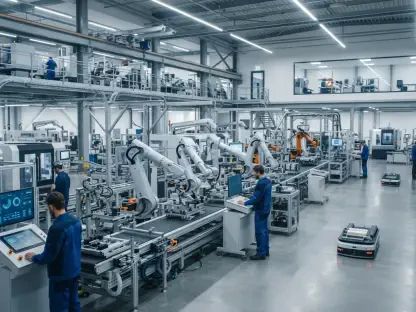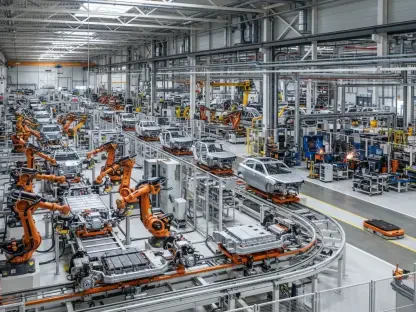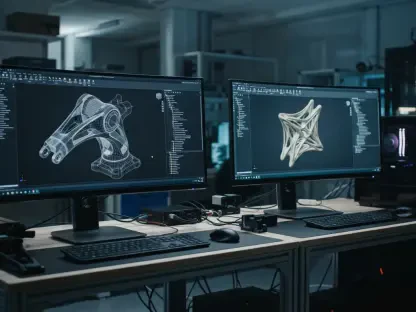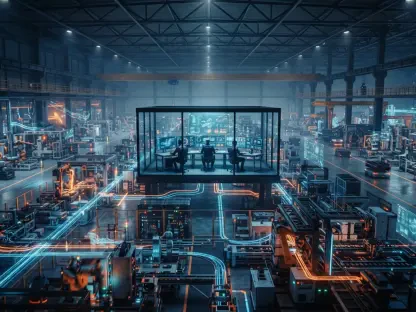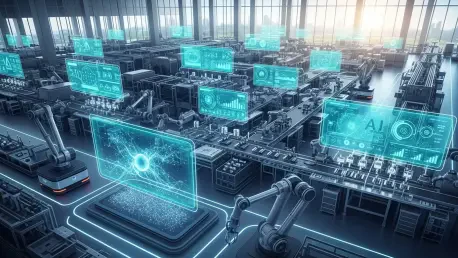

The integration of generative artificial intelligence into the modern industrial ecosystem has shifted from a theoretical experiment to a foundational cognitive layer that dictates the rhythm of global production. Rather than merely reacting to historical datasets, current systems are actively synthesizing original content, ranging from the rapid generation of optimized part designs to the real-time recalibration of complex shop floor schedules. This cognitive advancement allows manufacturers to approach production with a high degree of foresight, moving beyond the rigid boundaries of traditional automation into a realm of creative problem-solving. By utilizing massive datasets to simulate and resolve production bottlenecks before they manifest, factories are achieving a level of autonomy that was once confined to science fiction. This era marks the definitive move from Industry 4.0 to Industry 5.0, where human-machine collaboration is defined by imaginative adaptability.
Economic Projections and Environmental Stewardship
Financial Growth: Industrial Market Scaling
The financial landscape of smart manufacturing is undergoing a dramatic expansion, with market valuations reflecting the indispensable nature of generative tools in the current industrial sector. While early adoption phases saw modest investments, the sector is now witnessing an explosion in capital allocation as leaders recognize that AI-driven agility is a prerequisite for survival. From the current benchmarks established in 2026, the industrial AI market is on a trajectory to exceed $5 billion by 2034, driven by a compound annual growth rate that underscores a global shift in operational priorities. This growth is not merely a reflection of increased software licensing but represents a deeper structural change in how companies allocate resources toward intellectual capital and digital infrastructure. As competitive pressures mount, the ability to rapidly iterate production processes through generative models has become the primary differentiator for market leaders.
Resource Optimization: Achieving Sustainability Goals
Beyond the immediate fiscal benefits, generative AI serves as a critical instrument for achieving ambitious global sustainability goals and practicing responsible environmental stewardship. These systems are uniquely capable of identifying microscopic inefficiencies in energy consumption and material allocation that traditional human-led analysis often overlooks. By processing thousands of variables simultaneously, AI models can propose alternative manufacturing pathways that significantly reduce the carbon footprint of individual factories without compromising on output quality. This precision allows organizations to satisfy increasingly stringent green regulations while simultaneously lowering their overhead costs through the drastic reduction of physical waste. The optimization of inventory levels also ensures that excess materials are kept to an absolute minimum, aligning industrial throughput with actual consumption patterns. The transition toward a greener manufacturing model is being fueled by the predictive power of generative technologies.
Leading Innovators in the Industrial AI Space
Enterprise Software: Siemens and SAP Leadership
Prominent enterprise software providers such as Siemens and SAP are leading the charge by embedding generative capabilities directly into the core of their industrial applications. Siemens has successfully deployed specialized “Copilots” that act as a bridge between high-level engineering designs and the physical execution on the factory floor, allowing for a seamless flow of data-driven instructions. These tools translate abstract concepts into tangible manufacturing steps, reducing the time required to bring a new product from the drafting board to the assembly line. On the enterprise management side, SAP utilizes intelligent assistants to oversee digital supply chains, ensuring that production remains perfectly synchronized with fluctuating global demand in real time. By integrating AI into the logistics and procurement layers, these platforms prevent the costly disruptions that were common in the previous decade. This synergy between engineering precision and supply chain intelligence is redefining modern production cadence.
Governance Frameworks: Microsoft and IBM Solutions
Technology giants such as Microsoft and IBM provide the foundational cloud infrastructure and rigorous governance frameworks necessary for the large-scale deployment of these advanced models. Microsoft leverages its Azure platform to offer sophisticated tools for visual inspection and predictive maintenance, effectively turning static diagnostic reports into dynamic and actionable insights for shop floor workers. This democratization of data ensures that every level of the organization can contribute to operational improvements based on real-time feedback. Simultaneously, IBM focuses on providing the security and customization required to move generative AI out of the laboratory and into the heart of mission-critical factory operations. Their specialized AI suites prioritize data privacy and regulatory compliance, addressing the primary concerns of manufacturers who deal with sensitive intellectual property. By offering scalable and secure environments, these infrastructure providers enable companies to transition from pilot projects to full implementations.
Virtualization: NVIDIA and Dassault Systèmes Advances
The concept of the digital twin has reached a new level of sophistication through the innovations of companies like NVIDIA and Dassault Systèmes, who are revolutionizing factory planning. NVIDIA’s specialized platforms facilitate the creation of high-fidelity virtual replicas where AI-generated production scenarios can be rigorously tested in a risk-free environment. This allows engineers to simulate various layouts, equipment changes, and workflow adjustments before any physical resources are committed to the project. Dassault Systèmes complements this virtualization by incorporating physics-based simulations, ensuring that every AI-generated design adheres strictly to real-world physical laws and mechanical constraints. This integration prevents the production of designs that, while theoretically efficient, might fail under the stresses of physical operation. By merging generative creativity with engineering reality, these tools allow manufacturers to experiment with radical new production methods without the fear of downtime.
Connectivity: PTC and Oracle Integration
Seamless connectivity and data integrity are maintained by specialists such as PTC and Oracle, who focus on the fluid movement of information across the entire manufacturing lifecycle. PTC utilizes advanced Internet of Things platforms to transform raw sensor data from the machinery into creative solutions for enhancing production efficiency. This bidirectional flow of information ensures that the generative models are always working with the most current data, allowing for adjustments that are both timely and accurate. Meanwhile, Oracle integrates generative capabilities into its suite of cloud applications to provide managers with real-time recommendations for improving bottom-line performance. These recommendations are based on a holistic view of the company’s operations, from warehouse logistics to final assembly. By providing a unified data environment, these providers eliminate the silos that traditionally hindered cross-departmental collaboration, ensuring that every stakeholder has access to high-quality insights.
Strategic Deployment: Accenture Global Scaling
Accenture works with regional governments and multinational corporations to deploy secure AI clouds that allow for the rapid scaling of production processes across diverse geographic locations. Their focus is on creating a standardized digital backbone that supports consistency in quality and efficiency regardless of where a factory is located. By leveraging high-level consulting expertise, they guide organizations through the complex cultural and technical shifts required to move from localized pilot programs to a global manufacturing standard. This strategic oversight ensures that the implementation of generative tools is not just a technological upgrade but a complete organizational transformation. They emphasize the importance of data sovereignty and local compliance, ensuring that as AI scales, it remains within the boundaries of international legal frameworks. This comprehensive approach helps companies mitigate the risks of rapid expansion while maximizing the operational benefits of a unified manufacturing network.
Edge Computing: Rockwell Automation Performance
Rockwell Automation specializes in the “industrial edge,” where small, specialized AI models are deployed directly onto the hardware that controls the assembly lines. This localized intelligence provides real-time troubleshooting and automated code assistance right at the point of action, significantly reducing the latency associated with cloud-only processing. By placing the cognitive power at the machine level, they enable devices to make split-second decisions that prevent mechanical failure or product defects without waiting for a response from a remote server. This capability is essential for high-speed manufacturing environments where every millisecond counts toward maintaining the desired throughput. Furthermore, their focus on edge computing allows for greater operational resilience, as individual machines can continue to function intelligently even if there is a temporary disruption in broader network connectivity. This decentralization of intelligence represents a fundamental shift in how floor operations are managed.
The Future Landscape of Autonomous Factories
Synthesizing Innovation: The Creative Layer
The collective movement toward a cognitive manufacturing environment suggested that a “creative layer” was now vital for any modern factory to function effectively. Success by 2026 depended on strong partnerships between hardware and software providers and the ability to move AI from isolated pilot programs to full-floor operations. Ultimately, those who embraced these generative tools were not just automating tasks; they were completely reshaping the future of production to be more creative, efficient, and sustainable. This transition period proved that the industrial sector could move beyond static automation into a more fluid and responsive model. The integration of high-level reasoning with physical execution allowed for a level of precision that previously seemed unattainable. It was clear that the adoption of these tools was the primary driver of industrial excellence. These advancements laid the groundwork for a more resilient global economy that was capable of adapting to sudden shifts.
Future Scalability: Data Governance and Resilience
Future considerations for industrial leaders focused on the necessity of establishing a robust and transparent data governance framework to maintain the integrity of generative models. It became evident that as these systems scaled, the risk of data poisoning or model drift required constant monitoring and proactive adjustment by human oversight teams. Moving forward, the industry prioritized the development of standardized protocols for human-machine collaboration to ensure that workers could safely and effectively interact with increasingly autonomous systems. Actionable steps involved investing in specialized training programs to bridge the gap between traditional mechanical engineering and modern data science. Furthermore, the selection of vendor-neutral platforms emerged as a key strategy for avoiding locked-in ecosystems that might limit future flexibility. By addressing these foundational challenges, the manufacturing sector ensured that the benefits of cognitive automation remained accessible and sustainable.