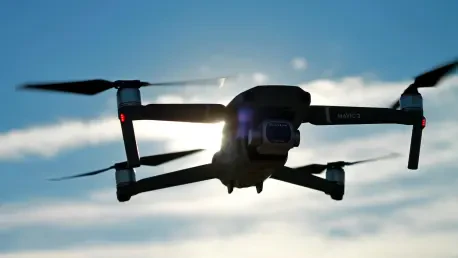

The sky over India’s varied terrain is no longer just a canvas for weather patterns but has become the primary theater for a sophisticated technological revolution led by domestic innovators. What happens when a leader in agricultural drone technology decides to pivot toward the front lines of national security? The launch of iQuantara by SPH Aviation is not merely the introduction of a new brand; it represents a fundamental shift in how India approaches domestic military hardware. By transitioning from civilian applications to high-endurance, military-grade systems, this move signals that the era of relying solely on foreign aerospace giants is drawing to a close.
This strategic evolution comes at a time when the boundaries between civilian and military technology are increasingly blurred. SPH Aviation, previously known for enhancing crop yields through precision spraying, has recognized that the same technical scaffolding—stability, endurance, and remote sensing—forms the backbone of modern defense operations. The introduction of iQuantara serves as a case study in technological agility, proving that established domestic players can successfully repurpose their expertise to meet the stringent demands of the armed forces.
The Urgent Mandate for Indigenous Defense Innovation
Modern warfare and border management have evolved into data-driven contests where unmanned aerial systems (UAS) serve as the primary eyes and ears of the armed forces. India currently faces a pressing need to modernize its defense infrastructure while adhering to the “Atmanirbhar Bharat” initiative for self-reliance. Relying on international supply chains for critical defense technology creates vulnerabilities in data security and logistical support. iQuantara enters the market at a critical juncture, aiming to fill the gap with homegrown solutions that ensure mission-critical data remains within national borders.
The risks associated with “off-the-shelf” foreign components are no longer theoretical; they are tangible threats to national sovereignty. When proprietary code and communication protocols originate outside the country, the integrity of sensitive intelligence is potentially compromised. By developing a vertically integrated ecosystem, the brand ensures that every byte of data transmitted between a drone and its ground control station is shielded by domestic encryption. This commitment to security is not just a feature but a foundational requirement for a nation seeking to maintain an edge in an increasingly volatile regional landscape.
Scaling the Frontline: Production Benchmarks and Mission Capabilities
The ambition behind iQuantara is rooted in industrial-scale manufacturing rather than small-scale prototyping. With a roadmap to produce over 500 drones in the first year and a target capacity of 1,000 units annually, the brand is positioning itself to handle large-scale government procurement. These systems are being engineered for diverse high-priority applications, including high-endurance surveillance for real-time intelligence and robust monitoring solutions for India’s varied geographical boundaries. Beyond simple reconnaissance, the brand is investing in swarm-based mission profiles—the next frontier in autonomous combat—and GIS mapping for critical logistics in rugged terrains.
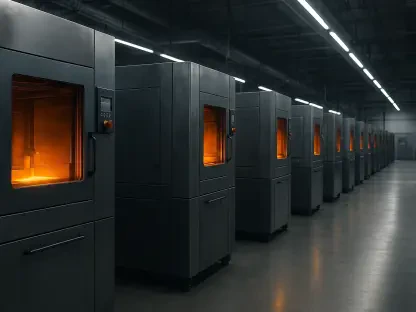
Moving from boutique engineering to high-volume output requires a complete overhaul of traditional manufacturing philosophies. The company has streamlined its assembly lines to ensure that quantity does not come at the cost of precision. Each unit must withstand extreme thermal fluctuations and high-altitude pressures, common in the Himalayan border regions. By achieving this level of scale, the brand intends to lower the cost-per-unit for the Indian Ministry of Defense, making it feasible to deploy vast fleets of autonomous guardians across every sector of the nation’s borders.
Bridging the Gap Between Academic Research and Battlefield Reliability
The credibility of iQuantara is bolstered by a leadership team that combines corporate agility with veteran military perspective. Under the guidance of Lt. Gen (Dr) R K Anand, the brand prioritizes operational utility, ensuring that every drone meets the rigorous demands of soldiers in the field. To maintain a competitive edge in “deep-tech,” the company has established a collaborative ecosystem with various Indian Institutes of Technology (IITs) and specialized defense research agencies. This synergy between academic innovation and military experience ensures that core subsystems, such as secure data exchange protocols and advanced autopiloting, are developed with proprietary intellectual property.
These academic partnerships go beyond simple consultancy; they involve the co-development of next-generation flight algorithms and artificial intelligence modules. While researchers focus on the theoretical limits of autonomous navigation, military veterans provide the reality check of how these systems perform under the stress of electronic warfare. This feedback loop ensures that the technology is not just innovative on paper but resilient in the face of signal jamming and environmental interference.
A Strategic Framework for Localizing Military-Grade Aerospace
iQuantara’s entry into the market provides a blueprint for how private sector players can successfully integrate into the national defense framework. Their strategy involves a significant financial commitment of ₹75 crores over five years, specifically targeted at capturing 15 percent of the domestic defense market through aggressive research and development. This framework prioritizes the development of secure telemetry and remote control interfaces, ensuring that the hardware is not just physically robust but digitally impenetrable. By focusing on the entire lifecycle of the UAV—from initial design to long-term logistical support—the brand sets a standard for how indigenous firms can contribute to a combat-ready India.
The road ahead necessitated a focus on the export potential of Indian defense tech, transforming the nation from a consumer into a provider. Stakeholders recognized that establishing a local supply chain for specialized sensors and carbon-fiber frames reduced lead times for repairs and upgrades. By 2026, the strategy shifted toward building a modular architecture that allowed for rapid hardware swaps in the field. This forward-looking approach ensured that the brand remained relevant as threats evolved, ultimately fostering a self-sustaining ecosystem of aerospace engineering that prioritized national interests above all else.