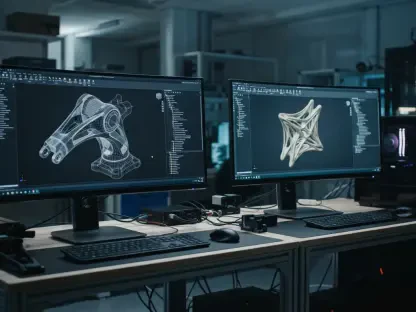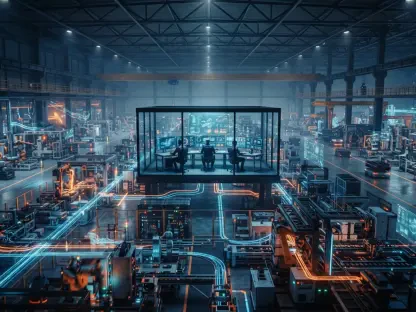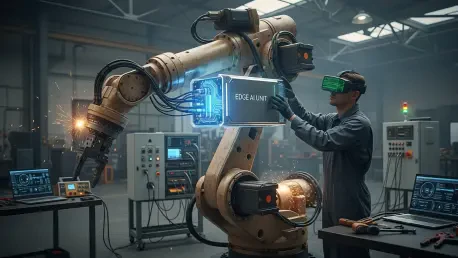

For decades, the industrial sector has accepted a harsh reality: once a machine leaves the showroom floor, its intelligence is frozen in time and its value begins a slow, inevitable slide toward the scrap heap. This linear path from acquisition to obsolescence is being disrupted by Industrial Edge AI Retrofitting, a methodology that treats hardware as a vessel for evolving intelligence rather than a static asset. By decoupling a machine’s physical utility from its cognitive capability, operators are discovering that the most efficient way to modernize a site is not to replace the fleet, but to upgrade its perception.
Evolution and Core Principles of Industrial Edge AI Retrofitting
The transition from traditional asset depreciation to the “Smarter, Not Newer” philosophy represents a fundamental shift in capital expenditure logic. In the past, technical debt was managed through massive replacement cycles that strained budgets and generated significant waste. Today, the emergence of edge computing has allowed for a more granular approach where intelligence is applied as an aftermarket layer. This movement acknowledges that the mechanical frame of a crane or loader often outlives its onboard electronics, creating a gap that retrofitting effectively bridges.
This technology is rooted in the principle of decentralized intelligence, where data is processed locally on the machine rather than in a distant cloud. This is critical for heavy machinery where latency can be a matter of life and death. By integrating powerful processors directly onto existing chassis, companies are transforming legacy hardware into reactive, intelligent agents. This evolution is not just about extending the life of a machine; it is about redefining what that machine is capable of doing in a modern, data-driven environment.
Key Technical Components of Modern Retrofitting Solutions
Edge-Based Machine Vision Systems
Modern edge-based machine vision systems serve as the sensory organs for this transformation, moving beyond simple proximity sensors to complex spatial awareness. These systems utilize neural networks to categorize the environment in real-time, distinguishing between a static pallet and a moving pedestrian with high precision. This capability is crucial in high-density environments like busy warehouses or construction sites where traditional safety measures often fail to account for the nuance of human movement and situational hazards.
Furthermore, these vision systems go beyond safety by providing operational insights that were previously invisible to management. By interpreting the environment, the AI can track load efficiency, identify bottlenecks in traffic flow, and ensure that personnel are following designated safety protocols. This shift from simple obstacle detection to full environmental interpretation allows a retrofitted forklift to act with a level of sophistication that matches or exceeds many new, factory-integrated models.
Non-Disruptive Deployment Architectures
Engineering requirements for successful retrofitting focus heavily on non-disruptive deployment architectures that minimize operational downtime. Unlike factory-integrated solutions that require proprietary ecosystems, modern kits utilize compact form factors and standardized interfaces to achieve installation times of under one hour. This rapid deployment model is essential because it allows site managers to upgrade a single vehicle during a lunch break, effectively bypassing the logistical nightmare of taking entire sections of a fleet offline for extended periods.
Moreover, the hardware used in these deployments is designed to be both low-cost and extremely rugged to withstand the vibrations and temperature extremes of industrial sites. The goal is to provide a “plug-and-play” experience that does not require a specialized team of robotics engineers to maintain. By focusing on ease of integration, manufacturers of these retrofitting kits have lowered the barrier to entry for smaller firms that previously viewed AI as a luxury reserved for the industry giants.
Current Trends and Technological Shifts in 2026
The landscape in 2026 is defined by the maturity of software-defined functionality, which allows older equipment to improve through over-the-air updates. As edge processing becomes more efficient, algorithms that previously required high-end servers can now run on low-power chips mounted directly to the chassis of a forklift. This shift means that a machine’s safety and efficiency metrics can actually improve over time, transforming it from a depreciating tool into an appreciating cognitive asset.
Moreover, we see a move toward federated learning models where insights gained on one site can be used to refine the software across an entire global fleet without compromising data privacy. This collective intelligence ensures that if a crane in one port learns to recognize a new type of safety hazard, that knowledge can be deployed to every other retrofitted crane in the network. This trend is effectively ending the era of the isolated machine, replacing it with an interconnected web of learning industrial assets.
Real-World Applications and Sector Implementations
Sector implementations across logistics and manufacturing demonstrate the versatility of this aftermarket approach, particularly within mixed-age fleets. Rather than requiring a uniform fleet of new vehicles, companies are leveraging AI to bring older cranes and loaders up to the same digital standard as their newest acquisitions. This digital agility allows for a unified safety and data protocol across an entire site, regardless of the individual age of the machinery involved.
In the construction industry, for instance, retrofitted loaders are now capable of navigating complex debris-filled environments while maintaining a safe distance from ground workers. In the logistics sector, automated forklifts that were once limited to rigid paths are now utilizing retrofitted vision systems to navigate dynamically changing warehouse floors. These applications prove that the most immediate path to industrial modernization lies in the existing fleet, providing a bridge to the future without the capital-intensive requirement of total fleet replacement.
Critical Challenges and Implementation Barriers
Despite the progress, technical hurdles regarding processing efficiency and heat dissipation in rugged environments remain significant obstacles. While edge chips have become more powerful, the power draw required for complex real-time video processing can still strain the electrical systems of older, battery-operated machinery. Balancing the need for high-fidelity situational awareness with the energy constraints of a ten-year-old forklift remains a delicate engineering challenge for many developers.
Furthermore, the market must still overcome a long-standing “discard and replace” mentality that favors the familiarity of new hardware over the complexity of software integration. Many organizations still struggle to calculate the ROI of an asset that grows more capable over time, as traditional accounting models are built for depreciation. Ensuring that these AI modules remain reliable as they age alongside the host machinery requires robust lifecycle management and continuous validation of the evolving software models.
Future Outlook and the Shift Toward Appreciating Assets
Looking toward the next few years, industrial equipment is poised to become a collective learning platform where localized data informs global updates. Breakthroughs in autonomous capabilities are expected to emerge from these retrofitted foundations, extending asset lifecycles and significantly reducing the environmental impact of machinery manufacturing. This evolution suggests a future where the value of a machine is determined more by its data processing history and learning capacity than by its physical odometer.
As sustainability becomes a core metric for global enterprise, the ability to keep a machine in service for twenty years instead of ten will be a major competitive advantage. The focus will shift from the raw horsepower of the engine to the refined intelligence of the edge processor. This transition will likely lead to a new secondary market for “AI-ready” used machinery, where the physical durability of the steel is paired with the infinite flexibility of modern software-defined architectures.
Final Assessment of the Retrofitting Landscape
The final assessment of the landscape revealed that the “retrofit and refine” strategy provided a far more resilient return on investment than traditional replacement. This technological shift forced a total reevaluation of asset longevity, proving that intelligence was the ultimate safeguard against obsolescence. Managers who embraced this transition found that their existing infrastructure held far more latent potential than previously realized, allowing them to scale safety and efficiency without the traditional overhead of new hardware procurement.
Moving forward, the primary focus for site managers should be the integration of standardized data layers that allow these retrofitted systems to communicate across different brands and eras of equipment. Establishing a vendor-neutral ecosystem will be the next logical step in ensuring that digital agility remains sustainable. Ultimately, the success of industrial edge AI was not found in building better machines, but in making the existing ones think more clearly about the world around them.