
The silent echo of idle assembly lines across the American Midwest stands in stark contrast to the thunderous demand for munitions that currently strains the global security architecture. As geopolitical conflicts across the globe deplete the nation’s strategic reserves, the Department of Defense has turned its attention once again to the automotive titans that once served as the backbone of American military might. This strategic shift aims to revive the legendary “Arsenal of Democracy,” the industrial miracle of the 1940s when car manufacturers transitioned from civilian vehicles to tanks and aircraft in a matter of months. However, the optimism of this historical parallel faces a complex set of modern challenges that question whether such a pivot remains possible.
The current landscape requires a critical assessment of how the industrial base has evolved over the last several decades. While the spirit of mobilization remains a powerful narrative, the structural realities of contemporary manufacturing present hurdles that were nonexistent during the mid-century era. This analysis explores the feasibility of leveraging automotive giants like General Motors and Ford to bridge the defense inventory gap, examining the fundamental shifts in production philosophy and the technical bottlenecks that define the current manufacturing ecosystem.
From Vertical Integration to Global Specialization: The Historical Shift
To grasp the difficulty of modern mobilization, one must analyze the industrial architecture that empowered the original Arsenal of Democracy. During the Second World War, American manufacturing was defined by high levels of vertical integration. Large-scale producers often controlled the entire life cycle of their products, from the raw materials and machine tools to the final assembly line. This internal control allowed for a remarkable degree of flexibility. A piano manufacturer could pivot to building glider components because the company already possessed the woodworking expertise, the specialized machinery, and a secure, internal supply of lumber.
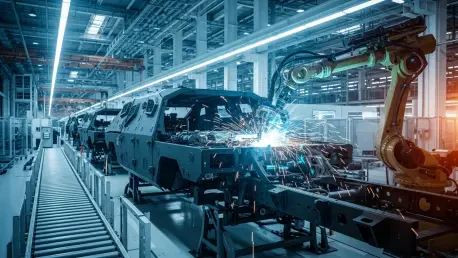
In the decades following that era, the industrial landscape underwent a fundamental transformation driven by the pursuit of cost efficiency and “just-in-time” delivery models. This shift prioritized global specialization over domestic vertical integration, leading to a fragmented industrial base. Modern automakers are no longer monolithic entities that produce every bolt and gear in-house; they have become the central coordinators of vast, multi-tiered global networks. While this model maximizes profits during peacetime, it has dismantled much of the domestic infrastructure required for a rapid industrial pivot during a national emergency.
The Bottleneck Crisis in Modern Manufacturing
The Complexity: Advanced Electronics and Specialty Materials
A primary obstacle in the modern defense transition is the staggering technological gap between historical hardware and contemporary weaponry. A World War II jeep was a masterpiece of mechanical simplicity, easily repaired and reproduced. In contrast, a modern missile or armored vehicle functions as a sophisticated, mobile supercomputer. This technological evolution has made the defense sector entirely dependent on high-end semiconductors, precision optics, and advanced energetics.
The automotive industry has already experienced the fragility of this dependency. Recent global events illustrated how a simple shortage of microchips can paralyze vehicle production worldwide. Within a defense context, these supply chain “choke points” are even more restrictive. Without a reliable domestic source for specialized chemicals or high-tolerance castings for turbine blades—items often produced by a very small number of niche global suppliers—Detroit’s assembly lines cannot contribute to the national defense regardless of their physical size or intentions.
Distinction: Physical Capacity vs. Actual Capability
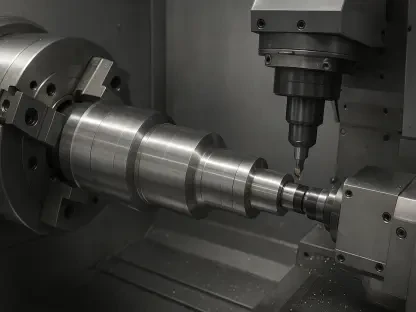
There is a frequent misunderstanding among policymakers who equate empty factory floor space with immediate manufacturing capability. However, true capability is the result of a synchronized ecosystem involving raw materials, specialized tooling, and a reliable network of secondary vendors. Modern automotive assembly lines are highly optimized for high-volume, repetitive tasks within very specific parameters.
Redirecting this existing infrastructure to produce high-performance defense materiel requires an entirely different set of technical assets and upstream support. Without a deep, domestic supply chain for specialized components, a dormant factory is merely a shell. The transition to defense production requires the reconstruction of the entire supporting network, a process that cannot be achieved overnight by simply flipping a switch on an old production line.
Regulatory Barriers: Human Capital and the Administrative Web
The barriers to entering the defense market are not only physical and technical but also administrative and human. Modern defense procurement is governed by an extensive framework of certifications, security protocols, and compliance standards that were largely absent eighty years ago. These requirements are essential for ensuring the reliability of advanced weapons systems, but they also serve as significant friction points that can delay production by years.
Simultaneously, the domestic labor market has changed. The broad industrial workforce of the 20th century has transitioned into a smaller, more specialized pool of technicians. There is currently very little “industrial depth” in the American labor force to absorb a sudden surge in defense demand. Finding workers who possess both the technical skills for precision robotics and the necessary security clearances remains a daunting challenge for any automaker looking to mobilize for national security purposes.
Technological Innovation: The Future of Flexible Production
Despite these systemic challenges, advancements in digital technology provide modern manufacturers with tools that were previously unimaginable. Digital twins and advanced modeling software allow engineers to simulate and modify production processes in a virtual environment before making physical changes to the factory floor. This capability reduces the time and cost associated with retooling and allows for a more efficient transition between civilian and military production models.
Furthermore, additive manufacturing, or 3D printing, offers a potential solution to traditional tooling bottlenecks. By producing small batches of specialized parts on demand, factories can bypass some of the delays associated with the global supply chain. These innovations point toward a future where “cell-based” manufacturing could allow civilian and defense production to coexist within the same facility. However, these gains are often localized and do not solve the broader issue of a lack of domestic raw material processing and specialized component manufacturing.
Strategic Recommendations: A Proactive Industrial Policy
If the American auto industry is to serve as a genuine reserve for the defense sector, the nation must move away from a reactive mindset. Stakeholders should focus on several key pillars to strengthen the industrial base. First, a comprehensive mapping of the entire supply chain is necessary to identify vulnerabilities in the lower tiers of sub-suppliers. Second, targeted investments should be directed toward domestic production of critical items such as semiconductor packaging and specialty energetics.
Additionally, the government must provide sustained demand signaling through long-term purchase agreements. This financial stability encourages private companies to maintain “warm” production lines and excess capacity that can be scaled during a crisis. Finally, streamlining the certification process for non-traditional contractors would ensure that the regulatory groundwork is laid long before a crisis necessitates a full-scale industrial mobilization.
Reimagining the Arsenal: Insights for a New Era
The investigation into the industrial base revealed that the ability to mobilize was no longer a matter of simple factory output but rather a test of supply chain resilience. It was determined that the old model of vertical integration had been replaced by a delicate web of global dependencies that lacked the robustness required for sudden shifts in production. The analysis showed that the complexity of modern technology and the weight of regulatory compliance created lead times that could not be overcome by sheer will or patriotism alone.
Ultimately, the findings suggested that rebuilding the Arsenal of Democracy required a fundamental reinvestment in domestic material sovereignty. Leaders recognized that for the automotive industry to truly bolster national security, the focus had to shift from the final assembly line to the foundational tiers of the manufacturing ecosystem. It was concluded that only by addressing the root causes of supply chain fragmentation could the United States hope to secure its industrial future and maintain its strategic edge in an increasingly volatile global environment.