
Transforming Indian Agriculture Through the Biogas Manure Mandate
The shift toward a circular agricultural economy has reached a critical milestone as India begins integrating renewable energy byproducts directly into its national food security strategy. The Indian Biogas Association (IBA) has recently unveiled a transformative strategic framework designed to overhaul India’s agricultural landscape while addressing pressing fiscal and environmental concerns. At the center of this initiative is a proposal for a mandatory, phased-in blending of Fermented Organic Manure (FOM)—a nutrient-rich byproduct of biogas production—with conventional chemical fertilizers. This move aims to curb the nation’s heavy reliance on imported fertilizers, with the IBA estimating that a 10% blending mandate by 2030 could save the Indian government approximately $2 billion annually. By integrating renewable energy goals with soil health restoration, the mandate seeks to create a self-sustaining circular economy that benefits both the national treasury and the farming community.
Addressing Soil Degradation and the Economic Burden of Imports
The drive toward an organic manure mandate is rooted in the urgent need to reverse the deteriorating state of India’s agricultural land. Decades of intensive chemical fertilizer use have led to a critical decline in Soil Organic Carbon (SOC) levels, which currently hover around an average of 0.4%. Since SOC is a fundamental indicator of soil health—affecting everything from nutrient retention to crop yields—this decline threatens long-term food security. This degradation creates a vicious cycle where farmers must apply increasing amounts of chemicals to achieve the same output, further depleting the natural microbial life of the earth.
Beyond environmental degradation, India’s current agricultural model is tethered to volatile international markets. Relying on imported chemical components leaves the national economy vulnerable to global price fluctuations and supply chain disruptions. Transitioning toward domestically produced FOM is therefore viewed not just as an ecological necessity, but as a vital step toward ensuring national economic security and reducing the subsidy burden on the state. By producing nutrients locally through biogas plants, the country can insulate its farmers from the unpredictable costs of global urea and phosphate markets while simultaneously cleaning up organic waste streams.
A Phased Roadmap: Market Stability and Soil Restoration
Building a Predictable Market: Mandatory Blending
To ensure the manufacturing industry and farmers can adapt without disruption, the IBA has proposed a structured four-year implementation roadmap. The strategy begins with a modest 1% mandatory blending obligation in 2026-27, gradually scaling up to 3% in 2027-28, 5% in 2028-29, and reaching the final 10% target by 2030. These mandates are essential for creating stable demand, providing Public Sector Undertakings (PSUs) and private distributors with the necessary incentives to prioritize organic alternatives over traditional chemical products. A clear regulatory trajectory encourages long-term capital investment in biogas infrastructure and ensures that the supply chain matures in tandem with increasing demand.
Integrating FOM: Existing Policy Frameworks
A cornerstone of the proposal is the formal integration of FOM into India’s existing tapestry of agricultural schemes. The IBA recommends including Fermented Organic Manure in the Nutrient-Based Subsidy (NBS) framework by recognizing organic carbon as a specific nutrient parameter. This adjustment would ensure that organic fertilizers are financially competitive with subsidized chemical options, removing the price barrier that often deters small-scale farmers. Furthermore, the proposal suggests linking FOM utilization with the Soil Health Card (SHC) scheme and the Paramparagat Krishi Vikas Yojana (PKVY). By aligning these programs, the government can provide a unified support system for farmers, making the transition to organic-enriched cultivation both affordable and technically accessible.
Scaling Through SuBiCulP: Regulatory Support
To unify these diverse efforts, the IBA has proposed the “SuBiCulP” (Sustainable Biogas-Organic Fertiliser Based Cultivation Programme). Operating under the slogan “Prosperity through SuBiCulP,” this umbrella initiative aims to link renewable energy production directly to agricultural inputs. While the inclusion of FOM in the Fertiliser Control Order (FCO) provides the legal foundation for this shift, institutional support remains critical. The IBA calls for expanded research and development in collaboration with national research councils to create region-specific protocols. Additionally, establishing district-level supply chains and decentralized testing facilities will be vital to maintaining quality standards and building trust among the rural population.
Innovations and Future Shifts in the Bio-Fertilizer Landscape
As India moves toward this mandate, the industry is likely to see significant technological and regulatory shifts. Innovations in biogas upgrading and nutrient concentration will likely make FOM easier to transport and apply, overcoming current logistical hurdles associated with the bulkiness of organic matter. We can expect a move toward “smart” organic fertilizers tailored to specific soil deficiencies identified through digital mapping and precision agriculture tools. These advancements will allow for targeted application, reducing waste and maximizing the biological impact of the manure on depleted fields.
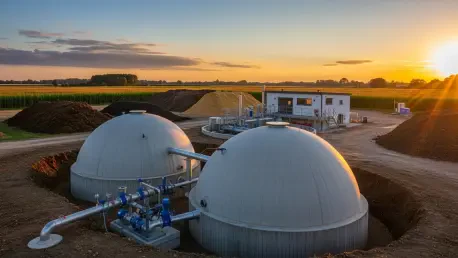
Furthermore, the expansion of Compressed Bio-Gas (CBG) plants under national energy initiatives will provide a steady, decentralized supply of manure across the country. Experts predict that as the organic carbon market matures, carbon credit monetization could provide an additional revenue stream for biogas plant operators and farmers alike. This financial incentive further accelerates the shift away from purely chemical-based farming. As digital platforms begin to track the lifecycle of organic nutrients, the transparency of the supply chain will improve, allowing for better quality control and higher market confidence in bio-fertilizer products.
Strategic Takeaways: Stakeholders and the Agricultural Industry
The proposed mandate offers a clear path forward for various stakeholders within the agricultural and energy sectors. For businesses, the phased roadmap provides a window to invest in FOM processing and distribution infrastructure before the 10% mandate takes full effect. Companies that specialize in logistics and packaging will find new opportunities in the specialized handling of organic enriched products. Farmers and agricultural professionals should begin familiarizing themselves with the integration of organic manure into existing nutrient management plans to take advantage of improved soil resilience and potential subsidies.
To maximize the benefits of this shift, it is recommended that stakeholders advocate for standardized quality certifications and participate in local extension services. Adopting these “best practices” early will ensure that the transition enhances productivity rather than complicating traditional farming workflows. Educational programs will be necessary to demonstrate the long-term cost savings associated with reduced chemical dependency and improved water retention in the soil. Collaborative efforts between biogas producers and fertilizer distributors will be the primary engine for successfully hitting the blending targets set for the coming decade.
Achieving Long-Term Sustainability and Economic Resilience
The Biogas Manure Mandate represented a sophisticated approach to solving two of India’s most persistent challenges: fiscal instability and soil exhaustion. By positioning Fermented Organic Manure as a mainstream agricultural input rather than a mere byproduct, the IBA’s vision fostered a dual-benefit solution that restored the biological integrity of the land while securing a $2 billion annual windfall for the treasury. This initiative functioned as more than a policy shift; it acted as a commitment to climate resilience and domestic self-reliance. As the global community watched, India’s successful implementation of this circular economy model served as a definitive blueprint for sustainable development across the developing world. The integration of energy and agriculture proved that economic growth and environmental restoration were not mutually exclusive goals but rather two sides of the same coin. Final efforts focused on ensuring that the infrastructure was robust enough to handle the scale of production required for a nationwide transition toward a greener future.