
Kwame Zaire brings a wealth of experience in high-stakes manufacturing and production management to our discussion today. Known for his deep understanding of how complex electronics and heavy equipment intersect, he has spent years advocating for the integration of predictive maintenance and rigorous quality standards in heavy industry. In this conversation, we explore the landmark delivery of India’s first indigenous hovercraft, a project that highlights the successful absorption of international technology and the strategic expansion of maritime security capabilities. We delve into the engineering precision required to meet the specific needs of the Coast Guard, the logistical challenges of domestic defense production, and the operational versatility of these advanced air cushion vehicles.
The following interview explores the transition of India’s maritime sector toward self-reliance, examining the technical specifications of the new hovercraft, the strategic importance of its deployment in West Bengal, and the role of international collaboration in fostering local manufacturing expertise.
Building high-performance maritime platforms under a foreign technology license involves complex logistics and engineering hurdles. How does a shipyard manage the intricacies of absorbing technology from a UK pioneer to produce a sophisticated vessel like this Air Cushion Vehicle?
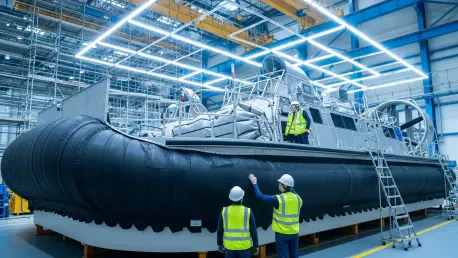
To make a project of this magnitude work, the engineering team must bridge the gap between abstract design documents and the gritty, practical reality of the shop floor. Absorbing a license from a veteran like Griffon Marine involves more than just reading blueprints; it requires a deep sensory understanding of how materials like marine-grade alloys and specialized fabrics interact under high pressure. The shipyard has to synchronize complex supply chains while ensuring that every weld and electronic sensor meets the exacting standards required for a craft that will eventually carry 42 personnel through treacherous environments. There is a profound sense of pride in seeing the first of six planned units transition from a technical manual into a physical machine that hums with power during its initial engine tests. By mastering these logistics, the shipyard proves it can maintain the integrity of the original design while adapting production workflows to fit local manufacturing strengths, which is the heart of the Aatmanirbhar Bharat initiative. It is about more than just assembly; it is about the mastery of a sophisticated maritime platform that meets global standards.
The performance specs of this hovercraft, such as its 45-knot maximum speed and 35-knot cruising speed, are impressive for a vessel of its size. What are the manufacturing and safety challenges involved in ensuring a craft can maintain such high speeds while carrying an eight-tonne payload?
Engineering for high-speed maritime transit requires a relentless focus on weight distribution and structural rigidity to handle the physical vibrations of 45-knot travel. When you are managing an eight-tonne payload, the margin for error in the lift system and the air cushion stability becomes incredibly thin, requiring precise calibration of every onboard system. From a production management perspective, we have to look at the predictive maintenance of the propulsion systems and the durability of the hull against the abrasive forces of mudflats and shallow waters. It is a sensory experience to stand near the craft when the engines roar to life, feeling the sheer volume of air required to lift such a massive structure off the ground and sustain that cushion for up to nine hours of operational endurance. Every component must be rigorously tested to ensure it can withstand the salt spray and high-impact maneuvers that the Coast Guard will put it through during law enforcement missions. Safety in this context means creating a vessel that feels stable and responsive even when it is pushing the limits of its performance envelopes in unpredictable coastal weather.
This vessel is designed for environments that are traditionally inaccessible, like riverine deltas and mudflats. From a technical perspective, what makes the Air Cushion Vehicle uniquely suited for these terrains compared to conventional patrol boats?
The magic of the Air Cushion Vehicle lies in its ability to literally float above the surface, bypassing the drag and depth requirements that ground conventional hulls. In the deltaic regions near West Bengal, where the water might be only inches deep or give way to thick mud, a standard vessel would be completely immobilized, but the ACV glides over these obstacles with ease. This craft’s design allows it to traverse environmentally sensitive and challenging terrains, providing a tactical advantage that feels almost like flying over the water rather than cutting through it. The manufacturing process for the flexible skirts and the lift fans is highly specialized, ensuring they can handle the impact of debris without losing the internal pressure needed for flight. This operational flexibility is exactly what allows the craft to perform humanitarian assistance and flood relief in areas where people would otherwise be stranded and unreachable by any other means of transport. It transforms a geographical barrier into a highway for search and rescue operations, which is a game-changer for regional security.
With the first of six hovercrafts delivered to the Coast Guard, what does this milestone signify for the broader goal of domestic defense production and the long-term sustainability of such projects?
This delivery is a tangible victory for the nation’s maritime self-reliance efforts, proving that the domestic industry can handle the full lifecycle of advanced defense platforms. It signals a shift from being a mere consumer of foreign technology to becoming a competent manufacturer that can produce world-class equipment on its own soil under a strategic license. The long-term sustainability of this project depends on the shipyard’s ability to implement a robust quality and safety framework that can be scaled across the remaining five vessels in the contract. There is an emotional weight to seeing the national flag on a vessel that was built through local labor and grit, knowing it will be stationed at Haldia to protect the eastern coastline. It sets a strong precedent for future maritime projects, showing that the integration of sophisticated electronics and heavy engineering is well within the reach of the country’s growing industrial base. By successfully delivering this first unit, the shipyard has laid the groundwork for a more resilient and independent defense supply chain.
What is your forecast for the future of indigenous maritime manufacturing in the region?
I expect to see a rapid acceleration in the complexity of vessels built domestically, moving far beyond standard hulls into highly specialized platforms like these air cushion vehicles. We will likely see more shipyards adopting advanced manufacturing technologies and digital twins to monitor performance across the projected nine-hour operational endurance of these crafts in real-time. As more units are delivered and deployed for coastal surveillance and rapid response, the data gathered from real-world operations in challenging terrains will feed back into the manufacturing process, creating a virtuous cycle of innovation. This success with the first hovercraft will serve as a blueprint for other sectors, proving that strategic partnerships and technology transfers are the fastest route to true industrial independence and maritime security. The sight of these high-speed vessels patrolling the coastline will soon become the standard, reflecting a new era where local expertise and global technology blend seamlessly to meet the most demanding security challenges.