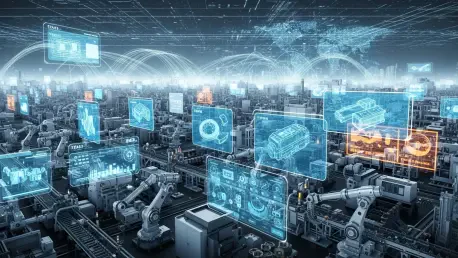

Modern industrial landscapes are no longer confined by the physical limitations of brick and mortar; they have expanded into a persistent, high-fidelity digital realm that functions as a living laboratory for innovation. This shift represents the Industrial Metaverse, a sophisticated convergence of real-time 3D environments and enterprise data that allows machines and humans to interact with surgical precision. Unlike the consumer-focused virtual spaces that prioritize entertainment, this iteration is built on the rigorous demands of industrial efficiency and structural integrity.
The emergence of this technology is driven by the need to solve complex production bottlenecks before they occur in reality. By synthesizing the Siemens Xcelerator platform with NVIDIA’s Omniverse, organizations have moved beyond simple visualization into a shared “Industrial AI operating system.” This framework provides the context for a new era of manufacturing where data is not just stored but activated within a spatial context, allowing global teams to collaborate on a single factory floor from across the world.
Fundamental Pillars of the Industrial Metaverse Ecosystem
Physics-Based Digital Twins and Simulation
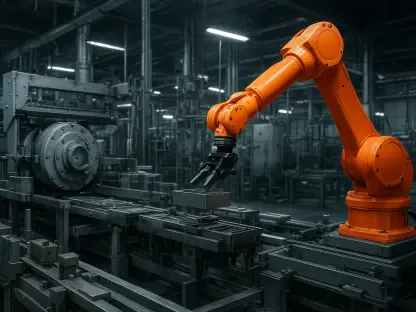
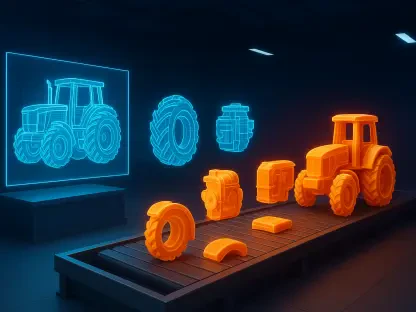
At the heart of this ecosystem lies the digital twin, but it has evolved far beyond a mere 3D model. These assets are now entirely physics-based, meaning they obey the laws of gravity, thermodynamics, and friction just as their physical counterparts do. This high-fidelity simulation is significant because it allows for “synthetic data” generation, where robots are trained in millions of virtual scenarios that would be too dangerous or expensive to replicate in a physical shop floor.
The performance of these simulations relies on photorealistic rendering that mirrors real-world lighting and material properties. This level of detail is not just for aesthetics; it ensures that optical sensors on autonomous machines can be calibrated accurately within the digital realm. Consequently, when a design moves from the virtual space to the assembly line, the margin for error is nearly non-existent, saving companies months of trial-and-error during the commissioning phase.
AI-Driven Analytics and Edge Computing Infrastructure
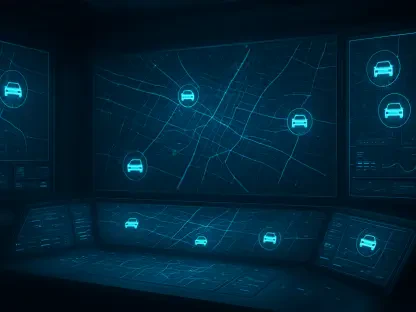
To handle the massive streams of information generated by these virtual environments, the technology relies on an intricate backbone of AI-driven analytics and edge computing. While the cloud provides the scale for long-term storage, edge computing offers the low-latency processing required for split-second decisions on the factory floor. This infrastructure allows for real-time adjustments, where AI models analyze sensor data to predict mechanical failures or optimize energy consumption on the fly.
This technical synergy transforms raw data into actionable intelligence. By processing information at the source, manufacturers can maintain a continuous feedback loop between the digital twin and the physical asset. This connection ensures that the virtual model is always an accurate reflection of reality, allowing the AI to run “what-if” scenarios that provide optimized solutions for logistics and production scheduling without interrupting active operations.
Current Industry Trends and the Rise of the Industrial AI Operating System
The current trajectory of the market shows a definitive shift toward unified platforms that treat AI as the central nervous system of the factory. We are seeing the rise of the Industrial AI operating system, which serves as a bridge between legacy hardware and modern software. This trend is characterized by the move away from siloed applications toward open ecosystems where different vendors’ tools can interoperate seamlessly.
Moreover, there is a growing emphasis on democratizing access to these complex tools. Industrial leaders are increasingly adopting low-code or no-code interfaces that allow shop-floor workers, not just data scientists, to interact with the metaverse. This shift in industry behavior suggests that the technology is maturing from a niche experimental phase into a standard requirement for competitive manufacturing, focusing on scalability and ease of integration across global supply chains.
Real-World Applications in Modern Manufacturing
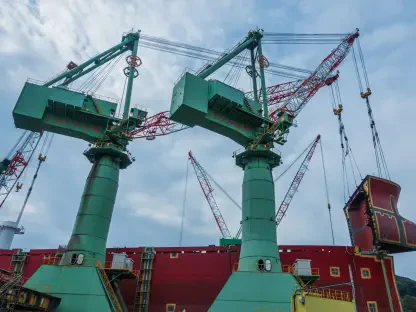
In practice, the Industrial Metaverse is already reshaping how massive infrastructure projects are executed. A prime example is the development of next-generation AI data centers and automotive plants, where engineers use virtual environments to plan the placement of thousands of miles of cabling and robotic arms. These implementations allow companies to visualize the entire factory lifecycle, identifying potential spatial conflicts or workflow inefficiencies long before a single foundation is poured.
Beyond construction, the technology is finding unique use cases in remote maintenance and workforce training. Technicians can now use augmented reality overlays, fed by metaverse data, to perform complex repairs on machinery they have never seen in person. This application is particularly vital for industries with highly distributed assets, such as offshore wind farms or remote mining operations, where sending a specialist on-site is both costly and time-consuming.
Technical Hurdles and Adoption Challenges
Despite its potential, the road to widespread adoption is fraught with significant technical and regulatory hurdles. The most pressing challenge is the issue of data interoperability; many legacy industrial systems use proprietary formats that do not communicate easily with modern 3D engines. Furthermore, the sheer computational power required to run real-time, physics-accurate simulations for an entire factory remains a barrier for smaller enterprises with limited capital.
Security and intellectual property concerns also represent a major market obstacle. Because the Industrial Metaverse requires the ingestion of sensitive proprietary designs into a shared digital space, companies are often hesitant to fully commit without robust, end-to-end encryption and decentralized data ownership models. Ongoing development efforts are currently focused on creating standardized protocols and more efficient compression algorithms to reduce the bandwidth and security risks associated with high-scale virtualization.
Future Outlook for Intelligent Industrial Facilities
The long-term impact of the Industrial Metaverse will likely manifest in the birth of fully autonomous industrial facilities. These “dark factories” would operate with minimal human intervention, managed by an AI that monitors the digital twin to make real-time adjustments to physical production. Potential breakthroughs in quantum computing could eventually allow these simulations to account for molecular-level material stresses, pushing the boundaries of what is possible in aerospace and chemical engineering.
Furthermore, we can expect a shift toward more sustainable manufacturing practices. By simulating the carbon footprint and energy lifecycle of every component within the metaverse, companies will be able to optimize for environmental impact as rigorously as they do for profit. This evolution will turn the metaverse from a design tool into a vital instrument for global sustainability, allowing for a more circular economy driven by precise, data-backed decisions.
Final Assessment and Strategic Impact
The Industrial Metaverse transitioned from a conceptual vision to a foundational industrial tool that redefined the relationship between data and physical production. It successfully bridged the gap between engineering departments and the factory floor, creating a unified language for innovation that accelerated development cycles across the board. The strategic impact was most evident in the way it lowered the barrier to entry for complex automation, allowing firms to de-risk massive investments through rigorous virtual validation.
The integration of physics-based twins and edge-driven AI established a new standard for operational excellence. While challenges regarding data standards and infrastructure costs persisted, the move toward open platforms provided a viable path forward for the industry. This technology did not just improve existing processes; it provided the essential digital framework for a generation of intelligent facilities capable of adapting to an increasingly volatile global market. Companies that embraced this virtualization gained a decisive advantage in agility and predictive capability.