
The traditional machinery replacement cycle is being disrupted as specialized agricultural contractors take over ownership and maintenance of high-utilization fleets. This transformation signifies a departure from the conventional model of periodic equipment upgrades, moving toward a continuous, service-based industrial paradigm. As the market navigates the period from 2026 to 2028, agricultural stakeholders are grappling with a confluence of immediate economic hurdles and permanent structural shifts. While traditional analysts often point to the recent fluctuations in corn and wheat prices as the primary cause for declining tractor sales, a more profound reorganization of global farming is underway. High interest rates have certainly increased the cost of borrowing, making individual producers more cautious about capital expenditures, but these cyclical factors are merely accelerating a trend toward land concentration. The current landscape is defined by a tension between short-term financial recovery and a long-term transition toward professionalized, large-scale operation management.
The Impact of Land Concentration and Professionalization
The Decline of Individual Operations in Global Hubs
The most visible manifestation of this structural shift is the rapid consolidation of farmable land into a shrinking number of highly efficient, large-scale operations. In the United States and throughout the major agricultural corridors of Europe, the number of independent family farms has seen a marked decrease, even though the total acreage under cultivation remains consistent. This concentration of land resources means that a relatively small percentage of professionalized entities now generate the vast majority of global agricultural wealth. These corporate and large-scale family operations operate with a level of financial sophistication that differs fundamentally from the traditional smallholder model. They view land and equipment as integrated assets that must be optimized for maximum throughput. Consequently, the market for mid-range machinery is contracting as these massive operations opt for high-capacity units capable of covering thousands of acres with minimal labor. This consolidation is not a temporary phase but a permanent professionalization of the industry that manufacturers must address to survive.
The Emerging Profile of the Modern Equipment Buyer
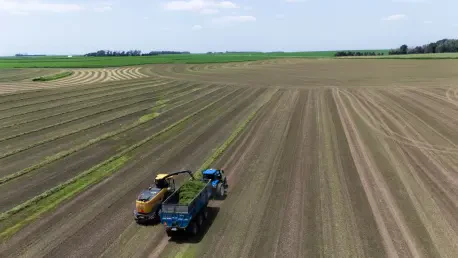
As individual farm ownership declines, the profile of the primary equipment buyer is evolving from a single owner-operator to a professional manager or a specialized custom contractor. These buyers prioritize strict return on investment and total cost of ownership over brand loyalty or historical legacy. In many regions, the rise of specialized contractors has completely changed the ownership dynamic; a single high-utilization fleet now performs the work that previously required dozens of individual tractors owned by separate farmers. This professionalized buyer base demands granular data on machine performance, fuel efficiency, and maintenance intervals to ensure every hour of operation contributes to the bottom line. Manufacturers are being forced to shift their value proposition from selling a physical product to providing a comprehensive service ecosystem. This includes advanced telematics and remote monitoring capabilities that allow for predictive maintenance, thereby reducing the risk of costly downtime during critical planting and harvesting windows. The focus is no longer on the sale alone but on the long-term operational success of the fleet.
Adapting to a High-Tech, Low-Volume Market
Prioritizing Technological Density over Sales Volume
In response to the professionalization of the market, the success of machinery manufacturers is increasingly measured by technological density rather than the total number of units shipped. The demand has shifted toward massive, sophisticated machines that integrate autonomous driving, precision GPS, and real-time data analytics. These units are designed to reduce input costs such as fuel, seed, and fertilizer by applying them with hyper-accurate precision, which is essential for maintaining profitability in a tight-margin environment. While manufacturers may see a reduction in the total volume of sales, the equipment they do deliver is significantly more complex and carries a much higher price point. This shift requires a total overhaul of the traditional dealership model, as support staff must now possess expertise in software engineering and data management as much as mechanical repair. The value of the machinery is now inextricably linked to its digital capabilities, forcing a transition where the initial purchase is just the beginning of a long-term, data-driven partnership between the manufacturer and the operation.
Navigating the Future of Agricultural Equipment
The transition toward a consolidated and professionalized agricultural market required industry stakeholders to abandon volume-based strategies in favor of specialized technical value. Manufacturers that succeeded were those that prioritized the development of modular, autonomous systems capable of integrating seamlessly into the digital infrastructure of large-scale operations. It was observed that the most resilient companies moved away from purely hardware-centric competition and instead focused on providing measurable efficiency gains through advanced software suites. Future success in this sector depended on the ability to offer flexible financial models, such as usage-based leasing or performance-guaranteed service contracts, which aligned with the ROI-driven mindset of modern contractors. Actionable steps for the coming years included investing in regional technical hubs and standardized data protocols to ensure equipment remained functional across diverse operational environments. By embracing these shifts, the industry ensured that even as the number of buyers decreased, the strategic importance of the machinery and the value provided per acre reached unprecedented levels.