Precise dispensing and weighing must occur within a fully enclosed environment to prevent even the smallest toxicological consequences. As the pharmaceutical landscape of 2026 continues to shift toward highly targeted therapies, the industry is witnessing an unprecedented surge in the development of ultra-potent Active Pharmaceutical Ingredients. These compounds, which are often the backbone of next-generation oncology and immunology treatments, offer patients hope through extreme clinical precision. However, this same potency presents a massive logistical and safety challenge for the manufacturing facilities responsible for their production. Handling substances that are effective at the microgram or even nanogram level requires a complete departure from traditional containment strategies used in the past. To maintain a safe working environment, companies are now forced to adopt rigorous new standards that go far beyond what was once considered high-level protection. The rise of these substances necessitates a reimagining of the fundamental protocols that define operator safety and product integrity.
The Evolution of Occupational Exposure Banding
Transitioning: From High Potency to Ultra Potency
A significant hurdle in contemporary drug development is the frequent absence of comprehensive toxicological profiles during the early phases of manufacture. To navigate this inherent uncertainty, producers are increasingly adopting risk-based strategies that prioritize employee well-being without hindering the rapid pace of clinical innovation. Historically, the industry relied on general safety margins, but the emergence of highly reactive molecules has rendered those broad categories obsolete in a modern laboratory setting.
While the OEB 6 standard was previously heralded as the definitive pinnacle of containment, it is now often viewed as insufficient for the current generation of molecules. These new chemical entities frequently demand exposure limits that fall significantly below the traditional threshold of 0.1 µg/m³. Consequently, the transition from high potency to ultra potency requires a more granular understanding of how microscopic particles behave within a workspace. As research progresses between 2026 and 2028, the push for more restrictive exposure bands will only intensify to match the increasing efficacy of these drugs.
Classification: Defining the OEB 7 Threshold
In direct response to these increasingly stringent requirements, industry specialists have codified the OEB 7 classification to manage environments requiring containment below 10 ng/m³. This tier does not represent a simple incremental update to existing safety measures; rather, it constitutes a qualitative leap in the conceptualization and validation of a facility. Establishing a formal framework for single-digit nanogram exposure ensures that any potential for cross-contamination or operator inhalation is virtually eliminated through superior architectural and mechanical design.
By adopting the OEB 7 standard, manufacturers can handle compounds of extreme or unknown toxicity with a level of confidence that was unattainable just a few years ago. This classification provides a future-ready benchmark that aligns facility capabilities with the most sensitive therapeutic advancements. The precision required to maintain such an environment involves rigorous air quality monitoring and highly specialized filtration systems. This rigorous approach ensures that even as drug molecules become more powerful, the safety of the professionals who create them remains the top organizational priority.
Engineering Standards for Maximum Containment
Technical Features: Modern Isolator Integration
The successful implementation of OEB 7 depends heavily on sophisticated engineering solutions that emphasize a fully enclosed and high-precision environment. To minimize the risks associated with manual intervention, modern isolator systems are designed to integrate multiple stages of production into a single, cohesive unit. By housing synthesis, filtration, and drying processes within one continuous sealed loop, manufacturers can effectively prevent environmental breaches. This level of integration is essential for maintaining the integrity of the containment zone throughout the entire manufacturing lifecycle.
Furthermore, the utilization of advanced rapid transfer ports and specialized split butterfly valves allows for the secure movement of materials into and out of the containment area. These technical components are critical for ensuring that the closed-loop system remains undisturbed during the transfer of potent powders or liquid reagents. By eliminating open-air exposure points, these systems provide a robust physical barrier that protects both the product and the operator. The combination of structural isolation and controlled material flow represents the current state of the art in ultra-potent API processing.
Advanced Operations: Automation and Ergonomics
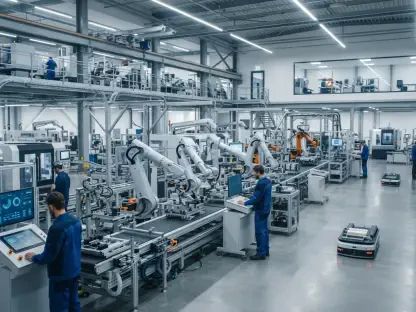
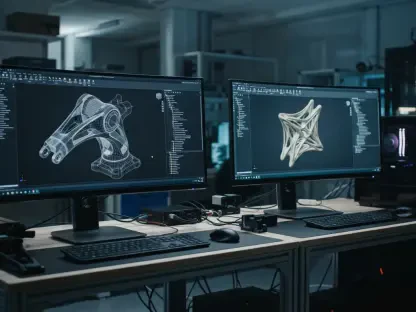
To further reduce the likelihood of human error, the latest OEB 7 isolators incorporate extensive automation, including sophisticated cleaning-in-place and sterilization-in-place protocols. These systems allow for the thorough decontamination of the interior environment without requiring operators to break the containment seal. The integration of robotic arms for precise handling and dispensing operations marks a significant advancement in safety technology. By delegating high-stakes tasks to automated systems, facilities can maintain a high degree of accuracy while isolating workers from the most dangerous stages of the process.
Ergonomic design also plays a vital role in the functionality of these modern containment units, with many systems now featuring voice-controlled interfaces and augmented reality displays. These tools allow operators to interact with the equipment naturally while remaining behind a protective barrier. Such advancements ensure that complex manufacturing tasks can be performed efficiently without compromising the rigorous air quality standards required for ultra-potent substances. As automation technology continues to evolve, the reliance on manual glove-box manipulation is being replaced by more reliable and safer digital control mechanisms.
Practical Application and Strategic Value
Real-World Performance: Case Studies in Efficiency
The practical effectiveness of these advanced containment standards is clearly demonstrated in recent European manufacturing projects where compounds with exposure limits near 1 ng/m³ were successfully processed. By consolidating previously fragmented workflows into compact, integrated isolator suites, these facilities managed to scale up their production capacity significantly. At the same time, they achieved a drastic reduction in the health risks associated with the manual handling of fine powders. These successful installations prove that superior safety does not have to come at the expense of operational throughput or financial viability.
Beyond safety, these integrated systems have allowed companies to accelerate their product delivery schedules by streamlining the transition between different manufacturing phases. The ability to perform synthesis and drying in a single environment reduces the time required for cleaning and validation between batches. These case studies highlight a clear trend where high-containment technology serves as a dual-purpose tool for both risk mitigation and operational excellence. Facilities that have already transitioned to these OEB 7-compliant workflows are reporting higher levels of reliability and fewer instances of production downtime.
Strategic Advantage: Containment as an Innovation Catalyst
Ultimately, the decision to adopt OEB 7 standards should be recognized as a strategic investment in long-term innovation rather than a mere regulatory obligation. By removing the safety barriers that often hinder the exploration of dangerous or highly reactive compounds, these advanced isolators provide a foundation for cutting-edge research. This infrastructure allowed organizations to investigate complex chemical pathways and develop niche therapies that would have been impossible to manufacture under older, less secure protocols. It empowered researchers to push the boundaries of what is medically possible by providing a secure space for high-risk experimentation.
Moving forward, pharmaceutical companies should evaluate their current containment capabilities against the anticipated needs of the 2026 to 2029 pipeline. Investing in high-tier isolator technology today ensures that a facility will remain competitive as global safety regulations become increasingly stringent. Organizations that took the lead in implementing these standards gained a significant advantage by possessing the necessary infrastructure to produce the next generation of life-saving medicines. Maintaining a proactive stance on containment safety proved to be the most effective way to ensure both business continuity and the safety of the global workforce.