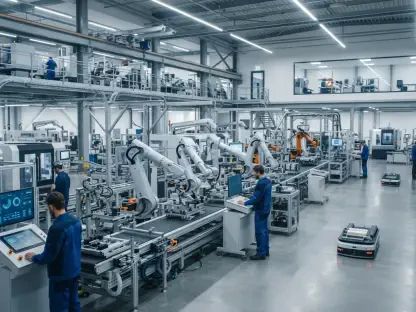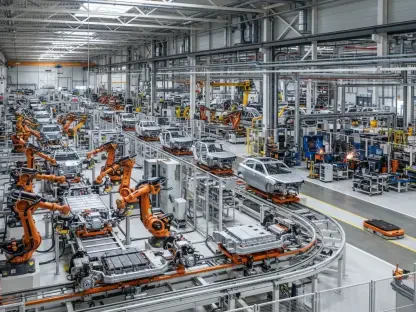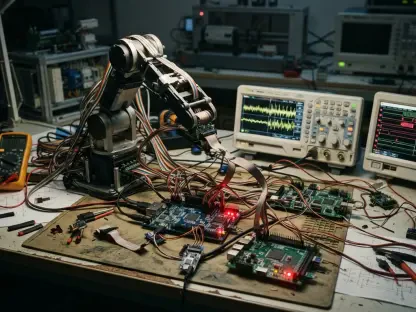

Kwame Zaire has spent years at the intersection of electronics, equipment, and production management, helping plants turn raw signals into outcomes on the floor. His focus on predictive maintenance, quality, and safety lines up with a hard truth: many U.S. plants sit near 60% overall equipment effectiveness, while frontline teams burn roughly 50% of their week chasing data across silos. In an era when labor productivity once grew at 3.4% per year and later slipped to −0.5%, he argues that AI-driven execution—built on reliable cloud foundations—can close the shop-floor productivity gap by moving from observation to action.
What specific productivity gap on the shop floor are you targeting, and how did you quantify it initially? Can you walk us through a before-and-after example, with baseline metrics and the first 90 days of improvements?
We target the twin gaps of low OEE—often around 60%—and the time tax on people, where the average worker loses about 50% of the week to data hunting. We quantified it by time-and-motion studies and simple OEE decomposition, taking a cold, honest look at availability, performance, and quality. Before our rollout, operators described “dead air” on the line and the hum of machines idling while supervisors scrolled through reports. After 90 days, the clearest shift is less searching and more doing: the 50% search burden becomes the first pool of hours we reclaim, and that freed time translates into visible flow—fewer pauses, quicker resets, and steadier output from a 60% baseline trending upward.
How do your “Solvers” work under the hood to bypass manual data correlation? Please detail the data inputs, prompt design, and the step-by-step path from detection to a prescribed action.
Solvers are pre-defined, focused prompts that ingest machine analysis, preventive-maintenance signals, and operational availability events in one pass. We design prompts with tight schemas: current state, recent anomalies, historical context, and the action catalog tied to standard work. The path is detect, diagnose, prescribe, and verify—first we detect a deviation, then correlate it to known patterns, generate a prescriptive action, and verify execution through operator acknowledgment. What operators feel is simple: a clear instruction, rooted in correlated data that used to take hours of manual sifting.
Many plants report around 60% overall equipment effectiveness. Which levers does your system attack first—availability, performance, or quality—and how do you prioritize fixes across lines, shifts, and assets?
We start with availability because unplanned stops starve everything else. From there we tune performance—short cycle losses and micro-stops—and then close with quality, using the same Solver scaffolding. Prioritization follows a heat map of recurring losses by line and shift, with clear flags on assets that repeatedly drag the 60% baseline. It feels practical on the floor: fix the stuttering machine that keeps the line at a standstill, then chase the speed gaps, then harden quality.
Frontline teams often spend half their week hunting for information across siloed systems. What integration sequence do you recommend to collapse these silos, and what early, measurable wins should teams expect in week one?
Start where the 50% time tax lives: integrate machine events, maintenance history, and production schedules into a single pane. In week one, even a lightweight feed of machine analysis and availability unlocks instant visibility so operators aren’t clicking through five systems. The early win is reclaimed hours—those same hours from the 50% burden—plus faster handoffs between shifts because context is stitched together. People feel the difference in their shoulders: less chasing, more fixing.
How do you surface hidden bottlenecks and root causes without overwhelming operators? Share a concrete case where the system flagged a non-obvious issue and the exact actions that restored throughput.
We cap cognitive load by surfacing one prioritized prescription at a time, tied to a clear outcome. In one case, the line blamed final packaging, but the Solver traced intermittent slowdowns to upstream availability hits that only showed up in short bursts. The prescription was targeted: adjust the upstream setup window, trigger a preventive task, and hold a quick standard-work refresher. Once executed, the line flow smoothed out—less stop-start noise, steadier rhythm, and the sense that the problem had finally been named and solved.
What architecture choices on AWS made the biggest difference for reliability and scale? Please describe your data pipelines, model orchestration, and how you balance cost, latency, and security on the shop floor.
We leaned on AWS for reliable ingestion, durable storage, and elastic inference so Solvers stay responsive during peaks. The pipeline streams machine and maintenance signals into a governed layer, with model orchestration that routes events to the right Solver and returns a prescription in near real time. Cost stays in check by auto-scaling inference and keeping cold data in economical tiers, while low-latency paths handle live decisions. Security is woven end to end—segmented networks, strong identity, and strict data scopes—so scale never dilutes trust.
When moving from observation to execution, how do you ensure recommended actions are trusted? What validation loops, alerts, and human-in-the-loop steps prevent false positives and build operator confidence?
Every prescription carries a rationale, a confidence level, and a link to standard work. Operators acknowledge or adjust, and that feedback loops back to the Solver so it learns what sticks and what doesn’t. Alerts escalate only after verification steps fail, which cuts down the noise that erodes trust. Over time, the loop feels natural: the system suggests, the human confirms, and results speak through calmer lines and quicker recoveries.
For preventive maintenance, how do you translate machine signals into scheduling decisions? Outline the thresholds, escalation paths, and how you measure avoided downtime versus maintenance cost.
We map machine analysis to condition thresholds that trigger either inspections or work orders, avoiding calendar-only habits. If a threshold is crossed, we escalate from a check to a planned repair, aligning with operational availability so we don’t steal uptime unnecessarily. Avoided downtime is tallied against actual labor and parts, and the curve becomes obvious when lines stop tripping over the same failures. It’s satisfying on the floor: fewer surprise stops, clearer schedules, and a hum that doesn’t get interrupted.
Early adopters report fast ROI. What payback periods and hard savings are typical, and what soft benefits—like morale or skill uplift—show up later? Please include a timeline and supporting metrics.
Teams see ROI within weeks when the 50% data-chasing drain is redirected into value work and the 60% OEE baseline begins to rise. Hard savings show up as stabilized throughput and fewer emergency maintenance events, which converts directly into recovered hours and scrap avoidance. Soft benefits lag but compound: morale lifts as fire drills fade, and skills rise because Solvers coach through standard work instead of leaving folks guessing. The first month is about visibility; the next few stack execution wins until the new normal feels steady.
In plants with legacy equipment and limited sensors, how do you bootstrap meaningful insights? What minimal data set, retrofit steps, and training plan help teams progress from pilot to scale?
Start with operational availability events and basic machine analysis; even a small signal set is enough for targeted Solvers. Retrofit the worst offenders first, then cascade to adjacent assets so the line picture fills in without boiling the ocean. Training is hands-on: short sessions on how to read a prescription, confirm an action, and close the loop. As confidence grows, scale the same playbook line by line until the rhythm of detect-diagnose-prescribe feels routine.
How do you adapt to different industries—discrete versus process—where failure modes differ? Share examples of tuning your Solvers and the performance indicators that matter most in each environment.
In discrete, we tune for changeovers, short cycles, and part-specific quality signals; in process, we bias toward continuous stability and drift detection. The Solver prompts shift vocabulary—setup windows and takt alignment for discrete, versus steady-state parameters for process. In both cases, we anchor to OEE but emphasize the dominant lever: availability swings in process, performance and quality interplay in discrete. The operators don’t see complexity; they see precise, relevant actions that sound like their work.
With labor productivity growth slowing in recent years, where can AI realistically bend the curve? What are the biggest constraints—data quality, change management, or incentives—and how do you overcome them?
AI bends the curve where waste is obvious: that 50% time sink and the 60% OEE ceiling. Constraints are real—messy data, human fatigue, and misaligned incentives—but they’re solvable with cleaner inputs, clear roles, and rewards for sustained gains. The historical swing from 3.4% growth to −0.5% shows the cost of drift; execution AI counters by turning signals into steps, every shift. People feel the lift when AI removes drudgery and gives them back control of the line.
How do you measure sustained impact beyond initial gains? Describe the dashboards, cadence of reviews, and the governance model that keeps improvements compounding quarter after quarter.
We run layered dashboards—line, asset, and shift—tracking availability, performance, and quality alongside action closure. Weekly reviews dig into prescriptions that moved the needle, while quarterly sessions reset targets and retire stale playbooks. Governance is simple but firm: owners for each loss bucket, escalation paths, and a habit of recognizing wins so behaviors stick. The result is compounding improvements instead of one-off sprints.
What risks come with AI on the shop floor—over-automation, model drift, or misaligned KPIs—and how do you mitigate them? Please include incident response steps and retraining triggers.
Over-automation dulls judgment, so we keep humans in the confirmation loop and surface the “why” behind every action. Model drift is handled with monitoring and retraining triggers tied to shifts in availability or quality distributions. If an incident occurs, we freeze the offending prescription, roll back to a safe baseline, and run a root-cause review before re-enabling. Misaligned KPIs get corrected by anchoring to OEE and the lived experience on the floor, not vanity metrics.
Looking ahead, how will real-time execution systems integrate with planning, quality, and supply chain tools? Paint a day-in-the-life scenario where decisions flow seamlessly from the plant to the boardroom.
Picture a morning where the plant starts with a unified view: machine analysis and operational availability roll up to a single signal. Solvers highlight today’s risks, scheduling adjusts in stride, and supply chain commits only to what the floor can truly deliver. Quality feeds back instantly, so design and sourcing choices reflect real conditions, not stale reports. By afternoon, leaders see the same truth as operators—no translation needed—turning boardroom choices into actionable, same-day moves.
Do you have any advice for our readers?
Start where the pain is loudest: the 50% of time lost to chasing data and the 60% OEE that everyone feels but no one owns. Make the first win small and visible—one line, one Solver, one stubborn loss—and let people taste success. Anchor decisions in the numbers we all share, like OEE and avoided downtime, and celebrate each standard work that sticks. Most of all, move from observation to execution—your team will hear the difference in the steadier hum of the line.