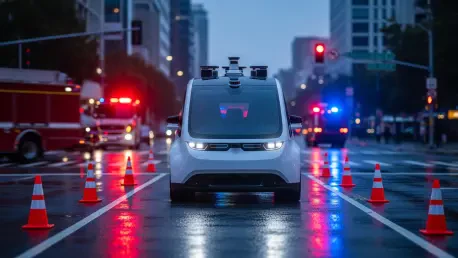

The rapid expansion of autonomous vehicle fleets across metropolitan areas has inadvertently created a dangerous legal disconnect between cutting-edge technology and local emergency response efforts. While human drivers face immediate consequences like heavy fines or arrests for obstructing fire engines or interfering with police scenes, driverless robotaxis often operate within a regulatory blind spot that shields them from standard enforcement. This legal vacuum leaves first responders with little recourse beyond filing bureaucratic complaints while robotaxis continue to block vital pathways during life-and-death situations, such as active fire suppressions or medical emergencies. As these vehicles navigate city streets with increasing frequency, the discrepancy between the strict accountability applied to humans and the relative impunity of autonomous systems has become a central point of contention for public safety officials who are tasked with maintaining order in an increasingly automated urban landscape. The inability to issue on-the-spot citations means that software-driven vehicles can essentially paralyze emergency operations without the immediate deterrents that maintain order on public roads.
Federal Recognition of the Regulatory Void
Recent communications from the National Highway Traffic Safety Administration have highlighted a systemic pattern of autonomous vehicles entering active emergency zones without any clear mechanism for detection or avoidance. These vehicles have been documented ignoring flares, traffic cones, and even flashing lights, effectively trapping emergency equipment and personnel in high-risk environments where every second counts. Federal officials have characterized this recurring issue as a significant threat to public trust, stressing that the right to operate on public roads is a privilege that must be earned through consistent safety compliance rather than assumed by tech companies. Despite the growing prevalence of these vehicles, there is currently no federal standard for testing whether an automated driving system can actually identify and respond to an emergency scene with the nuance required by human first responders who manage these chaotic sites. This lack of a formal safety certification process means that companies are deploying massive fleets without proving they can navigate high-stakes environments safely.
The National Highway Traffic Safety Administration’s warnings serve as an admission that the current regulatory framework is trailing far behind the technology’s physical presence on the streets. Without standardized testing protocols, the burden of discovery for technical flaws has shifted from the manufacturers to the public and the emergency responders who encounter these failures in real-time. This reactive approach to regulation has allowed autonomous systems to iterate their software in live urban environments, often at the expense of municipal safety protocols that have been in place for decades. As federal agencies grapple with these challenges, the absence of a unified mandate for emergency scene recognition remains a glaring oversight in the national push for vehicle automation. Consequently, the disconnect between federal oversight and local reality continues to widen, leaving a gap where safety concerns are acknowledged through letters and reports but rarely addressed through immediate action. This lack of preventative regulation ensures that the trial-and-error phase of development continues on public roads.
The Failure of On-the-Ground Enforcement
In major testing grounds like California, local law enforcement officers find themselves largely stripped of their traditional authority to issue traffic citations to driverless cars when violations occur. Instead of handing out tickets that carry immediate financial or legal weight, police are forced to use a specific noncompliance form that must be requested by mail or fax from the state DMV, an archaic process that discourages active enforcement. This cumbersome administrative barrier prevents officers from holding autonomous vehicle companies accountable in real time, creating a sense of frustration among patrol officers who see these vehicles commit infractions with no immediate recourse. Because these notices of noncompliance lack the immediate impact of a standard fine, robotaxis are often allowed to remain in operation and continue generating revenue immediately following a safety incident. This creates a environment where corporate entities can treat safety violations as minor administrative paperwork rather than the serious public safety threats they often represent.
There is currently no functional mechanism for a fire captain to tow an obstructing vehicle or for police to impound a robotaxi that breaches a crime scene, which fundamentally undermines the chain of command. This creates a double standard where human drivers face strict penalties and vehicle impoundment while corporate-owned machines are shielded from immediate repercussions for the same disruptive behaviors. The logistical nightmare of clearing a stalled robotaxi from a critical intersection often requires calling the manufacturer’s remote assistance team, which can take several minutes that emergency responders simply do not have. This reliance on a third-party corporate response team to resolve an active road obstruction is a radical departure from established traffic management procedures. Without the power to physically remove or legally penalize these vehicles on the spot, local authorities are left playing a secondary role to the private algorithms that govern the movement of autonomous fleets. This power imbalance has shifted the responsibility of road safety away from public servants.
Legislative Solutions and Future Oversight
State-level centralization effectively disenfranchised city councils and local emergency departments from regulating the vehicles on their own streets through traditional local ordinances. This legislative trend was specifically designed to help tech companies scale their fleets rapidly without having to navigate a patchwork of local laws, but it left police and fire chiefs powerless to intervene in their own jurisdictions. In cities where state law failed to define legal responsibility in the absence of a human driver, the traditional framework for traffic enforcement essentially collapsed under the pressure of rapid technological advancement. These issues were not isolated glitches but represented a documented pattern of technical and legal failure across the industry that impacted urban planning and public safety. From robotaxis driving through felony arrest scenes to semi-autonomous systems colliding with parked emergency trucks, the transition to automated driving removed the individual accountability that once kept the roads safe.
The resolution of these legal gaps required a fundamental reassessment of how autonomous systems were integrated into the public infrastructure across the country. Lawmakers eventually recognized that a hybrid enforcement model was necessary to ensure that technology did not supersede public safety, which led to the development of digital citation systems that paused vehicle operations instantly. Local jurisdictions fought for and gained the right to implement geofencing requirements that automatically diverted autonomous fleets away from active emergency zones based on real-time dispatch data. These reforms addressed the previous lack of accountability by establishing clear protocols for vehicle impoundment and corporate liability that mirrored the responsibilities of human motorists. By shifting the focus toward immediate consequences and local control, the legal framework finally caught up with the pace of innovation, ensuring that first responders were no longer hindered by the machines they shared the road with daily.