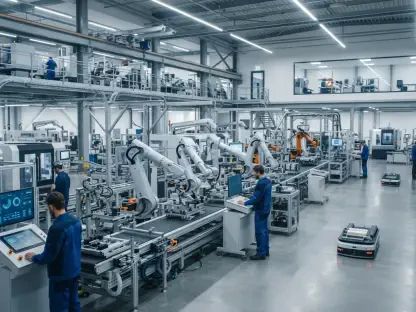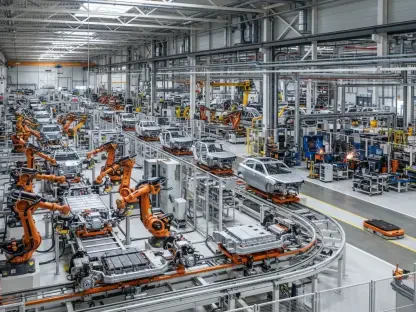

The monolithic industrial era is undergoing a silent collapse as the obsession with massive centralized production facilities yields to a more resilient, community-centric philosophy of distributed assembly. This shift represents a fundamental departure from the twentieth-century fixation on scale, which long argued that bigger always meant cheaper and better. However, the modern landscape has revealed that extreme centralization often creates fragile supply chains and economic deserts in smaller communities. Localized Advanced Manufacturing emerges not just as a technical alternative but as a restorative economic model that reintegrates production into the fabric of local society. By leveraging modular technology and digital oversight, this approach seeks to prove that high-tech goods can be produced more efficiently in a neighborhood pod than in a distant mega-factory.
Evolution of Decentralized Production Models
The historical trajectory of manufacturing followed a path of increasing consolidation, eventually leading to the global “mega-plant” era where single facilities produced goods for entire continents. This model relied on the assumption that volume was the primary driver of cost reduction, yet this logic ignored the escalating costs of logistics, complexity, and systemic vulnerability. As global disruptions became more frequent, the limitations of these rigid, centralized networks became painfully apparent, prompting a re-evaluation of how and where things are made. The current evolution toward decentralized production reflects a realization that proximity to the end-user and the ability to pivot rapidly are more valuable than the theoretical savings of mass production.
This technological shift is grounded in the principle of distributed intelligence, where the physical production is separated from the intellectual design. In the past, manufacturing required massive capital investment and specialized infrastructure that only large corporations or nations could afford. Today, the convergence of additive manufacturing, cloud-based quality control, and standardized robotics allows for the creation of sophisticated goods within small, flexible units. This transition mirrors the move from centralized mainframe computers to the distributed power of the internet, creating a network that is both more robust and more responsive to local needs.
The Architecture of Localized Advanced Manufacturing Pods (LAMP)
Standardized Design and Centralized Governance
The core of the Localized Advanced Manufacturing Pod (LAMP) model lies in its unique balance between local autonomy and centralized precision. While the physical assembly occurs in disparate locations, the engineering, product blueprints, and quality standards are governed from a central digital hub. This ensures that a device produced in a small American city is identical in quality and performance to one produced in a high-tech European center. By standardizing the “recipe” for manufacturing, companies can maintain brand integrity without the overhead of a massive, singular campus.
This governance structure utilizes real-time data monitoring to oversee every stage of the production process remotely. Such a system allows for immediate intervention if a specific node deviates from the established parameters, ensuring that the benefits of localization do not come at the expense of reliability. Moreover, this centralized digital oversight enables rapid updates; a design improvement can be pushed to every manufacturing pod across the globe simultaneously. This agility is a significant advantage over traditional factories, where retooling for a new product iteration could take months or even years of physical reconfiguration.
Radical Simplicity and Small-Footprint Assembly
A defining technical characteristic of the LAMP architecture is its adherence to radical simplicity, a design philosophy that prioritizes the most direct path to a functional product. Every component and assembly step is scrutinized to eliminate unnecessary complexity, which in turn reduces the space and specialized machinery required for production. This allows for sophisticated electronics—often as complex as a modern smartphone—to be assembled in a footprint no larger than a standard retail storefront. By shrinking the physical requirements, the model effectively lowers the barrier to entry for local production.
Performance metrics indicate that this streamlined approach does more than just save space; it significantly improves cost-effectiveness. Recent data suggests that these localized pods can produce advanced consumer electronics at costs 20% to 30% lower than traditional offshore mega-plants. This counterintuitive efficiency is achieved by eliminating the hidden costs of long-haul shipping, reducing waste through precision assembly, and leveraging a more engaged, local workforce. Consequently, the LAMP model challenges the long-held belief that low-cost labor in distant markets is the only way to maintain price competitiveness in the global economy.
Emerging Trends in Distributed Industry
The industry is currently witnessing a transition toward “community-as-infrastructure,” where manufacturing pods are treated as vital utilities rather than isolated businesses. This trend is fueled by the integration of artificial intelligence that can predict local demand and adjust production schedules autonomously. Furthermore, there is a growing movement toward circularity within these pods, where local waste streams are increasingly used as raw materials for new products. This evolution reflects a broader shift in consumer behavior, as people increasingly value goods that are not only high-quality but also produced with a minimal carbon footprint and a positive impact on their local economy.
Real-World Applications and Humanitarian Impact
The most profound demonstrations of localized manufacturing have occurred in regions where traditional infrastructure has failed or is non-existent. For example, the deployment of manufacturing pods in war zones like Ukraine has allowed for the production of critical medical recovery gear directly on-site. By manufacturing life-enhancing wearables in conflict areas, the technology serves as a form of resilient community infrastructure that provides both essential goods and high-value employment. This application proves that manufacturing can be mobile and functional even under extreme duress, offering a blueprint for disaster relief and humanitarian aid.
Beyond conflict zones, these pods are revitalizing economically stagnant urban centers by providing high-tech jobs that do not require relocation to a distant industrial hub. In cities like South Bend or Las Vegas, the arrival of localized production units has fostered a new generation of skilled workers who are invested in their local communities. These implementations show that when production is localized, the economic value generated remains within the community, creating a multiplier effect that supports local services and infrastructure. This model turns the factory from a distant, polluting monolith into a clean, integrated neighbor.
Technical Hurdles and Market Obstacles
Despite the promise of localized production, significant technical and regulatory hurdles remain, particularly regarding the consistency of raw material sourcing. While the assembly process is standardized, the global supply of raw components is still largely centralized, which can create bottlenecks if a primary supplier fails. Furthermore, existing trade regulations and tax codes are often designed with large-scale shipping in mind, making it difficult for distributed networks to navigate complex cross-border requirements. Developing a more resilient, localized supply chain for the components themselves remains a critical challenge for the next phase of development.
Market resistance also stems from the entrenched interests of traditional manufacturing giants who have invested billions in centralized infrastructure. Convincing stakeholders to pivot toward a distributed model requires a significant shift in corporate culture and financial strategy. Additionally, while approximately 80% of manufacturing could theoretically be localized, certain high-complexity items like jet engines or quantum processors still require the specialized environments of large-scale facilities. Balancing the expansion of localized pods with the continued necessity of specialized mega-plants creates a dual-track industrial landscape that is complex to manage.
Future Outlook and Global Economic Integration
The trajectory of localized manufacturing suggests a future where the global economy is composed of millions of interconnected nodes rather than a few massive hubs. If the model continues to scale as predicted, it could unlock trillions of dollars in incremental economic value by restoring productivity to overlooked regions. We are likely to see the emergence of “plug-and-play” manufacturing pods that can be deployed in a matter of days, allowing industries to respond to global crises or sudden shifts in market demand with unprecedented speed. This integration will likely lead to a more equitable distribution of wealth and technological capability across the globe.
Conclusion and Strategic Assessment
The review of localized advanced manufacturing demonstrated that the era of the mega-plant reached a point of diminishing returns. The analysis showed that the LAMP model successfully combined centralized digital governance with local physical execution, resulting in a system that was more agile and cost-effective than traditional alternatives. It was observed that radical simplicity in design allowed high-tech production to occur in small, community-integrated spaces, effectively lowering the entry barriers for localized industry. The deployment of these pods in high-stress environments like Ukraine provided undeniable proof that decentralized manufacturing could function as a resilient form of community infrastructure.
Strategic assessments indicated that the transition toward this model required overcoming entrenched regulatory frameworks and supply chain dependencies. However, the potential for significant economic revitalization made the adoption of distributed networks an inevitable shift for the global industrial sector. The findings suggested that as more industries moved toward the 80% localizable threshold, the traditional manufacturing landscape was permanently altered. Ultimately, the successful integration of localized pods proved that the future of production lay not in the pursuit of scale for its own sake, but in the empowerment of local nodes to build a more stable and equitable economy.