
As a veteran in production management and industrial safety, Kwame Zaire brings a unique perspective to the complexities of large-scale manufacturing and storage facilities. With a deep understanding of how specialized equipment and building materials interact under extreme stress, he provides essential clarity on the ongoing disaster at the frozen-food storage facility near downtown Los Angeles. This conversation explores the structural challenges of high-density cold storage, the unexpected hazards of green energy integration, and the long-term environmental consequences for the surrounding community.
The following discussion delves into the technical difficulties of fighting fires in insulated environments, the risks posed by massive inventory loads and compromised structural integrity, and the specific impact of smoke pollution on urban neighborhoods.
Cold storage facilities use heavy-duty insulation and high-density steel racking systems that make fire suppression incredibly difficult; how do these specific structural elements change the landscape for emergency responders compared to a standard warehouse?
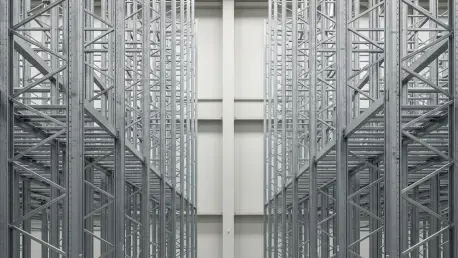
In a standard warehouse facility, emergency crews can often knock down a blaze within 24 hours, but the insulation in a cold storage plant acts like a thermal cocoon that keeps the intense heat trapped inside for weeks. This specific facility is roughly 500,000 square feet and is designed to operate as a giant freezer, meaning the walls are engineered to resist temperature changes, which unfortunately also prevents water from reaching the core of the fire. The sheer scale of the 65-foot tall steel racking systems creates a massive physical barrier that makes it far too dangerous for personnel to enter the building. Because these storage rows are 650 feet long and loaded with heavy pallets, there is a constant fear of a “domino effect” collapse that could crush anyone inside. It is a claustrophobic and high-stakes environment where traditional ventilation through the roof is nearly impossible due to the thick layers of specialized insulation.
With nearly 85 million pounds of frozen food stored within the facility, what are the primary concerns regarding the structural integrity and the long-term containment of such a massive blaze?
The sheer weight of 85 million pounds of frozen poultry, beef, and pork puts an incredible amount of stress on the racking systems even under normal conditions. Once you introduce a fire that compromises the roof, which is now sitting directly on top of those 65-foot towers, the entire building becomes a ticking time bomb of structural failure. Firefighters are forced to stay outside, dousing the exterior with heavy streams of water, because the risk of the ceiling pancaking down is simply too high to ignore. You can almost feel the tension in the air as crews are forced to strip away exterior walls, knowing that the dense inventory inside is fueling a deep-seated burn that water cannot easily reach. This isn’t just a fire; it is a slow-motion collapse of a massive industrial ecosystem that was never designed to be opened or accessed in this manner.
The presence of solar panels on the roof is a modern standard for energy efficiency, but how did these systems complicate the initial response and the eventual spread of the fire?
While solar panels are excellent for sustainability, they become a significant hurdle for firefighters who need to vent a building to release toxic gases and improve visibility. In this case, the fire allegedly sparked while subcontractors were working on the panels, and the resulting equipment on the roof made it impossible for crews to cut through and ventilate the structure quickly. The insulation beneath those panels prevented the heat from escaping, which likely caused the fire to travel horizontally across the top of the facility before it could be contained. When the workers dialed 911, the fire was already “off to the races” because the very features designed to keep the cold in were now keeping the heat and smoke trapped inside the shell. It is a tragic irony where a green energy initiative inadvertently created a physical barrier that allowed a manageable spark to turn into a multi-week catastrophe.
Residents in the surrounding working-class neighborhoods are reporting ash and heavy odors; what are the invisible risks associated with the smoke and debris coming from a facility of this nature?
The smoke billowing out of this site is carrying microscopic particles known as PM2.5, which are small enough to penetrate deep into the lungs and enter the bloodstream. For the families in Boyle Heights, this means a constant barrage of hazardous air that forces them to seal their windows, doors, and vents just to maintain a basic level of safety. There is a palpable sense of anxiety among the residents who see the ash falling on their homes and smell the acrid, heavy scent of burning plastics and organic material. Because the facility stores such a high volume of seafood and meat, the combustion of those materials creates a complex and unpleasant chemical profile in the smoke that is difficult to monitor in real-time. It is not just a nuisance; it is a public health crisis that requires people to wear N95 or P100 masks just to walk down their own streets during the light winds that push the smoke in all directions.
What is your forecast for the future of cold storage safety protocols following this event?
I believe we will see a significant shift toward requiring integrated internal sprinkler systems that are specifically rated for high-density, 65-foot racking heights to prevent fires from reaching this scale. This disaster has shown that external dousing is largely ineffective for a 500,000-square-foot freezer once the roof is compromised, so the industry must invest in more sophisticated, localized suppression technology. We will also likely see stricter regulations regarding the installation of roof-mounted solar panels, ensuring that there are designated “clear zones” for emergency ventilation to prevent smoke from becoming trapped. The financial and environmental cost of losing 85 million pounds of inventory is simply too high for the industry to continue with the current status quo of structural design and fire prevention.