
Over 200 Korean companies recently signaled their support for a government-led initiative to integrate AI across every stage of the garment production process. This movement arrives at a critical juncture where the domestic industry faces an existential crisis driven by a dwindling workforce and rising labor costs. Historically, South Korea was a global textile powerhouse, yet the shift toward low-cost offshore production in Southeast Asia threatened to leave domestic facilities obsolete. The current strategy focuses on reclaiming competitiveness by converting traditional sewing workshops into high-tech hubs powered by automation. By deploying sophisticated software and specialized hardware, the government aims to reduce the reliance on manual labor while simultaneously increasing production speeds. This systemic overhaul is not merely about replacing workers but about redefining the very nature of textile craftsmanship for a modern era. It marks the start of a digital textile renaissance.
Production Tech
Fabric Work
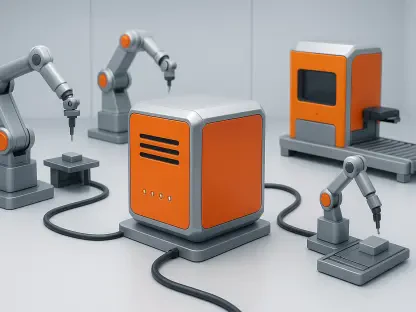
Modern textile automation faces a significant hurdle because fabric, unlike rigid metal or plastic parts, is inherently unstable and difficult for machines to manipulate. To address this, Korean innovators have developed advanced vision-guided robotic systems equipped with high-sensitivity pressure sensors. These machines use sophisticated algorithms to calculate the exact tension required to lift a single ply of fabric from a stack without causing distortion. By integrating these systems into the initial cutting phase, factories have achieved a level of precision that exceeds human capability, drastically reducing material waste. Furthermore, the use of laser-cutting heads mounted on multi-axis robotic arms allows for intricate designs that were once impossible to execute at scale. This technological leap ensures that the cut pieces are perfectly uniform, which is essential for the subsequent automated assembly stages that require high tolerance levels for garment success.
Sewing Tech
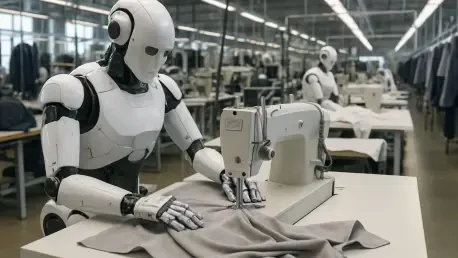
Transitioning from manual stitching to autonomous sewing represents a complex challenge in the modernization of the garment sector. Unlike traditional sewing machines that require a human operator to guide the fabric, the latest generation of collaborative robots works alongside technicians to automate repetitive tasks. These cobots are designed with specialized end effectors that mimic the dexterity of human fingers, allowing them to manage seams and hems with remarkable consistency. In many Seoul-based pilot facilities, technicians now oversee banks of modular sewing cells where robotic arms perform long, straight seams while humans handle the more complex aesthetic finishing touches. This hybrid approach has led to a significant increase in output per square foot of factory space. Moreover, these systems are equipped with machine learning capabilities that allow them to adapt to different fabric weights in real-time, ensuring that the production line remains highly versatile and efficient.
Design Systems
AI Analysis
The integration of generative artificial intelligence is fundamentally changing how Korean fashion brands conceptualize their collections before a single thread is spun. Designers now utilize neural networks trained on vast datasets of global street style and historical sales data to predict which silhouettes will dominate the market in the coming months. This predictive capability allows companies to move away from the risky “guess and check” model of inventory, focusing instead on data-backed designs. Once a concept is finalized, AI-driven pattern-making software automatically generates technical blueprints optimized for minimal fabric consumption. These digital twins of garments can be virtually “fitted” on 3D avatars to test drape and movement, eliminating the need for multiple physical prototypes. By streamlining the sampling process, the time from design to market readiness has been slashed, giving domestic manufacturers a significant edge in the fast-paced world of modern global fashion.
Smart Supply
The successful revitalized state of the industry relied on the seamless connection between the factory floor and the global marketplace through smart logistics. Companies implemented cloud-based platforms that synchronized production schedules with real-time inventory levels, ensuring that resources were never wasted on overstock. In the past, the industry struggled with fragmented communication, but the transition to unified digital ecosystems allowed for total transparency across the supply chain. Moving forward, manufacturers should prioritize the upskilling of their remaining workforce to manage these complex AI systems rather than focusing solely on hardware acquisition. Investing in decentralized micro-factories located closer to urban centers will likely be the next logical step to further reduce shipping times and carbon footprints. These proactive measures transformed a declining sector into a resilient industry that demonstrated how tradition could coexist with advanced robotic systems.