
The ability to use recycled granules in additive processes supports the goal of creating a more resource-efficient and circular production network. As the automotive landscape continues to pivot toward electrification and software-defined architectures, the physical infrastructure of manufacturing must mirror this newfound flexibility. The BMW Group is currently spearheading a transition that replaces massive, static industrial presses with Large Format Additive Manufacturing (LFAM) systems that operate on pure digital intelligence. This shift is not merely about changing how parts are made; it is about redefining the very speed at which an idea can transform into a physical object on the factory floor. By leveraging robotic precision and high-flow extrusion, the automaker is moving beyond the constraints of traditional molds, which have long acted as a tether on innovation. This evolution allows for a more responsive manufacturing network, where the focus shifts from managing inventory to managing data, ensuring that every component is optimized for its specific function within the vehicle’s lifecycle.
The integration of LFAM into the entire vehicle lifecycle, from initial design to aftersales support, has transitioned additive manufacturing from a niche prototyping tool into a fundamental pillar of a global production system. By employing diverse technologies like Fused Granulate Fabrication (FGF) for polymers and Wire Arc Additive Manufacturing (WAAM) for metals, the automaker can now produce complex, high-performance components that were previously too costly or physically impossible to manufacture. These systems represent a departure from the “one-size-fits-all” approach of mass production, allowing for the creation of bespoke assembly aids and structural components that are tailored to the specific needs of individual production lines. As these technologies mature, they are creating a ripple effect across the supply chain, reducing the need for long-distance shipping and enabling a more sustainable, localized approach to industrial fabrication.
Enhancing Manufacturing: Digital Agility and Robotics
Driving Efficiency: Part 1. The End of the Tooling Bottleneck
The move from physical tooling to digital data represents a significant breakthrough for automotive engineering, effectively eliminating the delays associated with traditional mold fabrication. Because components are printed directly from digital models, engineers can implement design modifications almost instantly, bypassing the “tooling bottleneck” that typically requires weeks of expensive re-tooling and manual adjustments. In a conventional setup, a change in a vehicle’s floor pan or roof structure would necessitate the creation of entirely new steel or aluminum molds, a process that is both time-consuming and financially draining. However, with LFAM, the digital file is simply updated in the CAD software and sent to the robotic printer, allowing the new version to be realized in a matter of hours. This digital-first approach ensures that the production environment remains agile, allowing for rapid iterations and the immediate production of assembly aids that streamline the factory floor without the burden of legacy hardware.
Driving Efficiency: Part 2. Robotic Scalability and High Payloads
Scalability within the factory is further realized through the use of advanced robotic platforms that handle high payloads and offer multi-axis movement, providing a level of versatility that standard 3D printers cannot match. These systems, often developed in partnership with automation experts, allow for the fabrication of large, non-linear geometries that were once restricted by the build volumes of enclosed printer cabinets. By utilizing industrial robot arms equipped with specialized extrusion heads, the manufacturing process can navigate complex paths in three-dimensional space, creating structural reinforcements and jigs that follow the organic contours of a vehicle’s chassis. By producing production-ready jigs, fixtures, and handling tools in-house, the company reduces its reliance on external suppliers and significantly shortens internal development cycles. This autonomy is crucial for maintaining a competitive edge in a fast-moving market, where the ability to deploy a new assembly tool in days rather than months can drastically reduce the time-to-market for new vehicle models.
Industrial Feedstocks: Part 1. The Economics of Granulate Fabrication
A critical consensus in the industry is the growing importance of Fused Granulate Fabrication (FGF), which utilizes standard injection-molding pellets instead of expensive specialized filaments. These pellets are already widely used in traditional automotive manufacturing, meaning their mechanical properties are well-understood and they are available at a fraction of the cost of specialized 3D printing materials. This allows the automaker to maintain material consistency across different production methods while drastically reducing the financial barriers to large-scale 3D printing. Because FGF systems can process a wide variety of materials, including carbon-fiber-reinforced polymers and recycled resins, the engineering team can select the exact material performance needed for a specific factory application. This economic efficiency makes it possible to print massive parts that would be cost-prohibitive if made with traditional 3D printing filaments, turning LFAM into a viable solution for large-scale industrial tools and protective housings that must withstand the rigors of a high-volume assembly line.
Industrial Feedstocks: Part 2. Advancing Metal Wire Arc Systems
On the metal fabrication side, the automaker is paving the way for series production of components using Wire Arc Additive Manufacturing (WAAM) by 2027. WAAM operates as a robotic welding process that builds metal parts in layers, offering much higher productivity and larger build volumes than traditional powder-based methods. While powder-bed fusion is excellent for small, intricate parts, it lacks the speed and scale required for the large structural components found in automotive frames and engine mounts. WAAM bridges this gap by using a standard welding wire as the feedstock, which is melted by an electric arc and deposited by a high-precision robot arm. This shift highlights a strategic move toward robust, industrial-scale fabrication that can meet the rigorous demands of automotive assembly lines while offering the design freedom of additive processes. By 2027, this technology is expected to be a standard fixture in the production of heavy-duty components, providing a path toward lighter and more structurally efficient metal parts that require less material and energy to produce.
Hybrid Workflows: Practical Assembly Applications
Combining Methods: Part 1. Integrating Additive and Subtractive Steps
The integration of LFAM has led to a “near-net-shape” manufacturing process that combines the best of modern additive techniques and traditional subtractive precision. The workflow begins with topology-based digital modeling to optimize the part for strength and weight, followed by the additive phase where the part is printed layer by layer. While 3D printing excels at creating complex internal structures and reducing material waste, it sometimes lacks the ultra-fine precision required for mating surfaces or bearing mounts. To solve this, the printed part undergoes a subtractive finishing phase using traditional CNC milling, where specific areas are machined to meet exacting tolerances. This hybrid approach represents the current best practice for large-format components, providing the speed of 3D printing with the precision of machining. By only using subtractive methods for the final touches, the company saves a tremendous amount of time and material while ensuring that every part meets the rigorous standards required for high-performance automotive applications.
Combining Methods: Part 2. Optimized Geometry and Material Efficiency
This near-net-shape methodology is a balanced methodology that maximizes production throughput without sacrificing quality, allowing for the creation of parts that are both lighter and stronger than those made by traditional means. In the past, creating a part with complex internal cavities would have required casting or expensive multi-part assembly, both of which introduce potential points of failure. Now, the additive process allows for these features to be integrated into a single print, with the CNC phase only removing the minimum amount of material necessary to achieve the final finish. This results in a massive reduction in scrap material, which is a significant improvement over traditional “subtractive-only” processes where up to 80% of a metal block might be turned into shavings. By focusing on material efficiency from the initial print to the final polish, the manufacturer can produce high-performance components with a much smaller environmental footprint, aligning with the broader industry goals of sustainable and efficient production.
Bionic Grippers: Part 1. Weight Reduction and Performance Gains
One of the most visible successes of LFAM at the production plants is the creation of bionic robot grippers used to handle heavy parts like car roofs and floor panels. Through topology optimization and 3D printing, these tools are now 30% lighter than their conventional counterparts, which were typically made from heavy steel or aluminum tubes. This weight reduction is crucial because lighter grippers require less energy to move and put less strain on the robot’s motors, directly lowering the maintenance requirements and carbon footprint of the production facility. The bionic design approach allows engineers to place material only where it is needed to handle the specific stresses of the lifting process, resulting in a skeletal, organic appearance that is far more efficient than a traditional boxy structure. These lightweight grippers allow the assembly line to move faster and more smoothly, increasing the overall throughput of the plant while reducing the risk of mechanical wear on the robotic fleet.
Bionic Grippers: Part 2. Customization Across Global Plants
These grippers are not just lighter; they are also highly customized for specific tasks at plants in Munich, Landshut, and Regensburg, demonstrating the power of localized manufacturing. Whether the robot is handling carbon fiber roofs for high-end sports cars or complex door assemblies for electric sedans, the ability to print tailored tools enhances the durability and efficiency of the machinery. Because each gripper is designed for a specific part geometry, the risk of slippage or damage during the assembly process is significantly reduced. This application demonstrates how LFAM can solve specific mechanical challenges while contributing to the overall longevity and reliability of factory equipment. Instead of waiting for a third-party vendor to design and ship a new tool, the plant engineers can print a replacement or an upgraded version overnight. This on-site capability ensures that the production line never stops due to a lack of specialized handling equipment, fostering a culture of continuous improvement and operational resilience.
Global Distribution: Supply Chain Resilience
Decentralized Production: Part 1. The Flexbot Modular Cell
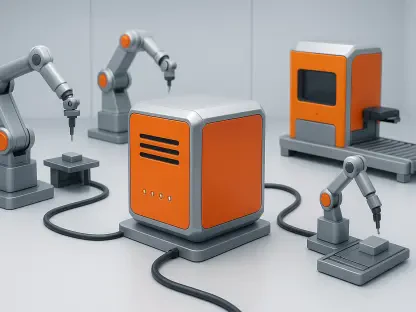
The partnership between BMW, CEAD, and Comau has introduced the Flexbot platform, a modular manufacturing cell that enables a new era of distributed manufacturing. This “location-agnostic” system allows the company to send a digital file to a local cell rather than shipping a physical mold or a massive finished component across the globe. The Flexbot integrates a high-output extruder with a versatile industrial robot, creating a self-contained production unit that can be deployed in various regions with minimal setup. By moving the production closer to the assembly point, the company reduces logistics risks and costs, ensuring that the necessary tools are available exactly where and when they are needed. This modularity means that a factory in the United States can use the exact same digital blueprint as a factory in Germany, ensuring perfect consistency in the tools and components used across the entire global manufacturing network without the need for redundant physical assets.
Decentralized Production: Part 2. Logistics and On-Demand Parts
This decentralized model is particularly valuable for the automotive aftermarket and low-volume production where traditional economies of scale do not apply. Obsolete parts, such as bumpers, trims, or diffusers for older vehicle models, can be printed on demand instead of being stored in massive, expensive warehouses for decades. By moving data instead of physical goods, the company is revolutionizing its logistics and creating a more resilient supply chain that can withstand global disruptions, such as shipping delays or material shortages. This on-demand capability also reduces the environmental impact of the supply chain by eliminating the need for overproduction and long-distance transport. When a customer needs a rare component for a legacy vehicle, the digital file is retrieved from the archives and sent to the nearest LFAM-equipped facility, where it is printed and finished in a fraction of the time it would take to source a traditional replacement.
Research Foundations: Part 1. Material Science at Oberschleissheim
The BMW Group Additive Manufacturing Campus in Oberschleissheim serves as the global hub for refining these technologies and exploring the limits of what additive processes can achieve. Research at this facility focuses on the nuances of material science, specifically how recycled plastics and carbon-fiber-reinforced composites behave during the high-speed extrusion process. This deep scientific inquiry ensures that every printed part meets the high-performance standards expected of a premium automotive brand, from UV resistance to structural fatigue limits. By testing new granulate blends and perfecting the heat management of the printing process, the research team can expand the library of approved materials for factory use. This scientific foundation allows the company to transition more parts from traditional manufacturing to LFAM with confidence, knowing that the additive components will perform reliably over the entire lifespan of the vehicle.
Research Foundations: Part 2. Structural Consolidation Techniques
A major finding from the research conducted at the campus is the immense benefit of part consolidation, where complex assemblies are redesigned as single units. Engineers can now print a complex assembly tool or a structural bracket as a single, cohesive unit rather than assembling it from dozens of individual pieces and fasteners. This eliminates joints—which are traditional points of failure and sources of vibration—resulting in a more robust and reliable product that requires less maintenance. Reducing the part count not only simplifies the assembly process but also decreases the potential for mechanical errors and tolerances stacking up over time. This consolidation also simplifies the supply chain, as the manufacturer only needs to manage a single digital file and one type of raw material instead of tracking hundreds of small screws, brackets, and connectors. The result is a more streamlined production flow and a finished product that is structurally superior to its multi-part predecessors.
Sustainability: The Future of Manufacturing
Environmental Stewardship: Part 1. Waste Reduction Strategies
The sustainability benefits of LFAM are a primary driver for its adoption, particularly as the industry moves toward carbon-neutral production goals. Traditional subtractive manufacturing is inherently wasteful, as it often involves carving a complex part out of a large block of material and creating significant scrap that must be collected, sorted, and re-processed. In contrast, additive manufacturing only places material where it is functionally required, leading to a substantial reduction in raw material consumption and energy use. By building parts layer by layer, the LFAM process ensures that virtually every gram of material used ends up as part of the final component. This “additive mindset” extends to the use of recycled materials, where waste from other parts of the factory can be ground into granules and fed back into the 3D printers, creating a closed-loop system that minimizes the environmental impact of the manufacturing process.
Environmental Stewardship: Part 2. Energy Efficiency through Lightweighting
Beyond waste mitigation, LFAM supports decarbonization goals through the extensive use of lightweighting and energy-efficient designs. Replacing heavy steel or aluminum tools with fiber-reinforced polymers significantly reduces the energy footprint of the manufacturing process from start to finish. Furthermore, lighter tools reduce the inertia that assembly-line robots must overcome during every move, leading to cumulative energy savings across millions of production cycles. When a robot arm is moving a gripper that is 30% lighter, it requires less electricity and experiences less mechanical wear, extending the life of the robot and reducing the total cost of ownership for the factory equipment. These small, incremental savings across thousands of robots and tools add up to a major reduction in the overall energy intensity of the production network, proving that high-tech manufacturing can be both more productive and more environmentally responsible.
Future Frameworks: Part 1. Transitioning to Microfactory Ecosystems
Looking ahead, the trend in automotive manufacturing suggests a move toward robot-driven microfactories that utilize LFAM as their primary fabrication method. These smaller, geographically dispersed units can be configured to meet the specific needs of a local market or a specific vehicle model without the massive overhead of a traditional mega-factory. The modularity of systems like the Flexbot provides a blueprint for a future where manufacturing is decentralized, incredibly fast, and highly customizable to local demands. In such an ecosystem, a microfactory could be set up near a major urban center to produce specialized fleet vehicles or customized consumer models on demand. This shift would drastically reduce the environmental and financial costs of vehicle transport and allow for a more intimate connection between the design, production, and the end-user, marking a new chapter in the history of industrial production.
Future Frameworks: Part 2. The Path to 2027 Series Production
As the automaker approaches the target of series production for metal AM in 2027, the distinction between 3D-printed and conventionally manufactured parts will continue to fade into the background of the industrial landscape. This evolution ensures a more flexible and resilient automotive landscape that can handle the complex challenges of a rapidly changing world. The ongoing integration of artificial intelligence and real-time monitoring into the LFAM process will further enhance quality and speed, making additive manufacturing as reliable as traditional stamping or casting. By investing in these large-scale systems, the company has secured a competitive advantage that balances engineering speed, cost-effectiveness, and environmental stewardship. The transition to LFAM is not just a technological upgrade; it is the foundation of a new manufacturing philosophy that prioritizes intelligence and adaptability over sheer physical scale, ensuring the longevity of the brand in a digital age.
Strategic Outcomes of Digital Transformation
The implementation of Large Format Additive Manufacturing across the global production network established a new baseline for industrial agility and resource management. By moving away from rigid tooling and embracing the flexibility of robotic extrusion, the engineering teams successfully reduced development cycles and material waste. This shift allowed the organization to respond to market fluctuations with unprecedented speed, proving that digital assets are as valuable as physical machinery. The successful deployment of bionic grippers and modular Flexbot cells demonstrated that additive technology was no longer limited to small-scale prototypes but was capable of handling the heavy-duty demands of a high-volume assembly line. Ultimately, these advancements provided a clear pathway toward a circular economy, where recycled materials and localized production combined to create a more sustainable and resilient future for the automotive industry. This transformation ensured that the manufacturing infrastructure remained as innovative and forward-thinking as the vehicles themselves.