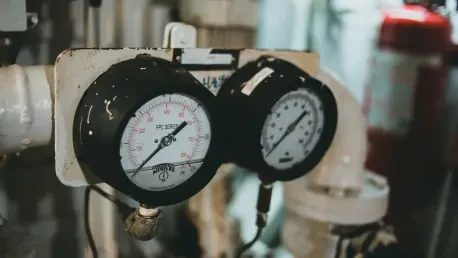

The reliability of industrial water treatment facilities depends heavily on the ability of balanced-type mechanical seals to manage sudden hydraulic pressure spikes. In the current industrial landscape of 2026, the integrity of high-pressure fluid networks has become the primary metric for operational success, particularly within power generation plants and municipal boiler feed systems. These complex environments rely extensively on multi-stage centrifugal pumps, such as the industry-standard Grundfos CR series, to maintain consistent flow under extreme thermodynamic conditions. However, the operational success of these systems is inextricably linked to the performance of their mechanical seals, which act as the final barrier against catastrophic failure. Because these components are subjected to intense hydraulic forces and thermal fluctuations, any deviation in manufacturing quality can lead to mechanical face distortion and premature leakage. For procurement managers, the goal is to source hardware that offers a verifiable path toward stability through strict engineering compliance and quality audits.
Mitigation of Hydraulic Load Through Architecture
The mechanical performance of fluid systems in 2026 relies on the sophisticated physics of balanced-type architecture. In high-pressure environments, conventional seals often succumb to the immense closing force exerted by the system fluid, which leads to excessive heat and accelerated abrasive wear. To mitigate these risks, engineers utilize a “stepped” shaft sleeve that creates a strategic differential in internal pressure areas. By carefully manipulating the ratio between the opening and closing forces, this design ensures that the seal faces remain lubricated and functional even when the system experiences extreme hydraulic surges. This hydraulic balance is not merely a theoretical advantage but a practical necessity for pumps handling abrasive or high-temperature fluids. The reduction in net axial force directly correlates to a decrease in friction torque, which preserves the structural integrity of the mating rings over long service intervals, thereby preventing the catastrophic face distortion that often plagues unbalanced seal alternatives.
Operational Advantages: Semi-Cartridge Integration
Building on these architectural advancements, the integration of semi-cartridge designs has transformed the efficiency of field maintenance for industrial operators. These assemblies are pre-set at the manufacturing facility to guarantee precise spring compression, which is a critical factor in maintaining the optimal closing force on the seal faces. In the past, field technicians were required to perform complex axial measurements during installation, a process that was highly susceptible to human error and misalignment. By utilizing a semi-cartridge format, the need for these on-site adjustments is removed, ensuring that the seal is perfectly aligned the moment it is coupled with the pump shaft. This level of precision engineering not only simplifies the installation process but also significantly reduces the risk of vibration-induced wear. For facilities operating 24/7, this translates to lower energy consumption and a substantial extension of the equipment’s operational lifecycle, providing a stable foundation for the entire fluid network.
ISO9001 Framework: The Standard for Precision
Dimensional precision is the cornerstone of effective fluid isolation, and it is strictly enforced through the ISO9001 quality audit framework. For industry-standard components like the 22mm shaft sleeve used in Grundfos CR pumps, manufacturers employ Coordinate Measuring Machines to verify every internal bore and concentricity profile. Even a deviation of a few microns in axial parallelism can cause the seal assembly to run out of alignment, leading to localized hotspots and uneven face wear. These audits ensure that every component produced in 2026 meets the exact tolerances required for high-speed centrifugal rotation. The use of advanced metrology tools allows for a level of consistency that was previously difficult to achieve in large-scale manufacturing. By verifying that the internal geometry of the sleeve perfectly matches the pump shaft, the audit process eliminates the mechanical stressors that cause premature seal failure. This rigorous oversight provides procurement teams with the confidence that each batch of hardware will integrate seamlessly into their critical infrastructure.
Surface Topography: Prevention of Micro-Fretting
In addition to macro-dimensional accuracy, the control of surface topography is vital for the longevity of high-pressure seals. Quality assurance protocols in 2026 involve the use of electronic profilometers to inspect the surface roughness of both the shaft sleeve and the mating rings. By restricting the roughness to specific microscopic limits, manufacturers can prevent the phenomenon known as “micro-fretting.” This type of wear occurs when small, high-frequency vibrations cause abrasive movement between the seal components and the pump shaft during startup sequences. If the surface is too rough, these vibrations can damage the primary seal, but if it is too smooth, the necessary lubricating film cannot form between the faces. The ISO9001 framework establishes the precise balance required for these surfaces, ensuring that they can withstand the rigorous friction of high-velocity rotation. Maintaining this level of surface integrity is essential for preventing the minute leak paths that eventually grow into significant operational disruptions.
Material Science: Polymer Resilience in Boiler Loops
Material science plays a pivotal role in the success of mechanical seals, especially concerning the secondary sealing elements like polymer elastomers. In high-pressure boiler loops, these O-rings are frequently exposed to aggressive chemical cleaning agents and extreme thermal gradients that can cause standard rubber compounds to fail. To ensure resilience, ISO9001 protocols mandate Shore A durometer testing to verify the material hardness of every elastomer batch. This testing is crucial because a compound that is too soft will “extrude”—or squeeze into the small mechanical gaps between the seal and the housing—under high hydraulic pressure, leading to an immediate loss of containment. Auditors also review comprehensive chemical compatibility logs to guarantee that the polymers can maintain their elasticity over long durations. By ensuring that the secondary seals remain supple and chemically inert, manufacturers protect the internal components from corrosion and leakage, which is fundamental to the stability of the entire high-pressure pump assembly.
Interfacial Hardness: Sintering Quality of Mating Rings
The primary barrier against fluid leakage is the mating ring assembly, typically constructed from high-hardness materials such as silicon carbide or tungsten carbide. Because these rings must endure constant friction at the seal interface, their material density and sintering quality are paramount. Modern auditing frameworks require micro-hardness mapping using Vickers and Rockwell testers to ensure that the material properties are uniform across the entire face. Proper sintering is vital to eliminate micro-cracks or structural voids that could expand under thermal stress, leading to a sudden and catastrophic fracture. A consistent grain boundary in the carbide microstructure ensures that wear rates remain predictable, allowing plant engineers to schedule maintenance based on data rather than guesswork. This focus on material integrity prevents cavitation erosion and ensures that the seal can maintain a tight closure even under the most demanding hydraulic conditions, reinforcing the overall reliability of the industrial water treatment or power generation facility.
Sourcing Security: Traceability and Mill Certifications
For global procurement professionals in 2026, sourcing high-end mechanical components requires a supply chain framework built on total transparency and traceability. Leading manufacturers have implemented digital tracking systems that record every production milestone, from the origin of raw material batches to the results of the final inspection. Providing “mill test certifications” and optical flatness logs has become a standard requirement for verifying that aftermarket components meet or exceed the specifications of original equipment manufacturers. This level of documentation allows plant managers to integrate specialized hardware into their preventative maintenance programs with absolute confidence. By having access to the full manufacturing history of a 22mm pump shaft seal, buyers can mitigate the risks associated with international sourcing and ensure that their supply chains are resilient. This transparency is not just about compliance; it is about creating a data-driven partnership between the manufacturer and the end-user that prioritizes the long-term integrity of critical industrial infrastructure.
Verification Protocols: Helium Light Band Analysis
One of the most sophisticated steps in the modern quality control process is the application of helium light band analysis to verify seal face flatness. This high-precision technique uses monochromatic light to audit the topography of the seal faces within fractions of a light wave, ensuring a level of flatness that is invisible to the naked eye. Achieving this extreme level of precision is the final safeguard against “out-of-box” defects, as even the smallest microscopic indentation can serve as a primary leak path under high pressure. When seal faces are polished to these exacting standards, the resulting surface allows for the formation of a stable hydrodynamic film that lubricates the interface during operation. This reduces the friction coefficient and prevents the overheating that leads to seal face blistering. For manufacturers, this rigorous testing approach is the ultimate demonstration of quality assurance, proving that every component is ready for immediate installation in high-demand environments where any amount of downtime is unacceptable.
Long-Term Integrity: Path to Operational Excellence
The industry ultimately recognized that the path to operational excellence was paved with dimensional precision and material integrity. In the transition toward more resilient infrastructure, procurement teams prioritized hardware that documented every stage of production through mill test certifications. By adopting these high-precision components, facilities successfully mitigated the risks associated with high-pressure fluid isolation and sudden hydraulic spikes. The move toward certified balanced-type seals established a new benchmark for safety, ensuring that critical water treatment and power generation processes remained continuous and efficient. Plant managers utilized data from Coordinate Measuring Machines and helium light band analysis to eliminate the uncertainty that previously characterized aftermarket sourcing. This strategic focus on quality auditing allowed industrial operators to reduce the total cost of ownership while extending the lifecycle of their multi-stage pumping systems. As a result, the global supply chain for mechanical seals became more transparent, setting a standard for reliability that protected modern infrastructure.