
A precision-machined marine bushing might look perfect on the inspection table, but its catastrophic failure during the first month of field operation often points to a fundamental misunderstanding of alloy selection rather than a flaw in the actual CNC process. In modern manufacturing, the assumption that all bronze alloys are interchangeable frequently leads to expensive production delays and components that cannot withstand the physical realities of their intended environments. With over four hundred distinct alloys currently available, the term bronze represents a vast spectrum of metallurgical properties that dictate everything from corrosion resistance to electrical conductivity. High-end industrial projects in 2026 demand a more nuanced approach where the material chemistry is aligned with the specific mechanical stresses of the application long before the spindle begins to turn. By shifting focus from generic machining manuals to a data-driven strategy, engineers can bridge the gap between theoretical design and the harsh demands of real-world operational service.
Material Selection: The Foundation of Component Longevity
The most common engineering pitfall involves treating bronze as a monolithic material, which often results in selecting an alloy that is either overkill for the application or woefully inadequate. C93200, frequently referred to as SAE 660, serves as the industry workhorse for a good reason, as it offers a highly favorable balance of cost-effectiveness and machinability for general-purpose bearings. This alloy is particularly well-suited for sleeve bearings and bushings that operate under continuous rotational loads with consistent lubrication, making it a staple for domestic industrial machinery. However, using this bearing bronze in a marine environment or under high-load oscillation is a recipe for premature wear. In contrast, C95400 Aluminum Bronze provides the necessary resilience for saltwater exposure and heavy-duty hardware, although it introduces a significant machining tax. Manufacturers must account for the fact that Aluminum Bronze typically requires twenty percent longer cycle times and causes faster tool degradation due to its inherent hardness.
Specialized applications require moving even further away from standard bearing alloys to utilize the unique physical properties of materials like C51000 and C86300. Phosphor bronze is the gold standard for precision electronics and spring-loaded connectors because its high fatigue resistance ensures that thin components do not snap under repetitive stress. While its machinability is moderate, the electrical performance it provides makes it irreplaceable in the current tech landscape. On the other end of the spectrum, Manganese Bronze, or C86300, is an outlier that provides tensile strength comparable to many high-strength steels. This makes it the ideal candidate for heavy-duty gears and hydraulic components, yet it remains one of the most difficult bronze alloys to machine. Cutting this material requires extremely conservative speeds and specialized carbide tooling to manage the intense heat generated during the process. Navigating these alloy choices requires a balance between the functional needs of the final part and the operational costs of the machine shop.
Design for Manufacturability: Balancing Geometry and Expense
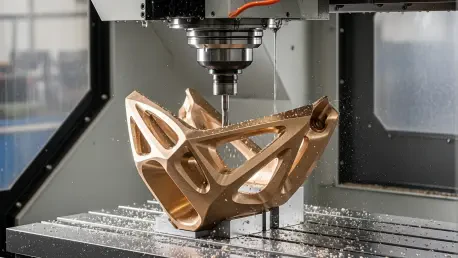
Significant cost inflation in CNC machining often stems from a disconnect between the engineering office and the practical limitations of the machine shop floor. One of the most pervasive issues is the specification of sharp internal corners, which are physically impossible to create with standard rotating cutting tools without secondary operations. Because bronze is a clean-machining metal that produces manageable chips, designers are often tempted to push for tighter geometries that require tiny, fragile end mills. These small-diameter tools necessitate multiple slow-feed passes to avoid breakage, which exponentially increases the time a part spends on the machine. By adjusting internal radii to align with standard tool increments, such as those between 0.5mm and 1.5mm, designers can allow for the use of larger, more robust tools. This simple change reduces cycle times significantly and eliminates the need for custom tooling, making the entire production run more economical.
Structural integrity is another critical factor where design decisions directly influence the success of the machining process, particularly concerning wall thickness. When designing bronze components, maintaining a wall thickness of at least 2mm is essential for preventing the phenomenon known as chatter. Chatter occurs when thin sections of the metal vibrate during the cutting process, leading to poor surface finishes and dimensional inaccuracies that can render a part useless. While specialized fixturing can sometimes mitigate these vibrations, the additional setup time and complexity will invariably increase the per-part cost. It is far more efficient to slightly revise the geometry to ensure the part remains rigid throughout the machining sequence. Furthermore, engineers should resist the urge to over-engineer by applying tight tolerances to non-functional features. Focusing high-precision requirements only on critical mating surfaces and contact points can reduce overall machining expenses by up to twenty-five percent.
Functional Tolerancing and Material Alternatives
The trap of over-engineering is not limited to geometry; it extends into the realm of precision and the refusal to consider alternative materials when bronze may not be the optimal choice. While modern CNC equipment can hold tolerances as tight as 0.01mm, maintaining such precision across an entire component increases inspection time and the risk of generating expensive scrap. Adopting a philosophy of functional tolerancing allows manufacturers to prioritize resources where they matter most, ensuring that the critical interfaces perform perfectly while non-essential surfaces are kept within more reasonable limits. This approach becomes even more vital when working with high-cost bronze alloys where every wasted gram of material impacts the bottom line. If the design requirements for a part involve extreme weight sensitivity, as is common in the aerospace sector, the high density of bronze can become a liability that outweighs its traditional wear benefits.
In high-volume production environments where the budget is the primary constraint, it is often necessary to evaluate whether a bronze part can be effectively replaced by an engineered plastic. For applications that involve dry-running conditions or relatively light loads, materials like PEEK or glass-filled nylon can provide a sixty percent reduction in manufacturing costs. These plastics offer excellent chemical resistance and low friction coefficients, though they cannot match the thermal conductivity or structural strength of bronze. Conversely, if a component must endure severe abrasive contact or heavy impact loading, even the strongest manganese bronze alloys may prove insufficient. In these extreme cases, transitioning to hardened or tool steels is the only way to ensure the long-term reliability of the assembly. Recognizing these environmental limits is a hallmark of sophisticated engineering, ensuring that bronze is used only where its unique characteristics provide a definitive performance advantage over modern synthetic alternatives.
Thermal Dynamics and Precision Execution
Success in producing high-performance bronze components is ultimately determined by a deep understanding of thermal physics and the specific production parameters of each alloy. Bronze has a coefficient of thermal expansion that sits between that of steel and aluminum, which creates unique challenges when parts are intended for multi-material assemblies. If a bronze bushing is press-fitted into a steel housing, the differential expansion that occurs as the machine reaches its operating temperature can cause internal stresses or even cause the assembly to seize. Designers must account for these thermal deltas by calculating clearances that accommodate expansion across the entire expected temperature range. This foresight prevents mechanical failures that often occur hours after a machine has been commissioned. Moreover, the cooling strategy during machining must be consistent to prevent the part from warping as it is removed from the fixture, ensuring the final dimensions remain stable.
The production professional must also realize that there is no universal speed or feed setting that works for all types of bronze. While softer alloys like C93200 can be processed at high speeds ranging from 150 to 300 meters per minute using standard carbide tools, harder alloys require a much more measured approach. For instance, machining high-strength manganese bronze at those same speeds would lead to instant tool failure and a ruined surface finish. For these tougher materials, keeping speeds below 100 meters per minute is necessary to maintain the integrity of the cutting edge and ensure a smooth, professional finish. The transition from initial prototyping to high-yield production runs relied on documenting these specific nuances and adhering to a rigorous, data-driven approach to material science. In the end, the most reliable bronze components were those designed with an awareness of the material’s failure modes, ensuring that every dollar spent on machining contributed directly to the part’s performance and longevity.