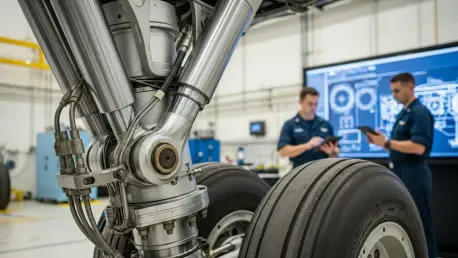

The sudden and dramatic collapse of the nose landing gear on a stationary Lufthansa Boeing 787-9 at Frankfurt Airport serves as a startling reminder that even aircraft at rest are not immune to catastrophic structural failures. In an era where global air travel demand remains at an all-time high, the focus on manufacturing quality control has undergone a fundamental transformation. What was once viewed as routine oversight has now become a critical pillar of aviation safety and corporate accountability. This analysis examines the current trends in aerospace defects, the recurring challenges within modern aircraft programs, and the trajectory of regulatory rigor as the industry moves forward.
The Shifting Landscape of Aerospace Production and Safety Monitoring
Tracking the Rise of Manufacturing Defects and Regulatory Intervention
Over the last several years, the industry has experienced a significant rise in production audits and delivery halts, largely driven by structural non-conformance in long-haul fleets. Data indicates that regulatory bodies have become far less tolerant of manufacturing deviations, specifically targeting issues like fuselage gaps and improperly secured components. These statistical spikes in reported defects have forced a widespread reevaluation of how aircraft are assembled and inspected before they ever leave the factory floor.
Moreover, there has been a notable shift in the adoption of automated inspection technologies. Manufacturers are increasingly relying on high-precision robotics and laser scanning to detect minute flaws that the human eye might overlook. As assembly lines speed up to meet mounting orders, the tension between production volume and quality assurance has become a central theme in industry discussions. The goal is to minimize human error, yet the transition to these advanced systems presents its own set of technical challenges and integration hurdles that require ongoing refinement.
Case Study: The 787 Dreamliner and the Frankfurt Landing Gear Incident
The recent incident in Frankfurt involved a 787-9 that had been in service for only a few months, having completed just 137 flights. Video evidence showed the aircraft nose dropping several meters after the front wheels slid forward, causing the gear bay doors to break upon impact. This event is particularly troubling because it occurred while the aircraft was stationary, just moments before passengers were scheduled to board for a flight to Los Angeles.
This failure draws uncomfortable parallels to previous setbacks in the program, including a historical event at Heathrow where a misplaced locking pin led to a similar collapse. Over time, the program has been hindered by a variety of quality-control issues, from bulkhead defects to horizontal stabilizer fittings. Each incident reinforces the idea that even advanced carbon-fiber aircraft are vulnerable to precision errors during both the manufacturing and maintenance phases, necessitating a more robust approach to long-term structural integrity.
Expert Perspectives on Mechanical Integrity and Maintenance Precision
Aviation safety experts, such as former investigator Jeff Guzzetti, highlight that a landing gear failure on a stationary aircraft is a highly irregular occurrence. Investigators are now tasked with reviewing flight data and maintenance logs to determine if the hardware suffered from a latent manufacturing defect or if ground protocols were not followed correctly. The rarity of such an event suggests that a unique combination of mechanical stress and human error may be at play, requiring a deep dive into the aircraft’s short operational history.
There is a growing consensus among analysts that the pressures of maintaining a global fleet often lead to compromises in maintenance precision. While the integrity of the hardware remains the primary focus, the human factor is increasingly viewed as the most volatile variable in the safety equation. Experts argue that even a minor lapse in a maintenance protocol can negate years of engineering excellence, making the consistency of ground operations just as vital as the assembly process itself.
The Future of Quality Control: Navigating Technological and Structural Challenges
The integration of Artificial Intelligence and digital twins represents a new frontier in predicting structural weaknesses. By creating a virtual model of an aircraft that updates in real-time based on actual flight conditions, engineers can identify potential failures before they manifest. This technology allows for a shift from reactive repairs to predictive maintenance, ensuring that components are replaced based on actual wear rather than arbitrary schedules.
Furthermore, regulatory bodies like the FAA are considering a more permanent, embedded presence on factory floors. This move toward real-time oversight aims to prevent non-conforming parts from entering the supply chain in the first place. Although these measures may lead to longer delivery timelines and increased aircraft costs, the industry is gradually accepting that the price of safety is a non-negotiable aspect of modern aviation.
Strengthening the Foundations of Aviation Safety
The industry recognized that the link between manufacturing flaws and operational safety required immediate attention to restore global confidence. Stakeholders prioritized the implementation of real-time monitoring systems and more transparent reporting standards to address systemic weaknesses. By focusing on a safety-first manufacturing philosophy, the sector worked toward ensuring that every airframe met the highest standards of reliability. These collective efforts eventually fostered a culture where engineering precision was valued above all other metrics, providing a clearer path for the future of flight.