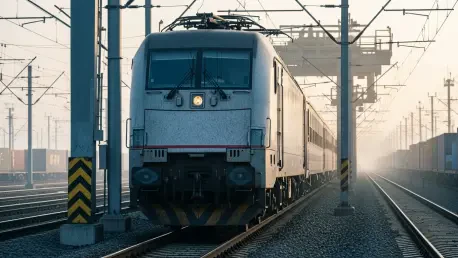

A single freight train carries enough cargo to replace a bumper-to-bumper convoy of trucks stretching over twenty miles, yet this efficiency often vanishes at the invisible wall that divides the American rail network into Eastern and Western territories. Currently, the national system functions as a fractured map, requiring most cross-country shipments to halt and exchange carriers at mid-continent hubs like Chicago or St. Louis. Union Pacific’s bold $85 billion bid to acquire Norfolk Southern seeks to dismantle this antiquated “hand-off” system, promising to unify the tracks and redefine North American logistics for the coming century.
This massive financial commitment represents more than just an expansion; it is a fundamental gamble on the future of transcontinental commerce. By merging these two giants, Union Pacific aims to create the first truly seamless coast-to-coast rail service in modern history. The move signals a shift away from the traditional regional silos that have dictated rail operations since the industrial era, moving toward a model where speed and reliability are prioritized over legacy boundaries. This integration would allow a single locomotive to pull a shipment from the Port of Los Angeles directly to the warehouses of the Atlantic coast without the administrative and physical friction of a mid-trip transfer.
The $85 Billion Gamble: Redefining the American Tracks
The $85 billion price tag associated with this merger reflects the high stakes of modernizing an industry that serves as the backbone of the economy. Union Pacific is positioning this acquisition as the ultimate solution to the fragmentation that has long hampered the efficiency of rail transport. By controlling the entire route, the company can optimize schedules and track usage on a scale that was previously impossible. This unified approach is expected to eliminate the need for complex interline agreements and the physical switching of railcars, which are often the primary sources of delay and damage in the shipping process.
Beyond the logistical mechanics, the merger represents a strategic pivot toward a more customer-centric business model. For decades, railroads have struggled to compete with the flexibility of the trucking industry, which can navigate the entire country without stopping for a carrier swap. This merger aims to level that playing field by providing a “one-stop shop” for shippers who require the volume of rail with the speed of a highway. The success of this gamble hinges on the ability of the new entity to maintain operational fluidity while managing the immense complexity of two massive, disparate networks.
The Evolution of the Transcontinental Ambition
Since the early years of the millennium, the United States rail industry has operated under a rigid geographic duopoly: two dominant carriers in the East and two in the West. This historical structure frequently creates logistical bottlenecks that ripple through the global supply chain, a reality that became glaringly obvious during recent periods of extreme port congestion and inflationary pressure. Union Pacific is now attempting to break this mold, responding to an urgent demand for transit solutions that can compete with the long-haul trucking sector.
The trucking industry currently controls a vast majority of high-value consumer goods transport due to its flexibility and speed. To capture a larger share of this market, the rail sector must overcome its reputation for slow, multi-carrier coordination. A unified network would allow Union Pacific to provide a streamlined alternative, leveraging the massive scale of a combined fleet to offer a more predictable schedule. This evolution reflects a broader trend where rail is no longer just a hauler of bulk commodities like coal or grain, but a high-tech partner in the modern retail economy.
Strategic Integration: The Quest for Uninterrupted Freight
The primary objective of this integration involves the creation of a direct, uninterrupted path for freight moving from the Pacific to the Atlantic. Union Pacific estimates that a single-line service could reduce transcontinental transit times by as much as 48 hours, a significant margin in a world where just-in-time inventory management is the standard. This efficiency gain is not merely about time; it is about the reliability that comes from removing the physical and administrative delays associated with switching cars between different companies in congested rail yards.
Environmental considerations also play a major role in the strategic justification for this merger. The proposal projects the removal of approximately 2.1 million truckloads from national highways annually, which would dramatically lower carbon emissions and reduce wear on public infrastructure. Shippers are expected to see significant economic benefits as well, with projected savings of nearly $3.5 billion as they move cargo from expensive roads to the more fuel-efficient tracks. This transition positions the rail industry as a critical player in achieving national sustainability goals without sacrificing economic growth.
Divergent Industry Perspectives: The Regulatory High Bar
Securing approval for such a monumental deal requires navigating the stringent “public interest” standards maintained by the Surface Transportation Board. This regulatory body remains wary of major consolidations following the service disruptions that plagued the industry during previous merger cycles. Union Pacific CEO Jim Vena has characterized the acquisition as a “marriage of equals,” designed to ignite a competitive “boxing match” with BNSF. He argued that the resulting rivalry between two massive networks would drive innovation and better service for all customers.
However, the proposal has encountered stiff resistance from various corners of the industry. Critics, including BNSF CEO Katie Farmer, argued that the merger serves shareholder interests at the expense of operational stability. There are deep concerns that “captive shippers” in the agricultural and chemical sectors—those with no alternative transport options—could face monopolistic pricing and reduced service quality. These stakeholders worry that once the competition is consolidated, the incentive to maintain low rates and high-frequency service will diminish, potentially leaving vital sectors of the economy vulnerable to price hikes.
A Framework for Stability: Labor Guarantees and Financial Safeguards
To address the potential for operational chaos, Union Pacific established a detailed framework intended to stabilize the transition. This plan included a “job for life” guarantee for all active union employees at the time of the merger, ensuring that the human element of the railroad remained protected during the integration process. Furthermore, the company proposed a customer advisory board to track service levels in real-time, providing an early warning system for any emerging bottlenecks. These measures aimed to prevent the technical failures that historically followed large-scale rail consolidations.
Financial safeguards also defined the terms of the agreement, including a $2.5 billion breakup fee if the deal failed to clear regulatory hurdles. Union Pacific set a specific cap on regulatory concessions, limiting the amount of forced divestiture the company would accept before abandoning the pursuit. This disciplined approach ensured that the merger only proceeded if it remained a viable enterprise for all stakeholders. Ultimately, the proposal sought to balance the ambitious goal of a unified transcontinental network with the practical realities of protecting the workforce and maintaining the integrity of the American supply chain.