
As a seasoned expert in industrial logistics and production management, Kwame Zaire offers a unique vantage point on the intersection of global trade and geopolitical stability. With his extensive background in manufacturing equipment and energy infrastructure, he has closely monitored the volatility in the Middle East and its cascading effects on international supply chains. Following the announcement of a tentative agreement between the United States and Iran to end their recent conflict, Zaire provides an essential deep dive into the logistical complexities of reopening the world’s most vital maritime chokepoint and the fragile diplomatic threads that hold this ceasefire together.
The following discussion explores the multifaceted challenges of the Geneva agreement, ranging from the immediate logistical hurdles in the Strait of Hormuz to the deep-seated territorial disputes involving Israel and Lebanon. We delve into the critical sixty-day window for nuclear negotiations and the broader economic implications for a world currently reeling from a massive energy crisis.
How do you perceive the logistical and political hurdles of reopening the Strait of Hormuz, especially given that it won’t officially happen until the signing in Geneva this Friday?
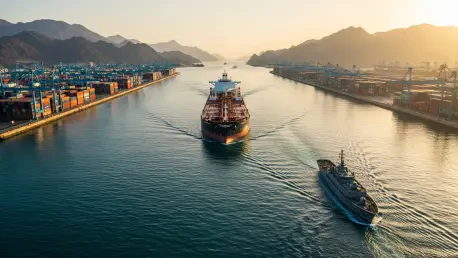
The logistics of reopening a waterway like the Strait of Hormuz are far more complex than simply flipping a switch, as the physical security of the passage is currently compromised by the remnants of a war that began on February 28. Even though Pakistan has mediated this initial deal, we are looking at a situation where a fifth of the world’s oil and natural gas has been stalled, creating a massive backlog that will take months to clear. There is an incredible amount of tension surrounding the Friday signing in Geneva; as we have heard from officials like Xavier Bettel, a lot can go wrong in a few days. We have to consider that Iranian attacks and the subsequent U.S. blockade have left the area a virtual graveyard for shipping schedules, and the sensory reality of the region—the smell of burning fuel and the sight of silent tankers—reminds us that maritime insurance and safety protocols must be entirely rebuilt. Until that document is signed, the blockade remains a suffocating force on the global economy, and we cannot expect a return to normalcy until the energy companies can safely redeploy their assets without the threat of renewed hostilities.
With Israel maintaining its stance on Lebanon and seizing 1,000 square kilometers of territory, how does this complicate the fragile peace agreement brokered by Pakistan?
This is perhaps the most volatile element of the entire deal because Israel is not a party to the agreement and has shown no intention of withdrawing from the 1,000 square kilometers of land it has seized across Lebanon, Syria, and Gaza over the last two and a half years. The defense minister, Israel Katz, has been very clear that they plan to stay indefinitely, which directly contradicts Iran’s demand that the war cannot end without a total cessation of fighting in Lebanon. When you walk through the southern suburbs of Beirut, the devastation is visceral, and the Israeli bombing just this past Sunday shows how quickly a single air strike can derail months of Pakistani mediation. Hezbollah is already calling for the return of prisoners and the reconstruction of these war-torn areas, yet the Israeli government remains focused on the threat of a nuclear Iran and the 15 months of tension that preceded the current conflict. This misalignment creates a massive strategic gap; while the U.S. and Iran might sign a piece of paper in Switzerland, the actual ground reality in Lebanon could spark a new cycle of violence that would make the Geneva deal irrelevant before the ink is even dry.
The deal sets a tight 60-day window to address Iran’s nuclear program; what are the technical and strategic implications of this deadline for regional security?
A sixty-day timeline to resolve an issue as dense as highly enriched uranium stockpiles is an almost impossible task, especially when you consider that the original 2015 accord took years of painstaking technical negotiations to finalize. From my perspective in production and quality management, the oversight required to verify the peaceful nature of Tehran’s program involves complex inspections that cannot be rushed without sacrificing safety and certainty. The U.S. and Israel are deeply concerned that these materials could be pivoted toward weaponization, a fear that has only intensified since the U.S. unilaterally withdrew from the previous agreement during the first Trump term. If they cannot reach a consensus within those two months, the underlying triggers for the war—the fear of an atomic threat—will remain fully active, potentially leading to a resumption of the blockade or worse. The pressure is immense because the deal’s longevity depends on technical benchmarks that usually require a stable, multi-year framework, yet the world is asking for a miracle in just eight weeks.
Considering the immense economic pressure, what does the restoration of shipping traffic look like from an operational perspective once the French and other G7 forces intervene?
Restoring traffic will be a high-stakes military and commercial operation, likely involving international missions like the one President Macron mentioned, utilizing assets like the nuclear-powered aircraft carrier Charles de Gaulle. We aren’t just talking about moving ships; we are talking about clearing mines, re-establishing satellite tracking, and ensuring that the Iranian ports, which have been under a U.S. blockade, are actually functional for trade again. The ripple effects of this closure have sent the prices of basic goods and fuel skyrocketing far beyond the borders of the Middle East, affecting every manufacturing sector that relies on stable energy costs. We will see preparatory meetings in Doha this week to map out these corridors, but the reality is that the “shaky ceasefire” makes every captain and crew member nervous about being caught in a crossfire. It takes a significant amount of coordination to move 20% of the world’s energy through such a narrow and contested space, and the operational success will depend entirely on whether the Lebanese army’s warnings about “Israeli violations” are heeded or ignored by the merchant fleet.
Given the historical tensions and the recent attacks on Gulf energy infrastructure, what is your forecast for the global energy market?
My forecast for the global energy market is one of guarded and precarious recovery, as the supply chain is currently too bruised to bounce back immediately after the Friday signing. While the opening of the Strait of Hormuz will technically allow oil and gas to flow again, the psychological damage to the market and the physical damage to Gulf energy infrastructure mean that prices will remain volatile and elevated for at least several months. We have to watch the 60-day nuclear window very closely; if those talks fail, the market will likely pre-emptively spike in anticipation of renewed sanctions or military strikes. Additionally, because Israel intends to remain in its seized territories, the risk of a “spoiler” event—a localized strike in Lebanon leading to a wider regional flare-up—remains at an all-time high. Investors and manufacturers should prepare for a slow stabilization characterized by sudden price fluctuations whenever news breaks from Geneva or Jerusalem, as the “normal” we knew before Feb 28 is still a very long way off.