
The localized water shortage at the 2 Sisters poultry plant in Willand serves as a stark warning about the profound fragility inherent in modern food supply chains that many take for granted. While the incident appeared to be a minor regional setback confined to a single facility, it actually revealed a significant disconnect between essential infrastructure and the regulatory frameworks governing it. This crisis highlights a systemic vulnerability where local resource issues can quickly spiral into national security concerns, exposing the gaps in how we manage the vital links between water, energy, and food production. Traditionally, these resources have been treated as independent commodities, yet this event demonstrates that a failure in one can trigger a cascade of consequences across the entire economy. As we look at the current landscape, it becomes clear that the resilience of our food supply is tethered to the stability of aging utility networks that were not designed for the modern intensity of high-output agricultural processing.
The Fragmentation of Essential Utility Networks
Modern infrastructure management is currently hampered by a fragmented approach where water companies, food producers, and government agencies operate in isolated silos that rarely communicate. Although these entities may meet their individual performance targets and satisfy their specific regulatory mandates, the lack of horizontal integration creates significant friction points that no single authority is responsible for overseeing. This fragmented structure fails to account for the reality that water is supplied locally but supports a national food system influenced by global climate pressures. When a regional water utility faces a supply dip, the impact is not confined to residential taps but ripples through industrial facilities that feed millions of people across the country. The absence of a unified oversight body means that risks are often miscalculated, as each sector focuses only on its own internal metrics rather than the broader health of the interconnected national network.
This systemic disconnect becomes particularly evident during periods of high demand or environmental stress when the competition for resources intensifies between different sectors. Without a clear hierarchy of priority or a mechanism for cross-sector coordination, the food industry often finds itself at a disadvantage compared to domestic water usage or other industrial needs. The reliance on legacy infrastructure further complicates this issue, as older systems were never intended to support the high-density processing requirements of contemporary food hubs. Integrating digital monitoring tools and predictive analytics could bridge these gaps, yet the current lack of shared data between utilities and producers prevents a proactive response to emerging shortages. To build a more resilient foundation, it is necessary to move beyond siloed thinking and recognize that the reliability of a factory’s water pipe is just as critical to national stability as the power grid or the transportation network that delivers final products.
Biological Constraints in the Just-in-Time Economy
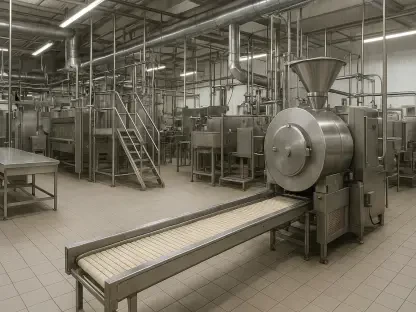
Food systems, particularly poultry processing, face unique biological and ethical constraints that set them apart from standard manufacturing sectors or consumer goods production. Unlike a manufacturing line that can be paused during a resource shortage without damaging the raw materials, live animal production operates on a continuous clock that demands constant water for animal welfare and hygiene. Any disruption in the water supply immediately threatens the entire supply chain, as the “just-in-time” nature of the industry leaves no room for delays without compromising the health of the animals or risking public safety. High-throughput facilities require immense volumes of water not just for the production process itself, but for maintaining the rigorous sanitary standards required by modern health regulations. When the water stops flowing, the biological clock does not, creating a logistical nightmare that quickly transitions from an operational problem to a profound ethical and regulatory crisis.
The economic pressures of a just-in-time economy further exacerbate these biological risks, as slim profit margins and tight delivery schedules leave little room for error. Most large-scale poultry processors do not have the luxury of extensive on-site water storage that could sustain operations for more than a few hours, making them entirely dependent on the continuous reliability of the municipal supply. This dependency creates a single point of failure that can disrupt the availability of protein on supermarket shelves within forty-eight hours of a localized outage. Furthermore, the specialized nature of these facilities means that production cannot easily be shifted to other regions on short notice, as each plant is a specialized hub designed for specific throughput levels. This concentration of production capacity in key geographic areas makes the entire food system more efficient but also more vulnerable to localized utility failures that can have disproportionate effects on national food availability.
Forging a Path Toward Holistic Resource Governance
Traditionally, governments have treated sectors like energy, water, and food as separate pillars of Critical National Infrastructure, which has led to a siloed response to crises. However, a more accurate view recognizes them as a single, integrated system where a failure in one area inevitably triggers a crisis in another, demanding a more comprehensive strategy. True national resilience requires shifting focus away from protecting individual sectors in isolation and toward managing the intersections where they meet, ensuring that minimum service levels are protected even when industries compete. This shift necessitates the development of a collaborative framework where resource allocation is determined by social and economic impact rather than just regional availability. By mapping the interdependencies between the water grid and food production hubs, policymakers can identify the most vulnerable nodes in the network and prioritize infrastructure upgrades that provide the greatest collective security.
The realization that the nation’s food security was inextricably linked to regional water infrastructure prompted a significant shift in how policymakers approached industrial resilience. Experts argued that a robust national food strategy had to look beyond simple production targets to address the practical operational challenges posed by climate change and aging utilities. Stakeholders established new information-sharing networks that allowed poultry processors and water companies to coordinate responses to potential shortages long before they reached a critical stage. This integrated philosophy of “connected responsibility” ensured that every entity understood the cascading effects of their actions on the broader supply chain. By moving toward a model of holistic resource governance, the industry successfully turned a moment of localized crisis into a blueprint for a more durable and integrated national infrastructure. This transition provided the necessary tools to secure the food supply against future environmental and logistical pressures.