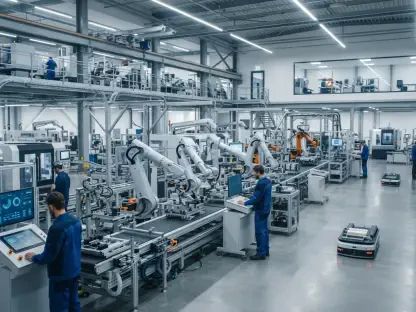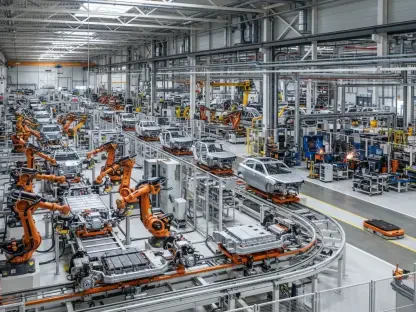

The sprawling manufacturing facilities in Shanghai that currently churn out luxury SUVs for the American market are bracing for a massive industrial exodus as Ford Motor Company initiates a multi-year plan to bring Lincoln production back to the United States. In a move that signaled the end of a decades-long reliance on offshore manufacturing, the automaker confirmed a dramatic strategic shift in its global footprint. This transition, which is scheduled to conclude by 2030, marks a fundamental pivot toward domestic investment and supply chain resilience. For the Lincoln brand, which has increasingly leaned on Chinese production for its flagship luxury models, this pivot represents more than just a change in geography; it is a total reassessment of what it means to be an American luxury icon.
The decision to retreat from the “made in China” era was not a matter of preference but a response to an increasingly hostile economic environment. For several years, the feasibility of importing high-end vehicles from transpacific hubs had been a cornerstone of Ford’s global strategy. However, the current trade landscape has rendered this model nearly impossible to maintain. By relocating production to the American heartland, Ford is attempting to reconcile its luxury aspirations with a reality where local manufacturing is once again the most stable path forward.
From Shanghai to the Heartland: A Multibillion-Dollar Pivot
The scheduled 2030 shift represents a multibillion-dollar bet on the long-term viability of American manufacturing. For years, the Lincoln brand successfully navigated the complexities of international trade, but the rising tide of fiscal barriers has finally reached a breaking point. The most significant obstacle is a massive 52.5 percent tariff currently levied on vehicles imported from China. This tax makes the current import model for the Lincoln Nautilus economically impossible, effectively erasing any profit margins that were previously gained through lower labor costs overseas.
Transitioning from transpacific supply chains to domestic manufacturing is about more than just avoiding taxes; it is about establishing a predictable future. While Shanghai provided a robust production hub for the Asian market, the costs associated with shipping and duties for the U.S. market have become unsustainable. Moving production back to American soil allows Ford to bypass these heavy financial burdens while ensuring that its luxury division remains competitive against both domestic and European rivals who have also begun to reshore their operations.
The High Stakes of Modern Automotive Manufacturing
The global automotive landscape is currently undergoing a profound transformation from a focus on globalized efficiency to one of technological sovereignty. In the past, manufacturers prioritized the lowest possible production costs, often looking to regions with established infrastructure and cheaper labor. Today, trade policy has replaced labor costs as the primary architect of the supply chain. Protectionist measures are no longer temporary hurdles but are instead permanent features of the international market, dictating the long-term viability of luxury vehicle imports.
Connecting domestic investment to broader national security trends has become a standard practice for legacy automakers. As vehicles become more advanced, the hardware and software used to build them are scrutinized with the same intensity as sensitive military equipment. Ensuring that industrial capacity remains within domestic borders is now seen as a way to safeguard against geopolitical shifts that could suddenly sever critical supply lines. This movement toward localized production reflects a growing industry consensus that operational security is far more valuable than the marginal savings of overseas manufacturing.
Deconstructing the Catalysts for Reshoring
The financial wall created by the Lincoln Nautilus import duties served as the immediate trigger for this change, but other regulatory pressures played an equally significant role. Chief among these is the “Connected Vehicle Rule,” which addresses growing national security concerns regarding the integration of Chinese-developed hardware and data systems in American cars. By moving software and hardware integration to American soil, Ford can streamline its compliance processes and ensure that its vehicles meet the most stringent safety and security standards without the risk of being barred from the road.
Avoiding the “Polestar Risk” has also become a priority for Ford leadership. This term refers to the potential for a brand to lose market access entirely due to tightening technological authorizations on foreign components. Furthermore, proposed legislative measures in Washington seek to ban companies with high foreign ownership or significant overseas dependencies from participating in the domestic market. For a brand like Lincoln, securing its market access by moving production home is a necessary step to future-proof its business against an increasingly restrictive legislative environment.
Insights from the C-Suite and Washington
Jim Farley, the CEO of Ford, has been vocal about the fact that the international trade landscape is no longer sustainable for brands that rely on heavy imports. He emphasized that the era of moving production to wherever labor is cheapest has ended, replaced by an era where proximity to the consumer and regulatory alignment are the keys to success. This perspective is shared by figures like Howard Lutnick, who has frequently pointed out that localized domestic production provides a unique competitive edge in a market where consumers and regulators alike are demanding more accountability.
The industry consensus on this matter is growing, especially following General Motors’ decision to move production of the Buick Envision to the U.S. by 2028. Analysts have noted that the U.S. Senate Commerce Committee is playing a pivotal role in shaping this future, with potential measures that could impact the operations of even major European and Asian brands. For American companies, the goal is to lead the way in this transition, ensuring that their supply chains are as resilient as they are efficient before new mandates become law.
Strategies for Reshoring and Future-Proofing Supply Chains
Automakers identified at-risk international manufacturing assets before trade barriers solidified further, allowing them to begin the slow process of repatriation. They prioritized the scaling of output at existing domestic hubs, such as the Louisville and Chicago assembly plants, to ensure these facilities could handle the increased volume of luxury models. By decoupling software development from overseas installation, manufacturers ensured that every vehicle met federal connectivity standards. This shift toward domestic hubs not only served the local market but also established a reinforced manufacturing base that functioned as a primary export center for North America and the Middle East.
Operational security eventually took precedence over short-term manufacturing efficiency in this new economy. Strategic planners focused on building a supply chain that could withstand volatile trade wars and shifting geopolitical alliances. They recognized that while the costs of reshoring were high, the cost of being locked out of the world’s most lucrative luxury market was far higher. Ultimately, the decision-makers established a blueprint for long-term growth that relied on American labor and localized technological control, ensuring that the next generation of luxury vehicles would be built on stable ground.