
The dream of having a mechanical assistant capable of managing household chores has finally transitioned from the silver screen to a massive industrial reality in Northern California. With the opening of a state-of-the-art facility in Hayward, the robotics firm 1X is pioneering a monumental shift by establishing the first domestic manufacturing hub dedicated to large-scale humanoid production. This 58,000-square-foot site represents more than just a logistical expansion; it serves as a central nerve center for the “NEO” robot, a humanoid engineered for safety and utility within private residences. By moving beyond experimental laboratory settings, the company is demonstrating that general-purpose robotics have matured enough to enter the consumer market with confidence. The facility currently employs a workforce of over 200 skilled individuals, bridging the gap between advanced artificial intelligence and tangible mechanical assembly. This milestone signals that the era of domestic automation is no longer a distant prospect but a current industrial standard.
Domestic Manufacturing and Scaling Strategy
Vertical Integration: The Foundation of Quality
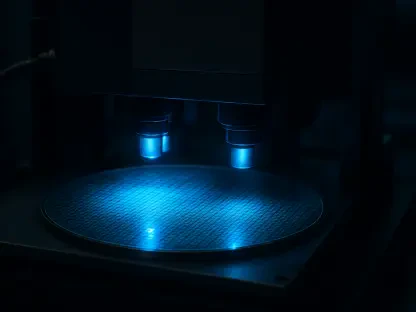
To achieve the precision necessary for robots interacting with humans in close quarters, 1X has adopted a full-stack vertically integrated manufacturing model. Rather than outsourcing critical components to a global web of suppliers, the Hayward facility produces motors, sensors, and transmission systems entirely in-house. This strategy is particularly evident in the production of specialized copper coils, where automated winding processes ensure that every actuator meets rigorous performance benchmarks. By controlling the entire lifecycle of the hardware, engineers can implement rapid iterations and refine mechanical designs without waiting for overseas shipments or dealing with external quality variances. This localized approach not only safeguards the supply chain against international disruptions but also allows for a level of customization and responsiveness that is rarely seen in traditional consumer electronics. Maintaining this level of internal oversight ensures that every NEO unit meets the high safety standards required for home environments.
The choice to center production within the United States reflects a commitment to providing localized support and faster delivery times for the initial wave of American consumers. By keeping the manufacturing process close to the research and development teams, the company can bridge the “lab-to-factory” gap with unprecedented speed. This synergy between design and assembly means that insights gained from the manufacturing floor can be immediately integrated into the next batch of units. Furthermore, the use of high-density battery packs and proprietary sensor arrays manufactured on-site allows 1X to maintain a proprietary edge in a rapidly growing competitive landscape. This industrial independence is a cornerstone of the company’s business model, providing a robust foundation for scaling operations as demand continues to surge across the domestic market. As the Hayward plant matures, it will serve as the primary blueprint for future global expansion, proving that domestic high-tech manufacturing remains a viable and highly efficient path for complex robotics.
Scaling Operations: Meeting Market Demand
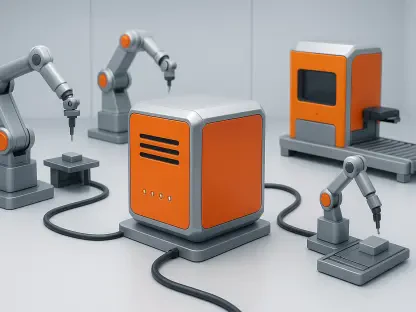
The aggressive scaling of production at the new facility is a direct response to the overwhelming consumer interest documented during the initial product launch. While the factory currently maintains an annual capacity of 10,000 units, the operational roadmap includes a rapid expansion designed to push total output beyond 100,000 units by 2027. This ambitious target is supported by the fact that the first production run sold out within a mere five days, indicating a massive latent demand for helpful humanoid technology in the domestic sphere. To meet these numbers, the Hayward plant utilizes advanced robotic assembly lines that work in tandem with human technicians to ensure both speed and precision. This hybrid workforce model allows the company to maintain high throughput while keeping the human-in-the-loop oversight necessary for complex robotic assembly. The ability to scale so quickly within the first year of operation demonstrates the maturity of the underlying manufacturing technology and the market’s readiness for home AI.
This surge in production capacity is not merely about volume but about establishing a sustainable ecosystem for humanoid robotics within the American economy. By creating hundreds of high-tech manufacturing jobs, the facility contributes to a burgeoning sector that blends traditional automotive assembly logic with cutting-edge artificial intelligence. The rapid sell-out of the NEO robot confirms that consumers are ready to move past simple vacuum robots toward sophisticated entities that can assist with mobility, cleaning, and complex social interactions. As the factory ramps up to 24-hour operation cycles, the logistical challenge shifts from proving the technology to managing the massive distribution network required for 100,000 units. This transition marks the moment where humanoid robotics ceases to be a niche luxury and begins its journey toward becoming a ubiquitous household utility. The success of this scaling effort will likely define the competitive landscape for the remainder of the decade as other firms attempt to match this output.
Technological Infrastructure and Market Adoption
Advanced AI: The Brains Behind the Machine
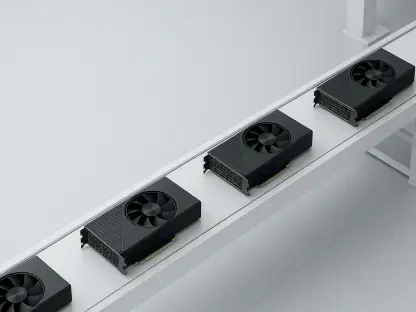
Powering the cognitive capabilities of the NEO humanoid is a sophisticated marriage of hardware and software facilitated by the NVIDIA Jetson Thor platform. This high-performance AI architecture allows each robot to process massive amounts of sensory data in real time, enabling it to navigate unpredictable home environments without constant reliance on cloud-based computing. By handling decision-making locally, the robot ensures user privacy and maintains operational consistency even when internet connectivity is unstable. This edge-computing capability is essential for tasks that require immediate physical reactions, such as catching a falling object or avoiding a sudden obstacle like a household pet. The integration of such powerful processing units into a humanoid frame marks a significant leap forward in robotics, allowing for a level of autonomy that was previously restricted to stationary industrial machines or high-end research prototypes. These advancements ensure that the robot is not just a tool, but a reliable presence in the home.
Before a single NEO unit ever steps foot into a customer’s living room, it undergoes extensive training within the NVIDIA Isaac simulation environment. This virtual training ground allows the AI to simulate thousands of hours of interaction and movement in a digital twin of a standard home, identifying potential safety risks and optimizing motor responses. This “sim-to-real” pipeline drastically reduces the time needed for physical testing and ensures that every robot arrives with a pre-validated set of skills for handling chores and mobility assistance. Once deployed, the robots continue to learn through a secure feedback loop that refines their performance based on real-world interactions. This combination of virtual pre-training and real-world adaptation creates a robust intelligence system that can handle the nuance of human interaction. The synergy between high-end simulation and powerful onboard hardware provides a level of reliability that has convinced consumers to invest in this technology, driving the rapid sell-out of the initial production run.
Economic Accessibility: Pricing and Future Utility
The economic strategy behind the NEO launch focuses on a dual-tier pricing structure designed to lower the barrier to entry for early adopters and families. While the outright purchase price of $20,000 for early access units positions the robot as a premium investment, the introduction of a $499 monthly subscription model opens the door for a much wider demographic. This subscription-based “robotics-as-a-service” approach includes ongoing software updates, maintenance support, and hardware upgrades, ensuring that the technology does not become obsolete as newer models are developed. This financial flexibility has proven remarkably effective, as evidenced by the overwhelming demand that saw the first batch of units completely spoken for in less than a week. The company aims to leverage this early momentum to scale production significantly, with a clear roadmap to exceed 100,000 units by 2027. This ambitious growth trajectory is supported by the current annual capacity of 10,000 units at the Hayward plant, which is currently operating at full throttle.
Looking ahead, the focus of the robotics industry shifted from industrial automation to consumer-centric solutions that provide tangible assistance in daily life. Stakeholders and analysts suggested that the success of the 1X factory model would likely prompt other manufacturers to reconsider domestic, vertically integrated production lines for high-end AI hardware. For consumers interested in participating in this technological transition, the current rollout phase provided an opportunity to integrate advanced mobility and chore assistance into their living spaces. Future considerations for potential owners should involve assessing the layout of their homes for optimal robot navigation and staying informed about upcoming software feature releases through the 1X platform. As the Hayward facility continues to refine its manufacturing processes, the goal remains to democratize access to humanoid assistants through further cost reductions and increased production volume. The integration of AI into the home moved from a conceptual curiosity to a practical, scalable service that prioritized safety, utility, and long-term reliability.