
The persistent hurdle known as the translational gap frequently stops laboratory breakthroughs from becoming commercially viable medications due to manufacturing and stability limitations during scale-up. The modern pharmaceutical landscape is currently undergoing a paradigm shift, transitioning from a focus on the mere discovery of therapeutic molecules to a sophisticated emphasis on the engineering required to deliver those molecules to the human body. This evolution is the focal point of a significant upcoming research collection in the Journal of Pharmaceutical Investigation. Scheduled for publication in early 2027, this collection represents a critical effort by the academic and industrial communities to address the disconnect between laboratory success and commercial viability. Curated by experts such as Sung-Joo Hwang, Min-Soo Kim, and Heejun Park, the initiative serves as a roadmap for the future of drug delivery, emphasizing that the most potent molecule is useless if it cannot be reliably formulated into a stable, effective, and manufacturable dosage form. The industry is beginning to realize that the molecular structure of a drug is only half the battle; the physical container—the particle—is what ultimately determines whether a treatment reaches its target within a patient. This realization is driving a surge in interdisciplinary research where materials science meets biology to redefine how medicine is produced and administered.
Enhancing Bioavailability: Overcoming Solubility Barriers
The physical manipulation of drug particles serves as a primary strategy for improving how a medication behaves within the human body. By altering parameters such as particle size, morphology, and crystal habit, scientists can fundamentally change the dissolution profile of a drug. The majority of new chemical entities discovered today possess poor physicochemical properties, most notably low water solubility, which limits their absorption. Techniques like nanonization increase the surface area-to-volume ratio, which significantly accelerates the rate of dissolution according to the Noyes-Whitney principle. Beyond simple size reduction, researchers are exploring the creation of amorphous solid dispersions. In an amorphous state, the drug lacks a defined crystalline structure, making it more soluble but also inherently less stable. The challenge lies in how to stabilize these high-energy states so that the drug remains effective throughout its shelf life. Engineering particles with specific surface characteristics can also prevent agglomeration, ensuring that the drug remains dispersed and ready for absorption. These physical transformations allow developers to salvage promising molecules that would otherwise fail in clinical trials due to poor bioavailability.
The specific route of administration dictates the engineering requirements of a formulation, as each pathway presents a unique set of physiological hurdles. Oral drugs must survive the stomach’s acidic environment while ensuring targeted release in the intestines, requiring protective coatings or enteric-release particles. In contrast, pulmonary or inhalable delivery requires exquisitely controlled particle aerodynamics. Particles must be small enough to reach the deep lungs but large enough to avoid being immediately exhaled by the patient. Injectable formulations requires rigorous attention to sterility, isotonicity, and long-term stability in liquid or suspension forms. Meanwhile, transdermal systems must navigate the stratum corneum, the body’s most formidable barrier. By applying universal physical principles like diffusion, viscosity, and surface tension, researchers can tailor particle behavior to meet the unique demands of each delivery method. This route-specific engineering ensures that the active pharmaceutical ingredient is delivered at the right concentration to the right tissue, minimizing side effects and maximizing therapeutic impact. The diversity of these delivery challenges highlights why a one-size-fits-all approach to formulation is no longer viable in the modern era of medicine.
Solid-State Characterization: Ensuring Manufacturing Reliability
A critical aspect of formulation is solid-state science, which focuses on the various physical forms a drug molecule can take, such as polymorphs, salts, or co-crystals. These different forms can have vastly different solubilities, melting points, and mechanical properties, making the choice of the solid form a strategic decision that dictates performance. A recurring problem in the industry is polymorphic transformation, where a drug spontaneously changes from a soluble form to a more stable but less soluble form during storage, rendering the medicine ineffective. To mitigate these risks, advanced analytical techniques such as X-ray powder diffraction, differential scanning calorimetry, and solid-state nuclear magnetic resonance are used to fingerprint the drug’s physical state. These tools allow scientists to monitor the stability of the formulation over time, ensuring that the medicine delivered to the patient is identical to the version tested in clinical trials. Understanding the thermodynamic landscape of a drug candidate is essential for preventing the unexpected emergence of less effective crystalline forms after a product has already reached the market. This rigorous characterization forms the foundation of a reliable supply chain.
Translating a formulation from small lab samples to industrial quantities presents a major scale-up bottleneck. The physics of powder blending, granulation, and tablet compression change significantly as the volume of material increases. Subtle differences in equipment geometry or heat transfer can lead to batch failures, where a formulation that worked perfectly in the laboratory fails to meet quality standards on a high-speed production line. This area of study is crucial for reducing technology transfer time, which remains one of the most expensive and time-consuming phases of bringing a new drug to market. The special research focus seeks to quantify these scale-up effects and develop predictive models to bridge the gap between small-scale experimentation and commercial manufacturing. By using computational fluid dynamics and other simulation tools, engineers can anticipate how raw materials will behave in large-scale reactors and presses. This proactive approach reduces the trial-and-error traditionally associated with manufacturing expansion, allowing for a more seamless transition from research to reality. The goal is to create robust processes that can withstand the variability of global production environments without compromising the integrity of the final dosage form.
Innovation: Disruptive Manufacturing Technologies
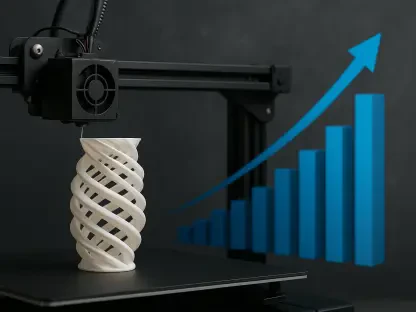
The pharmaceutical sector is embracing a minor industrial revolution by adopting flexible manufacturing methods like 3D printing and continuous processing. Additive manufacturing allows for the creation of tablets with complex internal structures that can control drug release rates with unprecedented precision. This technology also opens the door to personalized medicine, where doses are tailored to an individual patient’s weight, age, or metabolic profile directly at the point of care. Meanwhile, continuous manufacturing replaces traditional batch processing with an uninterrupted flow of materials through an integrated system. This shift reduces the manufacturing footprint, decreases the risk of human error, and improves product consistency by allowing for constant monitoring. Hot-melt extrusion, a technique borrowed from the plastics industry, is also being utilized to create amorphous solid dispersions, effectively solving the solubility issues inherent in many new drugs. These technologies move drug production away from rigid, legacy systems toward more agile and precise frameworks that can respond quickly to patient needs. The integration of these methods represents a fundamental change in how the industry thinks about the physical creation of medicine.
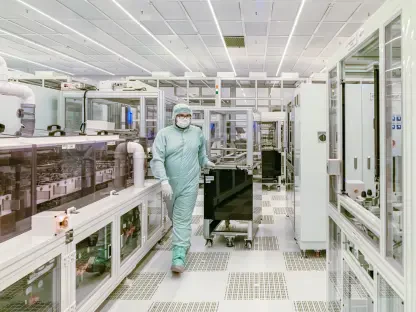
Complementing these hardware advances are systematic frameworks like Quality by Design and Process Analytical Technology. Rather than testing a product only after it is finished, which is a reactive approach, Quality by Design builds quality into the process from the start by identifying critical material attributes and process parameters. Process Analytical Technology supports this by using real-time sensors—such as near-infrared and Raman spectroscopy—to monitor the manufacturing line as it runs. This allows for immediate adjustments if the process begins to drift away from the ideal specifications, ensuring that every tablet or vial produced meets exact standards. The integration of these frameworks is essential for modern regulatory approval and serves as a key component of the translational narrative. By utilizing real-time data, manufacturers can ensure a level of precision that was previously impossible, reducing waste and increasing the safety profile of complex medications. This shift toward data-driven, proactive quality control is becoming the standard for the next generation of pharmaceutical production. It ensures that the sophisticated engineering applied at the particle level is maintained through every single step of the manufacturing journey.
Synthesis: Evolution of Comprehensive Drug Development Strategies
The movement toward precision formulation represented a unified, interdisciplinary effort to modernize medicine across the 2026 to 2028 period. By integrating particle physics, chemical engineering, and clinical pharmacy, the scientific community learned to engineer specific particles for specific delivery routes and patient populations. This holistic approach recognized that the success of a therapy was dependent on its physical delivery as much as its biological activity. Industry leaders moved beyond siloed research, creating collaborative environments where formulators and discovery chemists worked in tandem from the earliest stages of development. The focus on translational science provided a clearer path for academic innovations to reach the factory floor, significantly reducing the time required for technology transfer. Researchers successfully utilized advanced characterization tools to map the thermodynamic stability of new chemical entities, preventing the costly failures that previously plagued late-stage drug development. This period marked a definitive transition where the physical state of the drug became a primary consideration rather than an afterthought. The result was a more robust pipeline of medications capable of treating complex diseases with greater consistency and lower production costs.
As the industry moved forward, the implementation of actionable next steps became the priority for stakeholders looking to capitalize on these engineering advances. Stakeholders prioritized the adoption of standardized predictive modeling to simulate scale-up before the first physical batch was even produced. Companies began investing heavily in the training of a new generation of scientists who were equally proficient in material science and pharmacology. Regulatory bodies updated their guidance to encourage the use of continuous manufacturing and real-time monitoring, creating a more favorable environment for technical innovation. Moving forward, the focus must remain on the integration of artificial intelligence with particle engineering to accelerate the identification of the ideal solid form for any given molecule. Practitioners should seek to implement personalized dosage systems in clinical settings, bridging the gap between mass production and individual patient needs. By continuing to refine these engineering techniques, the pharmaceutical community ensured that the promises of modern biotechnology were successfully delivered to the global population. This evolution of drug delivery established a new standard for public health, where the gap between discovery and treatment was finally closed through the power of precision engineering.