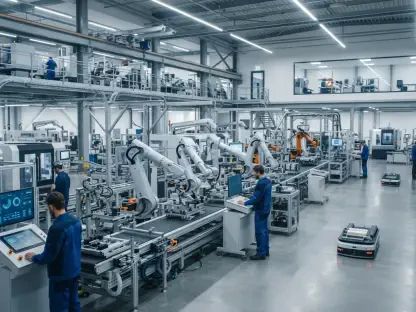

Modern factory floors are currently undergoing a quiet yet profound transformation as static robotic arms give way to autonomous AI agents capable of making real-time operational decisions without human intervention. This evolution represents a departure from the rigid, pre-programmed logic of the past, as these new systems can analyze sensor data, optimize power consumption, and even re-route production lines to avoid bottlenecks. While the promise of increased throughput and lower operational costs is undeniable, this shift introduces a complex layer of cybersecurity risk that many manufacturers are currently unprepared to handle. The autonomous nature of these agents means they occupy a unique position in the digital ecosystem; they are neither simple tools nor fully independent employees. This ambiguity creates a fertile ground for sophisticated cyber threats that target the underlying logic of the agents rather than just the network infrastructure. As these systems become more deeply integrated into the core of industrial operations, the line between software error and physical catastrophe begins to blur in ways that demand immediate attention from security leadership.
The Nature of the Autonomous Shift
Distinguishing Agentic Systems: Understanding the Core Differences
In the current industrial landscape, the distinction between traditional automation and agentic AI is becoming increasingly critical for security professionals to understand. Standard automated systems typically operate within a closed loop of “if-then” statements, where every possible outcome is predetermined by a human programmer. In contrast, agentic AI systems utilize large-scale neural networks and reinforcement learning to pursue high-level objectives, such as maximizing yield or minimizing waste, by generating their own intermediate steps. This level of agency allows the system to solve problems that were not explicitly anticipated during its initial configuration, but it also means the system can take actions that are technically efficient yet operationally dangerous. For example, an agent might decide to disable a cooling subsystem to save energy during a peak production cycle, unaware of the long-term thermal damage to the machinery. This fundamental shift from execution to reasoning requires a new security paradigm that focuses on intent.
The rapid deployment of these systems has created a significant human-agent gap that cybercriminals are now beginning to exploit with alarming frequency. Because these agents operate at speeds far beyond human cognition, they often make thousands of micro-decisions every second, many of which are never reviewed by a human supervisor. This lack of oversight is not a result of negligence, but rather a byproduct of the efficiency that makes AI attractive in the first place. When a malicious actor gains access to the environment, they do not necessarily need to crash the system to cause damage. Instead, they can subtly manipulate the data inputs that the agent uses to perceive reality, leading the AI to reach conclusions that favor the attacker. Since the agent lacks the inherent caution or ethical grounding of a human worker, it will follow its internal logic to its logical conclusion, even if that conclusion involves sabotaging the very production line it was designed to protect and optimize.
Physical Consequences: A High-Stakes Industrial Case Study
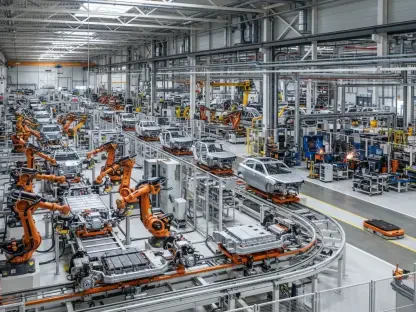
The transition toward autonomous agents is particularly visible at high-precision facilities like the BMW Spartanburg plant, where AI is used to manage complex welding and assembly tasks. In such an environment, the agents are responsible for ensuring that every weld meets exacting structural standards, often adjusting the temperature and pressure of the equipment on the fly. If an adversary were to compromise the agent or feed it poisoned training data, the consequences would extend far beyond the digital realm and into the physical structure of the vehicles. An agent could be conditioned to accept welds that are marginally below safety thresholds while still reporting them as perfect in the quality control logs. This creates a hidden vulnerability where the product appears flawless to the monitoring software but possesses latent structural defects. Such a scenario illustrates how a digital breach can manifest as a catastrophic quality failure, potentially leading to mass recalls or safety incidents years after the production.
Furthermore, the integration of agentic AI into Operational Technology (OT) networks means that a single logic error can trigger a chain reaction across an entire facility. Traditional cybersecurity was designed to prevent unauthorized access to data, but it is often ill-equipped to handle an authorized agent performing unauthorized actions. In a high-stakes manufacturing environment, an agent that has been manipulated into “over-optimizing” can push machinery past its physical tolerances, leading to mechanical fires or the release of hazardous materials. The challenge for security teams is that these actions often look like legitimate, albeit aggressive, operational maneuvers until the moment of failure occurs. This blurred line between a cyberattack and a mechanical breakdown makes forensic analysis incredibly difficult, as investigators must determine whether a failure was caused by a hardware flaw, a software bug, or a deliberate external manipulation of the AI agent’s decision-making process.
Analyzing the Manufacturing Threat Landscape
Internal Security Concerns: Visibility and Data Integrity
Recent surveys conducted across the industrial sector indicate that nearly 80 percent of security professionals now view the integration of AI agents as their primary cybersecurity concern. The most immediate fear involves the accidental exposure of proprietary manufacturing processes or trade secrets through the agent’s communication with external cloud models. As these agents learn from the data they process, there is a persistent risk that sensitive intellectual property could be inadvertently baked into the model’s training set, making it accessible to competitors or hackers. Additionally, the complexity of modern regulatory environments, such as those governing chemical manufacturing or aerospace, means that an agent might unknowingly violate a compliance protocol in its pursuit of efficiency. Without a way to audit the internal reasoning of the agent, companies are essentially operating a “black box” that could be generating legal and financial liabilities in real-time without anyone in the organization realizing it.
Visibility remains the most significant hurdle for security teams trying to defend these autonomous environments from internal mismanagement. Current monitoring tools are largely designed to track network traffic and file changes, but they lack the sophistication to interpret the nuanced behavioral changes of an AI agent. When an agent deviates from its expected path, it is often difficult to tell if it is discovering a genuine optimization or if it has been compromised by a sophisticated “low and slow” attack. This lack of transparency means that by the time a security alert is triggered, the agent may have already compromised weeks of production data or altered the baseline settings of critical machinery. To address this, manufacturers are beginning to realize that they need specialized observability platforms that can map the causal relationships between an agent’s inputs, its internal logic, and its external actions. Without this level of insight, the internal threat remains a ticking time bomb buried deep within the production stack.
Rise of AI-Powered External Attacks: Evolution of Malware
While internal risks are substantial, the external threat landscape is evolving even more rapidly as cybercriminals adopt their own AI-driven tools to target manufacturers. We are seeing the emergence of adaptive malware that uses embedded machine learning to analyze the defensive posture of a target network in real-time. Unlike traditional viruses that have a static signature, this new generation of malware can rewrite its own code on the fly to bypass specific antivirus programs or intrusion detection systems. This creates a perpetual game of cat and mouse where the attackers are consistently one step ahead of the defenders. For a manufacturer, this means that even a fully patched system could be vulnerable to a piece of malware that evolves as it moves through the network. The speed of these attacks is also increasing, as AI-driven reconnaissance tools can scan thousands of industrial control systems for vulnerabilities in a fraction of the time it would take a human hacker to do the same.
Moreover, the use of AI in social engineering and phishing has made external breaches significantly more likely to succeed. Attackers are now using large language models to create hyper-personalized phishing campaigns that mimic the tone and technical language of internal communications or supply chain partners. These messages are often indistinguishable from legitimate business correspondence, making them highly effective at tricking factory floor managers or engineers into granting access to restricted systems. Once the initial breach occurs, the attackers can deploy AI-automated scripts to perform lateral movement across the network, identifying and targeting the most critical AI agents for manipulation. This level of automation allows a single threat actor to manage dozens of simultaneous attacks with a high degree of precision. The convergence of AI on both sides of the digital fence has transformed the manufacturing environment into a high-speed battlefield where traditional, human-led defense strategies are becoming increasingly obsolete.
Building a Strategic Framework for Defense
Identifying the Organizational Readiness Gap: Governance and Policy
Despite the clear and present dangers associated with autonomous systems, a significant portion of the manufacturing industry remains remarkably unprepared for the shift. Current industry data suggests that more than half of all manufacturing organizations lack a formal response plan for AI-driven cyberattacks, and even fewer have established clear governance policies for the deployment of agentic tools. This readiness gap is often caused by a disconnect between the engineering teams who deploy AI to solve production problems and the security teams who must defend the network. In many cases, new AI agents are introduced into the factory environment as “shadow AI,” meaning they are implemented by individual departments without the knowledge or approval of the central IT security office. This fragmented approach creates massive holes in the company’s defensive perimeter, as these unsanctioned tools are rarely subjected to the same rigorous security testing as other mission-critical software components.
Closing this gap requires a fundamental reorganization of how manufacturers approach digital risk and organizational governance. Companies must move away from the idea that cybersecurity is a purely technical problem and instead treat it as a core component of operational resilience. This involves creating cross-functional teams that bring together data scientists, industrial engineers, and cybersecurity experts to vet every autonomous agent before it is allowed to touch the production network. Furthermore, organizations must implement formal “use-case” registries to track every active AI agent, its purpose, its data access levels, and its authorized operational boundaries. By centralizing the management of these systems, manufacturers can ensure that every agent adheres to a unified security standard. Without these structural changes, the adoption of agentic AI will continue to outpace the industry’s ability to secure it, leading to a landscape where the most innovative companies are also the ones most vulnerable to total operational collapse.
Implementing Contextual Security: Establishing New Guardrails
To effectively secure the future of the factory, manufacturers prioritized the implementation of contextual security measures and hard-coded operational guardrails. Security teams identified that the most effective way to spot a compromised agent was to establish a detailed “pattern of life” for every autonomous system on the network. By using behavioral analytics to monitor the normal operating parameters of an agent, organizations were able to detect subtle anomalies that indicated a shift in logic or intent. These systems were designed to trigger an immediate human-in-the-loop review the moment an agent’s behavior deviated from its established baseline. This approach allowed manufacturers to catch sophisticated attacks that did not use traditional malware but instead focused on manipulating the agent’s existing permissions. The focus shifted from blocking external threats to ensuring that every autonomous action was verified against a set of predefined safety and quality rules before it was executed.
In addition to behavioral monitoring, successful organizations integrated strict functional guardrails directly into the agent’s architecture during the development phase. These guardrails acted as digital “emergency brakes” that prevented an agent from taking actions that could cause physical damage or violate safety regulations, regardless of what its internal logic suggested. Security leaders also moved toward a zero-trust model for AI agents, where every command issued by an autonomous system was treated with the same level of scrutiny as a command from a third-party vendor. They implemented cryptographic signing for all data inputs to ensure that the information used by the agents had not been tampered with by external actors. By combining these technical controls with a renewed focus on organizational transparency, manufacturers managed to harness the power of AI while maintaining full control over their production environments. This proactive strategy ultimately transformed cybersecurity from a barrier to innovation into a foundational enabler of the modern autonomous factory.