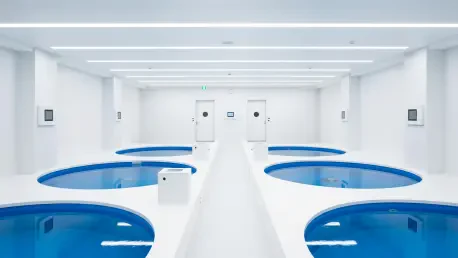

The challenge of feeding a dense urban population without vast arable land has forced Singapore to reconsider traditional farming models in favor of high-tech vertical solutions. As global food supply chains face increasing volatility, the city-state has intensified its efforts to produce 30 percent of its nutritional needs locally by 2030, a goal that recently saw a significant milestone with the opening of a specialized facility. Blue Aqua International has introduced the first land-based trout farm in Singapore, utilizing advanced recirculating aquaculture systems to bridge the gap between local demand and sustainable production. This facility does not just represent a new source of protein; it embodies a shift toward climate-resilient agriculture that minimizes environmental footprints while maximizing yield. By repurposing urban industrial spaces for high-intensity fish farming, the initiative addresses the critical need for food security in a nation that currently imports over 90 percent of its food, providing a blueprint for other land-scarce cities.
Advanced Recirculating Systems: Operational Excellence
The technological backbone of this trout farm lies in its sophisticated recirculating aquaculture system, which allows for precise control over the aquatic environment regardless of the external tropical climate. Unlike traditional open-pond farming, this closed-loop system filters and recycles nearly all the water used, significantly reducing the waste and contamination that typically plague maritime aquaculture. High-tech sensors monitor parameters such as dissolved oxygen levels, pH balance, and temperature in real-time, ensuring that the cold-water trout thrive in Singapore’s heat. This environment-controlled approach eliminates the need for antibiotics and growth hormones, resulting in a cleaner and more nutritious product for the local market. By maintaining optimal conditions through automation and digital monitoring, the farm achieves growth rates that outperform conventional methods, proving that intensive inland farming is not only possible but commercially viable in dense urban centers across the world.
Beyond the mechanical components, the integration of data analytics and artificial intelligence plays a crucial role in optimizing the feeding cycles and health assessments of the fish stock. The system uses vision-based AI to track individual growth patterns and detect early signs of stress or disease, allowing for immediate intervention before issues escalate. This level of precision farming minimizes resource wastage, particularly in terms of high-cost feed, which is one of the largest expenses in commercial aquaculture operations. Moreover, the facility utilizes renewable energy sources to power the extensive filtration and cooling units, aligning the project with broader sustainability goals. By reducing the reliance on electricity from the grid, the farm lowers its carbon footprint and operational costs simultaneously. The synergy between biology and engineering in this facility sets a new standard for how high-value species can be cultivated far from their natural cold-water habitats, expanding the possibilities.
Strategic Implementation: Local Resilience and Future Growth
Establishing a local source for premium fish like trout is a strategic move that addresses both economic and logistical vulnerabilities within the regional food market. By producing these fish on-site, the reliance on long-haul airfreight is virtually eliminated, which directly translates to lower transportation costs and a significant reduction in associated carbon emissions. This local supply chain ensures that the product reaches consumers with maximum freshness, often moving from harvest to plate within hours rather than days. For a nation that relies heavily on imports, this facility serves as a vital buffer against international price fluctuations and supply chain disruptions that have become increasingly common. The project also fosters a new ecosystem of specialized labor, requiring workers skilled in aquatic biology and systems engineering. This development of human capital is essential for the success of the domestic agritech sector, providing high-value jobs and encouraging further investment in local food technology.
The transition to land-based aquaculture necessitated a rigorous reevaluation of urban zoning and resource allocation to ensure that industrial spaces could support biological life cycles effectively. In the months following the launch, several key operational milestones were achieved, demonstrating that the modular nature of the systems allowed for rapid scaling and adaptation to market demands. Stakeholders in the food industry recognized that the shift toward localized production was not merely a trend but a fundamental requirement for maintaining stable supply chains. It became clear that the integration of circular economy principles, such as utilizing nutrient-rich wastewater for vertical hydroponics, provided additional revenue streams and further reduced environmental impact. The industry concluded that the next essential steps involved standardizing regulatory frameworks and localizing feed production to secure the entire supply chain. These efforts established a definitive roadmap for expanding urban farming across the region.