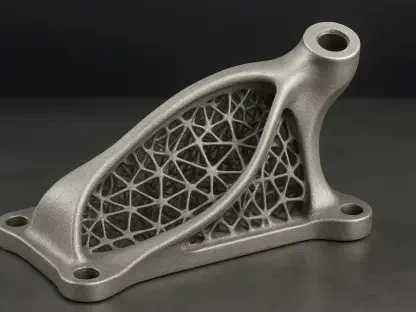

The aerospace sector currently faces a significant paradox where record-breaking order backlogs for commercial and defense aircraft meet a constrained global supply network struggling with component delivery. While the demand for fuel-efficient engines and lightweight structural frames has never been higher, traditional manufacturing methods often fall short of the required speed and precision. Signicast has positioned itself as a pivotal player in this landscape by leveraging advanced investment casting techniques to bridge the gap between complex design requirements and mass-market scalability. By moving away from slower, conventional sand casting or labor-intensive machining processes, this approach allows for the creation of near-net-shape components that require minimal finishing. This efficiency is not merely a matter of convenience; it represents a fundamental shift in how aerospace manufacturers manage their inventory and respond to sudden fluctuations in the global market.
Advancing Production Speed Through Automated Systems
Eliminating Human Error via Robotic Integration
Precision in the aerospace sector leaves no room for the variability inherent in manual labor, particularly when dealing with the intricate geometries of turbine blades. Signicast addresses this by deploying fully automated shell-building systems that ensure every ceramic mold is created with absolute consistency across thousands of production cycles. These robotic cells monitor environmental variables like humidity and temperature in real-time, preventing the minor structural flaws that typically lead to high scrap rates in foundries.
By standardizing the dipping and drying phases of the investment casting process, the facility achieves a level of repeatability that was previously unattainable. This technological leap directly addresses the bottleneck of part rejection, which has historically been a major cause of delivery delays for major engine manufacturers. Furthermore, the integration of smart sensors allows for predictive maintenance, ensuring that production lines remain operational without unplanned downtime or failures.
Shortening Lead Times with Rapid Prototyping
One of the most persistent bottlenecks in aerospace production has been the lengthy lead times associated with traditional hard tooling, which can often take months to manufacture. Signicast circumvents this obstacle by utilizing sophisticated 3D-printing technologies to create wax patterns or ceramic molds directly from digital files. This additive manufacturing approach allows engineers to test functional prototypes in high-performance alloys within days rather than weeks, significantly accelerating the validation phase.
Reducing the reliance on permanent metal dies during the early stages of development allows manufacturers to explore complex designs that would be impossible via conventional machining. This capability is particularly relevant for the development of new propulsion systems where weight reduction translates into fuel savings. The integration of rapid prototyping into the casting workflow ensures that the transition from concept to flight-ready part is smoother, providing a strategic advantage in a fast-paced market.
Material Innovation and Quality Assurance in High-Stakes Environments
Optimizing Superalloys for Next-Generation Propulsion
The demand for higher operating temperatures in modern jet engines necessitates the use of advanced nickel-based superalloys that are notoriously difficult to work with. These materials provide the thermal stability required for high-pressure turbine vanes but require precise thermal management during the casting process. Signicast utilizes vacuum induction melting to maintain the chemical integrity of these specialized alloys, preventing oxidation and maintaining the structural properties of the metal.
This level of environmental control is essential for producing parts that can withstand the extreme stresses of supersonic flight or prolonged cruising. By mastering these complexities, the casting process allows for the creation of parts with internal cooling passages that are far more intricate than those possible through subtractive manufacturing. This leads to engines that are more powerful and durable, reducing the frequency of scheduled maintenance and improving the reliability of the global aviation fleet.
Digital Inspection and Traceability Protocols
Quality assurance in aerospace is a non-negotiable requirement where every component must be accompanied by a comprehensive data trail documenting its origin and structural integrity. Signicast incorporates advanced non-destructive testing methods, such as automated X-ray inspection, directly into the production flow to identify internal defects early. This proactive approach prevents faulty parts from progressing through the assembly line, saving significant time and resources that would otherwise be wasted.
Digital traceability has become the backbone of supply chain management, utilizing unique serial coding for every cast part to provide a transparent record of the manufacturing process. This system allows OEMs to track the movement of components from raw material to final delivery, ensuring there is no ambiguity regarding the provenance of critical hardware. By modernizing the documentation process, the facility removes the administrative bottlenecks that often slow down the transition from the factory floor to the hangar.
Forward-Looking Strategies for Sustainable Aerospace Growth
The adoption of advanced investment casting and automation provided a clear roadmap for resolving the most stubborn bottlenecks within the aerospace manufacturing sector. Stakeholders realized that the transition to a more resilient supply chain required a commitment to integrating digital workflows with physical production capabilities. To maintain this momentum, industry leaders focused on expanding localized manufacturing hubs that utilized these high-tech casting methods to reduce international shipping dependencies.
Technical staff was cross-trained to manage the sophisticated robotic systems that now define the modern foundry. By investing in these areas, the industry successfully transformed its procurement strategies from reactive to proactive, ensuring that component shortages did not dictate the pace of global aviation growth. The lessons learned suggested that the future of aerospace production would depend on the continued convergence of material science and automated precision. Strategic partnerships became the norm, allowing for a more interconnected and transparent exchange of data.