
High-power laser applications are currently constrained by stimulated Brillouin scattering, a phenomenon that occurs when glass fibers reach their maximum energy thresholds. As energy pulses travel through silica-based glass, they induce acoustic vibrations that reflect light back toward the source, effectively capping the output and risking hardware damage. This physical barrier has forced researchers to seek alternative materials that can withstand higher thermal loads and manage optical nonlinearities more effectively than traditional glass. Transparent ceramics have emerged as the primary contender due to their superior thermal conductivity and robust mechanical properties. Unlike single-crystal growth, which is slow and limited in shape, ceramic fabrication allows for large-scale production of gain media. By leveraging additive manufacturing, engineers are now designing components with localized chemical compositions that precisely control the light path, paving the way for a new era of directed energy and industrial precision.
The Shift: Beyond Glass in Laser Technology
Thermal Excellence: Performance Characteristics of Ceramics
The thermal properties of transparent ceramics distinguish them as the most viable successor to silica glass in the current technological landscape. Unlike amorphous glass, which has a relatively low thermal conductivity, advanced ceramic materials like yttrium aluminum garnet allow for efficient heat extraction even during continuous-wave operations at multi-kilowatt levels. This efficiency is vital for maintaining the structural integrity of the laser medium and preventing the onset of thermal lensing, which can lead to beam divergence and loss of focus. When a laser operates at peak capacity, the resulting heat must be managed to avoid permanent damage to the optical path. Ceramics provide a mechanical robustness that supports higher power densities, allowing for the development of systems that are significantly more powerful than their glass counterparts. As a result, the industry is seeing a shift toward ceramic gain media for applications requiring high-intensity output and minimal downtime for cooling.
Beyond thermal management, the chemical composition of transparent ceramics offers a level of precision that was previously unattainable in optical engineering. In the sintering process, microscopic powders are fused together under extreme heat and pressure, which allows for an incredibly uniform distribution of doping ions throughout the material. This homogeneity is essential for ensuring that the laser gain is consistent across the entire aperture of the medium, reducing the risk of localized distortions that can compromise beam quality. Furthermore, the polycrystalline structure of these ceramics can be tailored to minimize scattering losses at the grain boundaries, achieving optical clarity that rivals that of single crystals. This ability to create large-format gain media with precise chemical control has enabled the production of high-energy systems that were once limited by the size constraints of crystal growth. Consequently, manufacturers are now able to scale laser power without sacrificing the spectral purity required for precision measurements and scientific research.
Precision Fabrication: The Role of 3D Printing
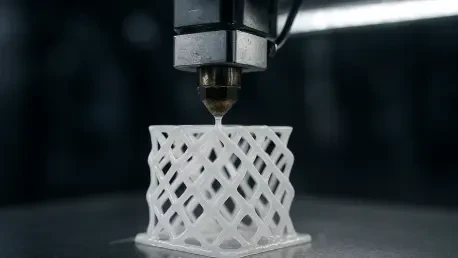
The adoption of additive manufacturing techniques has fundamentally changed the way ceramic laser components are designed and produced. Using technologies such as direct ink writing and stereolithography, engineers can now fabricate ceramic structures with complex internal architectures that cannot be achieved through traditional molding or pressing. This capability allows for the integration of cooling channels directly into the gain medium, further enhancing heat dissipation and enabling higher duty cycles. Additionally, 3D printing facilitates the creation of gradient-doped components, where the concentration of active ions varies throughout the structure to optimize energy absorption and beam extraction. By precisely controlling the placement of material at the micrometer scale, it is possible to design self-correcting optics that counteract the physical stresses induced by high-power operation. This level of customization has reduced the complexity of laser housing and cooling systems, leading to more compact and efficient designs for mobile and airborne platforms.
The widespread integration of ceramic gain media successfully overcame the energy bottlenecks that had plagued high-power laser systems for years. By 2026, the industry had moved away from the fragility of glass, embracing the thermal and mechanical resilience offered by 3D-printed alternatives. Companies that early adopted these additive processes realized substantial improvements in operational lifespan and power-to-weight ratios for their hardware. The focus subsequently shifted toward refining the purity of raw ceramic powders and optimizing the sintering cycles to further reduce internal defects. Organizations were encouraged to implement automated monitoring systems to ensure consistency in the 3D printing process, as even minor deviations could impact the performance of high-brightness beams. This transition not only improved current industrial cutting and defense technologies but also set the stage for more ambitious scientific endeavors. Ultimately, the move to ceramics proved that material innovation was the primary driver for surpassing the physical limits of traditional optics.