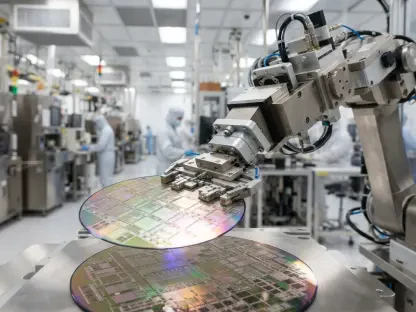

Ukraine is transforming from a passive recipient of foreign aid into a hub of additive manufacturing expertise by developing indigenous substitutes for sophisticated foreign weapons. The technological shift toward additive manufacturing is occurring as the traditional pillars of global security fracture. The appearance of the Russian Filin cruise missile illustrates how 3D printing accelerates high-tech production even under heavy sanctions. While the geopolitical consensus once provided a steady hand, internal political divisions within major powers now threaten to disrupt the strategic flow of military innovation. This creates a critical window where the ability to rapidly iterate and deploy hardware determines the balance of power. As traditional assembly lines struggle with supply chain bottlenecks, the decentralization of manufacturing offers a new path for alliance resilience. The current environment demands a move toward agile, distributed production to counter the threats that emerge from high-tech adversaries who are bypassing conventional constraints through engineering.
Assessing Political Stability: Alliance Cohesion
The effectiveness of NATO’s collective response is increasingly tied to the internal political health of the United States, where the old bipartisan agreement on containment has given way to complex internal debates. These shifts introduce a layer of unpredictability that risks stalling long-term defense modernization projects and infrastructure updates across Europe. Strategic planners must now account for a landscape where policy directives can change rapidly, potentially leaving allies in a state of logistical limbo if a coherent leadership front is not maintained. To mitigate this risk, there is a push to institutionalize technological cooperation so that advancements in additive manufacturing remain insulated from short-term political volatility. This stability is essential for establishing a reliable network of suppliers who can support high-intensity operations without constant administrative oversight. If the alliance remains divided, the window for a technological counter-offensive may close as adversaries continue to refine their own streamlined methods.
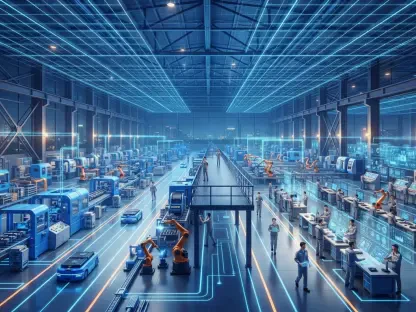
Beyond political rhetoric, military officials are prioritizing the transition from hypothetical support to a tangible, distributed industrial base that leverages 3D printing at scale. By synchronizing the industrial outputs of various member states, NATO aims to bypass the slow, bureaucratic procurement cycles that have historically hampered rapid rearmament efforts. This approach allows for a more responsive defense posture where parts can be designed in one country and printed in another, directly near the point of need. Such a system effectively counters Russia’s recent production gains by offering a faster and more flexible alternative to centralized factory models. The focus is shifting toward real-time solutions for the Ukrainian theater, ensuring that frontline units are not just recipients of surplus gear but active participants in a modern supply network. This integration represents a fundamental departure from legacy military-industrial thinking, favoring speed and adaptability over the massive, slow-moving logistics tails of the previous century.
Transitioning to Production: Distributed Defense
NATO has already begun testing the limits of decentralized manufacturing through initiatives like the European Defence Agency’s additive manufacturing workshops, which serve as proof-of-concept for mobile production hubs. These mobile centers demonstrate that the ability to manufacture critical components on-site reduces the vulnerability inherent in centralized logistics and long-range transport routes. In high-intensity conflict zones, a single strike on a major factory can halt an entire supply chain, but a distributed network of smaller, 3D-printing-capable units remains resilient even under direct pressure. This shift toward local production ensures that defense capabilities are not entirely dependent on the safety of international shipping lanes or the availability of specialized cargo planes. By moving the point of production closer to the operational front, the alliance is effectively shortening the maintenance cycle. This strategic evolution emphasizes self-sufficiency at the tactical level, providing a robust backup for when traditional support is compromised.
A significant challenge to international defense cooperation has always been the dense web of export controls, particularly the regulations that govern American technology. However, the rise of specialized innovation is beginning to dissolve these barriers, allowing NATO partners to share advanced designs for unmanned aerial vehicles and missile components with unprecedented ease. By intentionally designing systems that utilize non-restricted parts and open-source additive manufacturing parameters, engineers are creating a collaborative ecosystem that moves faster than the legal frameworks originally intended to control it. This breakthrough allows for a level of technological agility that was once impossible, as nations can now exchange digital blueprints and print hardware without waiting for years of regulatory approvals. Consequently, the speed of innovation is no longer dictated solely by legal departments but by the actual engineering capabilities of the allied researchers. This regulatory bypass is essential for maintaining a competitive edge.
Leveraging Innovation: Ukrainian Future Strategy
Ukraine’s role in this arms race has shifted from being a mere testing ground to serving as a primary driver of manufacturing innovation for the entire Western alliance. Faced with constant pressure on their supply lines, Ukrainian engineers have successfully utilized additive manufacturing to produce indigenous alternatives to foreign munitions and sophisticated spare parts. This bottom-up approach allows for rapid prototyping and field testing that would take years in a traditional Western defense laboratory, providing immediate feedback on what works in actual combat scenarios. The expertise gained by these frontline innovators is now being funneled back into NATO’s own development programs, helping to refine the next generation of 3D-printed weaponry. By integrating these real-world lessons, the alliance can move away from overpriced legacy systems and toward a more cost-effective model of warfare. The agility shown by technical teams proves that a smaller, tech-savvy force can effectively counter a larger opponent.
The deployment of 3D-printed platforms like the Filin cruise missile underscores the reality that the technological divide between sanctioned states and global powers is rapidly shrinking. Russia’s ability to standardize electronics and use additive manufacturing to simplify its supply chains shows that isolation no longer prevents the creation of high-tech threats. This leveling of the playing field forces a reevaluation of how superiority is maintained in an era where digital manufacturing designs can be transmitted instantly. For NATO to preserve its strategic advantage, it must transition from a reliance on mass-production factories to a model based on mass-customization and rapid deployment of 3D-printed assets. The fusion of European industrial prowess, American technical support, and Ukrainian combat data provides a unique opportunity to build a modern defense infrastructure. Failing to embrace this shift would leave the alliance vulnerable to adversaries who have already recognized the transformative power of additive manufacturing in reshaping modern warfare.
Future Strategic Considerations: Global Security
The evolution of additive manufacturing redefined the parameters of military readiness, moving the focus from stockpiling finished goods to securing robust digital supply chains. To secure a long-term advantage, defense leaders prioritized the creation of a unified digital library of certified 3D-printing blueprints that all alliance members could access in times of crisis. This effort required immediate investment in standardized printing materials and high-speed, secure data links that could withstand electronic warfare interference on the battlefield. Furthermore, the integration of artificial intelligence with 3D-printing workflows automated the detection of structural flaws, ensuring that locally produced parts met rigorous safety standards without manual oversight. Policymakers also expanded the open-design philosophy to a wider range of critical components, ensuring that technological barriers did not become strategic liabilities. By taking these concrete steps, the international community transformed a disruptive technology into a cornerstone of collective defense.