
The traditional paradigm of materials science is undergoing a seismic shift as the Georgia Institute of Technology spearheads a national initiative to digitize the discovery process using a Programmable Cloud Laboratory. Supported by an $18.1$ million dollar grant from the National Science Foundation, this ambitious project aims to modernize American manufacturing by transitioning research from labor-intensive manual testing to a streamlined, AI-driven digital workflow. Historically, developing next-generation technologies like advanced energy storage or high-performance alloys required years of physical trial and error within localized facilities. By abstracting these processes into a remote cloud-based environment, researchers can now bypass the physical constraints that once dictated the pace of innovation. This shift represents more than just a technological upgrade; it is a fundamental restructuring of how humanity interacts with the building blocks of the physical world, promising to accelerate the arrival of critical hardware solutions for a rapidly changing global economy.
Automated Infrastructure: Transforming Physical Labs Into Autonomous Environments
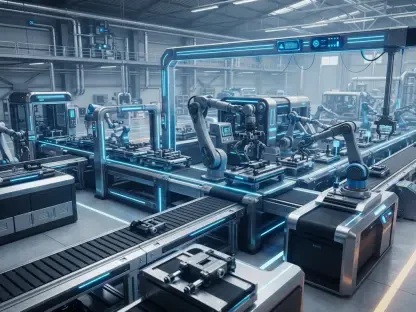
The core of this transformation resides within the Advanced Manufacturing Pilot Facility, which is currently being overhauled into a sophisticated, self-driving research environment. This evolution involves the integration of over $100$ specialized pieces of equipment into a cohesive, automated ecosystem where robotic systems manage the heavy lifting of sample transport and hardware operation. By removing the need for constant human presence, the facility can maintain a continuous operational cycle, significantly increasing the throughput of experimental data. Such a high degree of automation does not merely replace manual labor but rather enhances the precision and reproducibility of scientific results. When machines handle the repetitive tasks of physical sample preparation and measurement, the variability introduced by human factors is minimized, leading to more reliable datasets. This structural change allows the facility to function as a programmable entity, where the physical movements of robotic arms and chemical injectors are dictated by software code.
Artificial intelligence serves as the intelligent layer that connects the strategic goals of a scientist with the mechanical capabilities of the autonomous hardware. Rather than requiring researchers to possess deep expertise in the operation of every specific instrument, the system allows them to input high-level recipes describing the desired properties of a material. Sophisticated AI agents then take these parameters and autonomously determine the most efficient experimental pathways, selecting optimal material compositions and managing the complex logistics of the facility. These agents are capable of scheduling tasks across various machines, ensuring that resources are utilized effectively without bottlenecks or conflicts. This integration of AI creates a seamless bridge between digital intent and physical execution, allowing for a level of experimental complexity that was previously unattainable. As the AI continuously learns from each experiment, it becomes increasingly proficient at identifying subtle patterns in material behavior, further shortening the discovery timeline for advanced components.
Virtual Integration: Utilizing Digital Twins and Collaborative Networks
To maximize efficiency and mitigate the risks associated with automated hardware, the cloud laboratory utilizes digital twins, which are high-fidelity virtual replicas of the physical workspace. These virtual models allow scientists to simulate and validate an entire experimental workflow within a digital environment before a single physical resource is consumed. This preliminary phase is crucial for identifying potential mechanical collisions, safety hazards, or logical errors in the experimental script that could damage expensive equipment or lead to wasted materials. Once a virtual simulation is successfully verified, the physical experiment is triggered, and the resulting real-world data is immediately fed back into the digital twin. This bidirectional data loop ensures that the virtual model remains an accurate representation of the physical reality, refining its predictive capabilities over time. By utilizing these simulations, the research process becomes more sustainable and cost-effective, allowing for a “fail fast” approach in the virtual world that preserves physical assets.
This initiative is not an isolated project but a foundational component of a broader federal strategy to establish a national network of $20$ AI-enabled cloud laboratories across the United States. By collaborating with prestigious institutions such as Duke University and various technology startups, Georgia Tech is creating a unified digital interface that transcends geographical boundaries. This decentralized model allows a researcher to design a complex material at one facility, initiate its manufacture at another, and conduct specialized characterization at a third location, all through a single centralized platform. Such a collaborative infrastructure breaks down the silos that have traditionally isolated research institutions, enabling a more fluid exchange of ideas and resources. This national network ensures that world-class instrumentation is accessible to a wider range of scientists, regardless of their institutional affiliation. By pooling the strengths of diverse facilities into a single programmable grid, the United States is building a more resilient and interconnected research ecosystem.
Economic Impact: Expanding Industrial Accessibility and Strategic Outcomes
The implementation of a research-as-a-service model provides profound economic advantages, particularly for academic startups and small-to-medium-sized industrial players. By offering remote access to industrial-scale equipment, the cloud laboratory significantly lowers the financial barriers to entry that often prevent innovative ideas from reaching the prototype stage. Traditionally, the cost of acquiring and maintaining high-end laboratory hardware was prohibitive for smaller organizations, forcing them to rely on limited local resources. The cloud lab democratizes this access, allowing any researcher with a valid project and a digital connection to leverage state-of-the-art manufacturing tools. For larger corporations, the facility offers a risk-mitigation strategy, providing a sandbox where they can experiment with radical new processes or materials without disrupting their existing production lines. This flexibility encourages more aggressive experimentation and faster iteration, ensuring that the transition from a laboratory breakthrough to a product is no longer delayed.
Beyond economic considerations, the transition to autonomous materials discovery is a strategic imperative for sectors critical to national security and environmental sustainability. The ability to rapidly develop new materials for clean energy, such as more efficient catalysts for hydrogen production or lightweight composites for aerospace, is essential for maintaining a competitive edge. This model moves away from the static, slow-moving research cycles of the past and toward a more agile ecosystem that can respond to emerging needs in real-time. By synthesizing robotics, remote-access infrastructure, and artificial intelligence, the project cultivates an environment where human ingenuity is augmented by machines capable of processing information at digital speeds. This synergy allows for the exploration of vast chemical spaces that would be impossible to navigate through human effort alone. As these systems become more integrated into the national manufacturing strategy, they will provide a persistent advantage in the race to develop the materials that will define future grids.
Operational Standards: Strategic Evolution for a Digital Research Era
The successful deployment of programmable cloud laboratories necessitated a departure from traditional research methodologies and a commitment to new standards in data interoperability. To fully capitalize on this technological shift, the scientific community focused on creating unified protocols that allowed different robotic systems and AI agents to communicate seamlessly across the national network. Researchers prioritized the curation of high-quality, machine-readable datasets, which served as the essential fuel for the AI models driving discovery. Investment in workforce development also proved critical, as the role of the materials scientist evolved from a manual technician to a high-level systems orchestrator and data analyst. Organizations that embraced these structural changes early on found themselves better positioned to iterate on new designs and bring advanced materials to market with unprecedented speed. Moving forward, maintaining this momentum required continued collaboration between academia and industry to ensure that the digital infrastructure remained secure.
Refining the relationship between human researchers and autonomous systems became the primary focus as the network of cloud laboratories expanded across different regions. Scientists learned to leverage AI agents not just for execution but for the creative generation of experimental hypotheses that challenged conventional chemical wisdom. The integration of real-time feedback loops allowed for the instantaneous adjustment of experimental parameters, which drastically reduced the volume of wasted chemical reagents and energy. This evolution in laboratory management underscored the importance of cybersecurity, as the protection of proprietary material “recipes” became a top priority for participating industrial partners. By standardizing the digital-to-physical handoff, the initiative established a blueprint for how other scientific disciplines might modernize their own research pipelines. The transition eventually proved that the speed of discovery was no longer limited by the physical presence of a scientist, but by the clarity of the digital questions they were able to formulate within a connected, intelligent, and global framework.