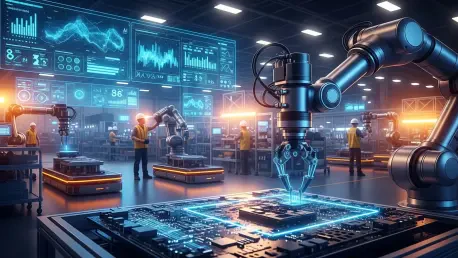

The long-standing apprehension that automation might render the American industrial worker obsolete is currently being replaced by a sophisticated model of technological synergy. As manufacturing environments become increasingly digitized, Google.org has committed $10 million to the Manufacturing Institute to integrate artificial intelligence into the core of the American industrial sector. This significant investment is part of the broader AI Opportunity Fund, which seeks to equip the workforce with the technical fluency needed to navigate a landscape where high-speed robotics and predictive analytics are standard. Rather than viewing machine learning as a threat to employment, this initiative reframes AI as a tool for human empowerment, ensuring that laborers remain the primary decision-makers on the shop floor. By bridging the gap between legacy industrial processes and modern computational capabilities, the partnership attempts to stabilize the domestic supply chain while fostering a culture of continuous learning that can adapt to rapid cycles of innovation.
Specialized Curricula and Technical Certification
To address the diverse skill levels present in today’s factories, the initiative focuses on the development of specialized training tracks such as AI 101 for Manufacturing and Advanced AI for Manufacturing Technicians. While the introductory curriculum adapts existing foundational concepts to the factory floor, the advanced course represents an entirely new framework designed by the Manufacturing Institute to tackle complex technical challenges. A critical component of this strategy is the inclusion of Google’s AI Professional Certificate, which is being offered to both current employees and prospective students at no cost. By eliminating the financial barriers typically associated with high-level technical certifications, the program ensures that socioeconomic status does not dictate a worker’s ability to participate in the digital economy. This targeted educational approach provides the specific vocabulary and technical background required to troubleshoot autonomous systems, optimize production schedules, and maintain the integrity of AI-driven equipment in real-world scenarios.
Expanding the Industrial Talent Pipeline
Scaling these educational efforts required a localized strategy, leading to the expansion of the Federation for Advanced Manufacturing Education into fifteen additional regions across the country. By embedding AI training directly into these existing talent pipelines, the program successfully modernized the traditional apprenticeship model for the current industrial era. To ensure that students possessed the resources to complete their education, the mikeroweWORKS Foundation collaborated with the initiative to provide Work Ethic Scholarships, which offered essential financial assistance to dedicated learners. The integration of localized support systems and specialized funding created a robust infrastructure for long-term workforce retention and regional economic stability. Moving forward, stakeholders prioritized the continuous update of training modules to reflect emerging software capabilities and emphasized the importance of public-private partnerships in maintaining industrial competitiveness. These coordinated efforts demonstrated that proactive investment in human capital was the most effective safeguard against technological displacement in the evolving manufacturing sector.