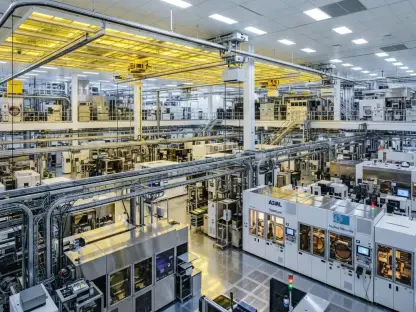

Establishing a one hundred and thirty thousand square foot autonomous hub in California marks a significant step toward revitalizing American industrial strength. For decades, the domestic production landscape suffered from a widening gap between the speed of digital innovation and the glacial pace of physical assembly. While engineers could iterate on software in seconds, retooling a traditional factory often required months of downtime and millions of dollars in capital expenditure. This systemic bottleneck has been challenged by Foundry Robotics, which recently secured one hundred million dollars in Series A funding. Led by Marlinspike Partners and supported by heavyweights like Khosla Ventures and SE Ventures, this influx of capital signals a major pivot toward flexible, software-defined production. By moving away from static assembly lines that are purpose-built for a single product, the industry is entering an era where hardware production can finally match the agility of the digital world.
The New Paradigm: Manufacturing-as-a-Service
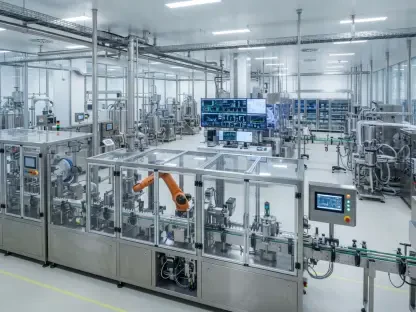
At the heart of this transformation is the manufacturing-as-a-service model, which treats physical assembly as a scalable software stack rather than a rigid set of machines. Unlike traditional facilities that rely on isolated robotic arms performing repetitive tasks, this new approach utilizes FoundryOS, a proprietary agentic system that bridges the gap between cloud-based intelligence and the factory floor. This operating system coordinates every movement within the facility, ensuring that hardware and software function as a single, cohesive unit. By owning the entire assembly stack, providers can offer companies the ability to scale production without the massive overhead usually associated with building dedicated factories. This shift allows startups and established defense contractors alike to focus on design and engineering while leaving the complex logistics of autonomous assembly to a specialized, highly efficient infrastructure that adapts to their specific needs in real time.
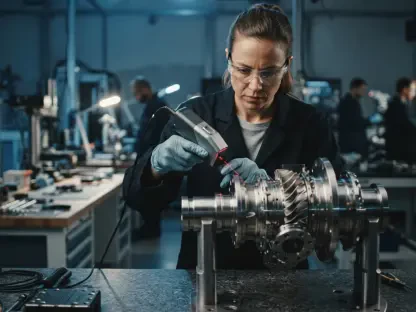
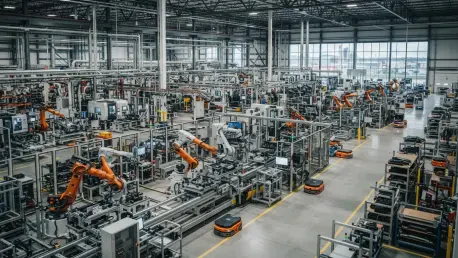
The inherent flexibility of these AI-powered robotic cells represents a departure from the historical norm of specialized tooling. In a standard setup, a line designed for underwater drones could never be repurposed for satellite components without a total overhaul; however, autonomous hubs utilize generalized robots that learn through every production run. As the AI models underlying these systems ingest data from millions of assembly points, they become increasingly adept at handling complex electro-mechanical tasks with minimal human intervention. This means a single facility can pivot between vastly different product categories in a matter of days. Such versatility is essential for maintaining a competitive edge in a global market where consumer demands and geopolitical requirements change overnight. The integration of physical AI ensures that every error is corrected and every efficiency is optimized, creating a self-improving loop that drives down costs while simultaneously increasing the precision of the output. This allows for a level of consistency that human-centric lines struggle to achieve.
Industrial Strength: National Security and Strategic Scaling
The strategic location of the Emeryville facility highlights a broader trend of reshoring high-value manufacturing to ensure supply chain resilience and national security. By focusing on complex, ruggedized electronics—such as autonomous vehicles and telecom infrastructure—the leadership team is positioning the facility as a critical partner for the defense sector. Co-founded by Adarsh Kulkarni and Emmanuel Lamacchia, the venture combines software-first perspectives from Scale AI with the operational rigor of the Tesla Model Y program. Industry experts have noted that domestic capacity for scaling unmanned systems is no longer a luxury but a necessity for modern defense strategies. When production remains within domestic borders and is powered by autonomous systems, the risks associated with international logistics and intellectual property theft are significantly mitigated. This localized approach allows for rapid prototyping and deployment of critical technologies that are vital for military superiority. This development fostered a more robust infrastructure that supported the next generation of industrial innovation and growth.
Ultimately, the movement toward autonomous factories established a new standard for how physical goods were conceived and brought to market. By eliminating the necessity for expensive, product-specific retooling, the industry successfully decoupled innovation from the constraints of traditional hardware production. Companies that embraced these software-defined facilities found themselves able to iterate with a frequency that was previously reserved for software developers. The shift toward physical AI proved that the United States could maintain its leadership by embedding intelligence directly into the labor of assembly. This transition ensured that domestic manufacturing was no longer a relic of the past but a forward-looking engine of economic growth and national resilience. Moving forward, the focus remained on expanding these autonomous capabilities to even more diverse sectors, ensuring that the lessons learned from electro-mechanical assembly were applied across the entire industrial landscape. The success of these early hubs provided a clear roadmap for a more agile and secure industrial future.