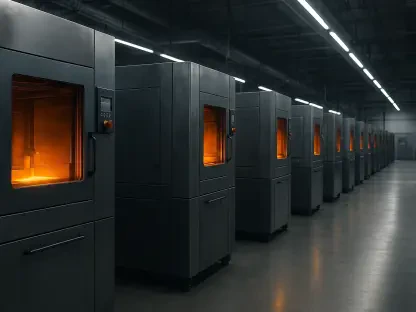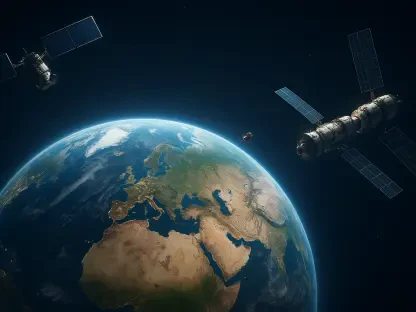

The thunderous roar of a rocket ascending toward the stars often obscures the grueling administrative battle fought by engineers on the ground to certify every individual printed part. While additive manufacturing has mastered the art of printing complex geometries, the industry remains shackled by a certification process that relies on fragmented PDF reports and manual data entry. Most quality assurance currently depends on paper trails, creating a logistical mountain that rivals the technical complexity of the engines themselves.
The DIQAM (Digital Qualification Framework for Additively Manufactured Space Components) initiative, led by amsight under the European Space Agency’s FLPP program, is betting that the key to faster launches isn’t a better printer, but a smarter digital thread. Launched in September 2026, the project spans from 2026 to 2027, focusing on the creation of a unified framework. By prioritizing data over documentation, the effort ensures that aerospace hardware is as agile in its qualification as it is in its production.
Breaking the Bottleneck of Spaceflight Certification
The current momentum in additive manufacturing is often slowed by the sheer volume of proof required to ensure a 3D-printed nut or bolt won’t fail in the vacuum of space. While printers can now produce parts at an unprecedented pace, the certification protocols have struggled to keep up with this digital speed. The industry has reached a point where the physical manufacturing of a component is frequently the fastest part of the entire development cycle, leaving engineers buried under a mountain of manual verification tasks.
To address this, the DIQAM project focuses on replacing fragmented, manual systems with a cohesive digital environment. By creating a smarter way to handle quality evidence, the initiative aims to bridge the gap between rapid production and rigorous safety standards. This shift is essential for maintaining the pace of modern space exploration, where the ability to iterate and deploy hardware quickly determines the success of ambitious orbital missions.
The High Cost of Proving Integrity in the Modern Space Race
In the traditional manufacturing landscape, qualifying a part for flight is a labor-intensive odyssey involving CT scanning, destructive mechanical testing, and the tedious assembly of disparate data points. This “analog” approach to high-tech parts creates a paradox where a component can be printed in hours but takes months to be cleared for use. This delay has become a primary barrier to cost-effectiveness as the space industry shifts toward agile satellite constellations and reusable launchers.
Moreover, the inability to quickly validate 3D-printed hardware hinders the rapid deployment of essential technologies. As companies strive for faster mission cadences, the manual verification of internal structures and material integrity becomes a significant financial burden. Without a transition to more efficient validation methods, the transformative potential of additive manufacturing remains trapped behind a wall of bureaucratic requirements and traditional testing protocols.
The Architecture of the Digital Qualification Evidence Framework
To solve the data fragmentation problem, the DIQAM project is building a unified system that captures the entire lifecycle of a 3D-printed part. The framework aggregates raw powder specifications, real-time machine sensor logs, and post-processing results into a single digital repository. By integrating these diverse streams, engineers can maintain a continuous record of a component’s quality from the moment the material is sourced to the final inspection.
The core of this strategy involves moving from “buried” PDFs to machine-readable formats through automated data ingestion prototypes. By replacing static files with a reusable digital chain, the project ensures that quality evidence is searchable, sortable, and instantly accessible. This standardization allows for better statistical evaluation of part reliability, moving away from one-off testing protocols toward a more comprehensive and data-driven understanding of the manufacturing process.
Industry Perspectives on the Digital Shift
The DIQAM consortium, featuring ArianeGroup, ISPTech, and Fraunhofer IAPT, views this transition as a fundamental shift in how aerospace engineering operates. Leaders at the ESA argue that the next great hurdle for additive manufacturing is no longer the printing process itself, but the efficiency of proving part integrity. There is a broad consensus that a digital shift is essential to maintain European competitiveness in an increasingly crowded global space market.
The framework’s efficacy is currently being tested on critical hardware, including a Phase Change Material container for the Ariane 6 rocket and a high-pressure propellant tank for CubeSats. For contract manufacturers like APWORKS, the project represents a shift from hours of manual documentation to a “single-click” evidence generation process. These real-world demonstrators serve as proof that digital quality strategies can significantly reduce the manual labor typically required for spaceflight certification.
Strategies for Implementing a Digital-First Quality Strategy
Implementing a digital-first quality strategy required a total elimination of data silos between material suppliers and quality assurance teams. Successful organizations established a “Digital Thread” that connected every stage of production through a shared data environment, ensuring transparency. By utilizing machine sensors to capture real-time build telemetry, teams successfully reduced the reliance on post-build inspection, which allowed for a more proactive approach to qualifying advanced components.
The adoption of standardized, machine-readable file formats enabled rapid statistical analysis and cross-departmental sharing. This shift eventually built enough statistical confidence to reduce the need for redundant, destructive testing on every individual part. Future considerations focused on expanding these digital frameworks to include more diverse materials and printing technologies, ensuring that the path from digital design to spaceflight remained streamlined for the next generation of explorers.