
Kwame Zaire brings a rare depth of knowledge to the intersection of industrial efficiency and human welfare. As a manufacturing expert with a specialized focus on production management, Zaire has spent years studying how predictive maintenance and safety protocols can modernize factory floors. However, his most recent work dives into the harsh realities of the global textile supply chain, particularly in industrial hubs like Surat, India. In this conversation, we explore the alarming reality facing millions of workers who operate heavy machinery in extreme temperatures, the economic pressures that prevent factory owners from upgrading their facilities, and the growing labor crisis that threatens the very fabric of global fashion production.
This discussion covers the sensory and physical toll of working with stenters and boilers in a humid climate, the significant barriers created by international trade tariffs and geopolitical conflicts, and the stark lack of legal protections for the informal labor force. We also delve into the long-term health implications for workers and the systemic changes needed to prevent a total breakdown in manufacturing capacity as climate change intensifies.
Inside textile units, machines like stenters and boilers generate intense steam and chemical fumes. How do these elements fundamentally transform the workspace into a hazard for the millions of people employed in this sector?
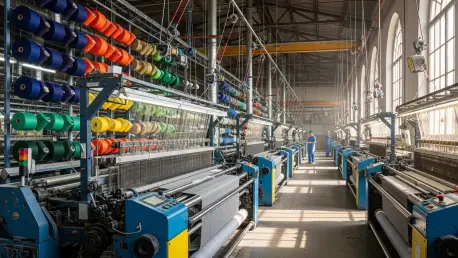
The environment inside these factories is dominated by the relentless, engine-like roar of stenters and the constant hiss of boilers, creating an atmosphere where the air feels heavy and suffocating. Workers like Soni Pande endure 10 to 12-hour shifts in spaces with low ceilings where every inch is packed with heavy machinery that radiates a punishing heat. Even with mist-spraying fans and coolers in place, the sheer volume of steam from drum washers often overpowers any cooling attempts, leaving the 1.4 million people in Surat’s textile industry in a state of constant physical exhaustion. It is not just a matter of discomfort; the pungent chemical smells and high humidity lead to frequent dizziness, fainting, and a debilitating weakness that makes it difficult for workers to even finish their shifts. This sensory overload and physical strain are the daily reality for those producing the 30 million meters of polyester cloth that ship out of the region every single day.
While some factories have installed coolers and exhaust systems, these measures often fall short on the hottest days. What are the practical challenges of cooling a massive industrial space that cannot be sealed?
In a textile processing unit, traditional air conditioning is virtually impossible because the workflow requires doors to remain open, which is why managers rely on evaporation-based air coolers and exhaust fans. We see some manufacturers, such as Vinit Fabrics, investing about $5,300 into centralized air ducts to carry cool air across the floor, yet even these systems are often outnumbered by the heat-generating power of the machines. There are creative attempts at insulation, such as using jute bags to cover radiating equipment or keeping hot water gutters closed to prevent extra steam from escaping, but these are small fixes for a massive problem. On the most extreme days, the cooling effect is so limited that workers are still forced to take frequent breaks in designated “cooler” areas just to avoid total collapse, proving that current technology is struggling to keep up with the rising temperatures.
Global trade tensions and regional conflicts are often seen as high-level political issues, but how do they directly impact the physical safety and comfort of a worker on the factory floor?
The ripple effects of international events like the Iran war and the heavy tariffs levied by the Trump administration have a devastating impact on the capital available for worker welfare and factory upgrades. Because polyester is a synthetic fabric derived from petroleum-based plastic, the Iran war has driven up raw material prices, leaving factory owners with very little margin to invest in expensive cooling infrastructure. When profits are squeezed by these external economic pressures, the thousands of dollars required to install and maintain advanced ventilation systems are often the first thing to be cut from the budget. This has led to a situation where production units are running at only 60% capacity, not just because of the market, but because the economic strain prevents the creation of a workspace that is actually inhabitable for the labor force.
With approximately 90% of India’s workforce operating in the informal sector, how does the current legal landscape fail to address the specific needs of textile laborers?
The tragedy is that while India has laws and guidelines intended to protect its citizens from extreme heat, these protections rarely extend to the 550 million informal workers who form the backbone of the economy. Many of these textile workers in Surat are effectively invisible to the law, which means they lack the oversight and implementation of safety standards that might otherwise mandate better ventilation or shorter hours. Labor unions have recently petitioned the government for stricter implementation and better ground-level monitoring, but for a single mother earning just $7 a day, there is no choice but to keep working through the heat to provide for her children. Without a legal framework that specifically accounts for these informal laborers, the responsibility for safety falls entirely on factory owners who are already struggling with their own financial survival.
Beyond the immediate risk of heatstroke or fainting, what are the long-term physiological tolls on workers who spend years in these high-humidity, chemical-heavy environments?
The combination of intense indoor heat and persistent chemical fumes creates a “slow-motion” health crisis that will burden these workers for decades after they leave the factory floor. Research from organizations like WRI India suggests that these employees are at a significantly higher risk for chronic lung and kidney issues due to the constant inhalation of steam and toxic vapors during their 12-hour shifts. The dehydration they experience isn’t just a temporary setback; it puts a recurring, dangerous strain on their internal organs that can lead to permanent damage and a significant decrease in overall worker efficiency. When you consider that 75% of India’s workforce—roughly 380 million people—is vulnerable to heat-related illness, we are looking at a massive public health challenge that could cost the nation billions in both medical expenses and lost productivity.
As temperatures continue to rise, how is the heat inside factories fundamentally changing the labor market and the production capacity of industrial hubs like Surat?
We are reaching a tipping point where the heat is no longer just a discomfort but a primary driver of labor shortages, as many workers are choosing to return to their hometowns in states like Bihar rather than face the factory floor. Subhash Sharma, a production manager, noted that his facility is running at only 60% capacity because people are simply refusing to come back to work in such unbearable conditions. This exodus of talent is a direct response to a workspace that feels increasingly life-threatening, where the physical demand of dyeing and printing fabric outweighs the financial incentive. As long as the climate-driven heat and humidity remain unmitigated, the industry will continue to see a decline in its workforce, eventually threatening the survival of a sector that employs more than 1.4 million people.
What is your forecast for the textile industry in Surat as it faces the twin pressures of climate change and global economic instability?
I believe we are entering a period of forced evolution where the textile industry will either have to radically redesign its production environments or face a total collapse of its labor model. If policymakers and factory owners do not collaborate on comprehensive heat action plans that treat industrial zones as high-risk areas, the labor shortage will only deepen as workers prioritize their survival over a $7 daily wage. We may see a shift toward more automation to replace the most dangerous manual tasks, but that transition will take years and significant investment that current tariffs and energy prices make difficult to achieve. Ultimately, the future of Surat’s 30 million meters of daily fabric production depends on whether the global supply chain is willing to pay the true cost of cooling the environment for the people who make our clothes.