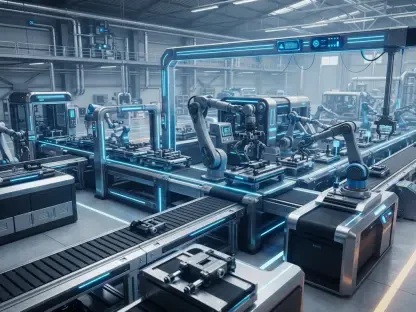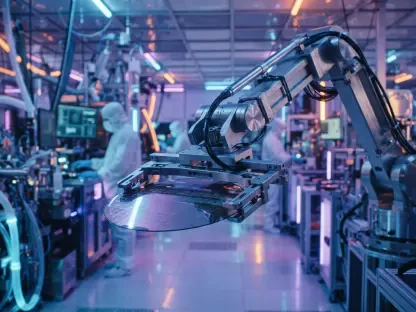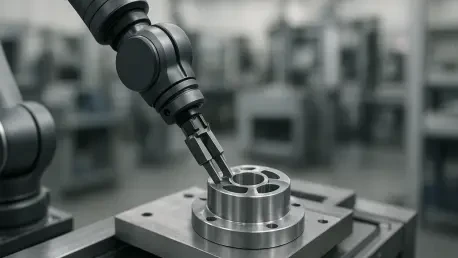

As traditional industrial robots struggle with rigid programming, Walden Robotics is developing machines that can adapt to changing factory floor conditions. For decades, the manufacturing sector relied on automation that performed with clockwork precision but lacked any inherent capacity to handle deviations. When a part arrived misaligned by a mere centimeter, the entire production line would often grind to a halt, necessitating manual intervention and costly downtime. Walden Robotics, a specialized spinoff from the Toyota Research Institute, aims to dismantle this status quo by introducing “Physical AI.” This technological shift signifies a move away from robots as fixed tools toward robots as intelligent agents. By leveraging advanced machine learning models, these systems are no longer confined to the scripts written by engineers years ago. Instead, they operate with a level of situational awareness that allows them to navigate the inherent messiness of real-world industrial environments effectively. This evolution is critical for maintaining competitiveness in an era defined by rapid product cycles and supply chain volatility.
Integrating Cloud Infrastructure with Physical Execution
Virtual Training Grounds: The Role of Cloud-Based Simulation
CoreWeave provides the essential backbone for this transformation by offering the massive compute power required for high-fidelity simulations. Before a robot ever touches a physical component on a factory floor, it spends thousands of hours in a virtual environment where it encounters millions of possible scenarios. This digital rehearsal is not merely about repeating a path but involves deep reinforcement learning where the AI explores various strategies to achieve a goal. Adrien Gaidon and his team emphasize that these simulations must be incredibly detailed to account for friction, weight distribution, and material properties. Without the specialized GPU clusters provided by modern cloud infrastructure, the time required to train such sophisticated models would be prohibitive. Consequently, the synergy between high-performance computing and robotics has become the primary driver for deploying adaptable machines that can handle complex subassembly tasks with minimal setup time today. The ability to simulate reality at scale ensures that the robot is prepared for the unpredictable nature of modern production.
Localized Adaptation: Transitioning from Digital Models to the Shop Floor
Despite the robustness of virtual training, the transition to the physical world remains a significant hurdle often referred to as the sim-to-real gap. Virtual environments, no matter how complex, cannot perfectly replicate every nuance of a noisy and dusty factory. To mitigate this, Walden utilizes a sophisticated hybrid approach where the AI model is fine-tuned using data from the actual deployment site. This ensures that the robot accounts for specific lighting conditions or mechanical vibrations unique to that facility. By starting with a strong foundation in simulation, the machine arrives at the factory floor with a high baseline of competence, requiring only a final layer of localized learning to reach peak efficiency. This method significantly reduces the commissioning period from several months to just a few weeks. The ability to iterate in a digital space before executing in reality allows manufacturers to test new production workflows without risking damage to expensive equipment or disrupting current output schedules. This localized learning ensures that the machine remains a long-term asset.
Human Oversight and the Economics of Flexible Automation
Human-in-the-Loop: Accelerating Growth through Collaborative Correction
The human-in-the-loop model transforms technical failures into educational opportunities by utilizing remote assistance to bridge knowledge gaps. When an autonomous robot encounters a situation it cannot resolve—such as a jammed feeder or a damaged part—it signals a remote operator who can see through the robot’s sensors and provide a direct correction. This remote assistance ensures that production remains steady, but more importantly, every manual correction is recorded as high-quality training data. John Mancuso of CoreWeave notes that this interaction is vital for creating a continuous feedback loop. The robot learns exactly how a human expert would handle the anomaly, effectively downloading that specialized knowledge into its neural network. Over time, the frequency of these calls for help decreases as the AI becomes increasingly proficient at resolving those specific edge cases autonomously. This collaborative approach addresses the psychological barrier to AI adoption by positioning the machine as a partner that grows in value.
Future Resilience: Strategy for a Data-Driven Industrial Ecosystem
To successfully navigate this industrial transition, organizations prioritized investing in robust data governance and cloud connectivity. The shift to learning robots required a fundamental change in how factory managers viewed their equipment, treating machines as evolving assets rather than static tools. Leaders focused on establishing clear protocols for data security and human oversight to ensure that autonomous systems operated within safe, predictable parameters. They also emphasized the upskilling of existing staff, training them to manage fleets of robots and interpret the data generated by physical AI platforms. By fostering a culture of technological curiosity and continuous improvement, companies unlocked the full potential of their robotic investments. This proactive approach allowed manufacturers to thrive in a landscape where flexibility and speed became the primary metrics for success. The focus finally moved from simple automation to creating a truly intelligent, integrated production environment that adapted to market demands through the synergy of human expertise and machine intelligence.