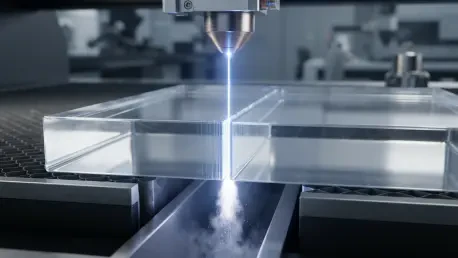

The transition from straight-line cuts to complex radius paths significantly alters the heat input per unit length in acrylic fabrication. In the current manufacturing landscape of 2026, Polymethyl Methacrylate, or PMMA, remains an essential material for architectural signage and mechanical housings due to its unique optical and structural properties. While CO2 laser cutting is the standard for shaping this thermoplastic, achieving a perfect balance between speed and precision is notoriously difficult. A recent study published in Discover Mechanical Engineering by Arifin et al. tackles this problem by applying machine learning to optimize the cutting process. The researchers moved beyond simple observations to develop a framework that addresses conflicting goals like minimizing kerf width while simultaneously reducing machining time. By investigating how laser power, speed, and thickness interact, the study offers a predictive model that replaces traditional trial-and-error with data-backed precision, ensuring that high-throughput manufacturing does not come at the expense of edge quality or accuracy.
Advancing Precision Through Systematic Experimental Design
Establishing the Hardware and Factorial Foundation
To establish a reliable baseline for industrial applications, the research team utilized a Zaiku Laser LS-6040 machine, a 100-watt system equipped with a flying-optic setup that is typical for modern fabrication shops. The experimental design followed an L27 orthogonal array, which allowed for a full factorial exploration of three key control factors: laser power, cutting speed, and material thickness. By setting laser power at levels of 70%, 80%, and 90%, and varying cutting speeds between 4 and 8 mm/s, the researchers were able to observe how energy density shifts across different thicknesses of PMMA, ranging from 3 to 5 mm. Fixed parameters such as a nozzle stand-off distance of 8 mm and an assist gas pressure of 2.9 psi were maintained to ensure that the variations in the output were strictly due to the primary variables under study. This systematic approach provided a dense dataset that captures the nuances of thermal interaction, providing the necessary foundation for the subsequent machine learning analysis.
Evaluating Geometric Path Complexity and Thermal Effects
A primary innovation of this study involves the evaluation of cutting geometry beyond the standard straight-line paths often found in existing literature. Most industrial components require complex shapes, and the researchers recognized that the mechanical behavior of a CNC machine varies significantly when interpolating between the X and Y axes. To account for this, they measured the kerf width—the width of the material removed by the laser—along three distinct paths: straight, diagonal, and curved radius sections. This distinction is critical because heat accumulation behaves differently when the laser head changes direction or moves along a curve, leading to variations in the final dimensions of the part. By including surface roughness measurements for both straight and diagonal paths, the study captured the localized non-linearities that occur in real-world manufacturing environments. This multi-path analysis ensures that the resulting optimization model is applicable to intricate geometries rather than just simple, linear cuts.
Decoding the Physics of the Laser-Polymer Interaction
Thermodynamics of Cutting Speed and Kerf Control
The analysis of the experimental data highlights cutting speed as the single most influential factor in determining both the geometric quality and the production efficiency of the laser process. From a thermodynamic perspective, the researchers observed that lower cutting speeds allow for a significantly higher accumulation of heat within the PMMA substrate. This concentrated thermal energy tends to enlarge the melt pool, which in turn leads to a wider and less precise kerf width. This effect is particularly pronounced in thinner materials where the heat has less volume to dissipate, causing excessive melting at the edges. Conversely, by increasing the cutting speed, the thermal input per unit length is restricted, which produces a much narrower and cleaner cut. Understanding this relationship allows manufacturers to push the limits of their equipment, finding the highest possible speed that still ensures full material penetration, thereby maximizing the output of the machine without sacrificing the tight tolerances required for high-precision industrial components.
Energy Conservation and Surface Quality Dynamics
The investigation also uncovered a subtle but important relationship between laser power and the resulting edge quality. Interestingly, the study noted that once the laser power reached the threshold required for full penetration, further increases in power did not significantly alter the kerf width. This finding suggests that manufacturers can operate at the minimum necessary power level to achieve a cut, which serves to extend the lifespan of the laser generator and reduce overall energy consumption. However, the surface finish presents a different challenge, as the optimal conditions for smoothness often conflict with the goals for high speed. The researchers found that the smoothest edges were generally produced at higher power settings combined with slower speeds on thinner materials, where the laser creates a more stable melt flow. This inherent trade-off between productivity and surface finish necessitates a multi-objective approach, as optimizing for one variable alone often leads to a degradation in another, requiring a sophisticated balancing act that machine learning is uniquely suited to perform.
Comparing Machine Learning Models for Predictive Accuracy
Neural Network Architectures for Non-Linear Gradients
To navigate these complex thermal relationships, the researchers compared three distinct machine learning paradigms to determine which could best predict the outcomes of the laser cutting process. They evaluated an Artificial Neural Network, a Random Forest regressor, and a Ridge Regression model. Given that the dataset consisted of 27 experimental runs, the team opted for a compact ANN architecture featuring three input neurons, a single hidden layer of five neurons, and six output neurons. This lean structure was intentionally designed to avoid the common pitfall of overfitting, which often occurs when deep learning models are applied to relatively small sample sizes. The ANN proved exceptionally capable of handling the non-linear thermal gradients associated with the laser’s interaction with the polymer, particularly in predicting kerf widths across various geometric paths. This ability to generalize from limited data makes the shallow neural network a powerful tool for process estimation in specialized manufacturing environments where large-scale data collection is not always feasible.
Comparative Analysis of Random Forest and Ridge Regression
While the neural network excelled in several areas, the comparative analysis showed that different models have specific strengths depending on the metric being measured. For instance, the Random Forest model was found to be the most robust for predicting the machining time and the diagonal kerf width. Since machining time is largely a deterministic factor based on the programmed speed, the Random Forest model achieved nearly perfect accuracy in this regard. On the other hand, Ridge Regression proved to be the most stable method for predicting surface roughness. The researchers noted that roughness is often influenced by stochastic factors, such as minor oscillations in the melt pool or the turbulent flow of the assist gases, which can be difficult for non-linear models to capture accurately without a much larger training set. Despite these variations, the validation experiments confirmed that the Artificial Neural Network achieved the lowest overall average error rate of 6.19%. This level of accuracy demonstrates that even a modest computational model can provide significant predictive power.
Achieving Optimal Efficiency with Gray Relational Analysis
Consolidating Conflicting Metrics Through Mathematical Weights
The ultimate goal of the research was to find a unified solution to the conflicting objectives of high quality and high speed, which was achieved through Gray Relational Analysis. Because the study tracked six different output responses—three types of kerf width, two roughness measures, and cutting time—a traditional single-variable optimization would be insufficient. GRA allowed the researchers to convert these disparate and often competing metrics into a single numerical value known as the Gray Relational Grade. This grade provides a holistic ranking of each parameter combination based on its overall performance across all criteria. By applying different weighting scenarios, the researchers were able to confirm which settings offered the most stable performance whether the priority was shifted toward maximizing productivity or minimizing surface defects. This methodological bridge between experimental data and decision-making ensures that the final recommendations are not just theoretically sound but are also practically applicable on the factory floor, where multiple performance targets must be met simultaneously.
Practical Validation and Significant Performance Gains
The results of the optimization process identified a specific combination of parameters—90% laser power, 8 mm/s cutting speed, and 5 mm material thickness—as the absolute optimum for the PMMA cutting process. An Analysis of Variance performed on the Gray Relational Grade values confirmed that cutting speed contributed a staggering 59.25% to the overall success of the operation, followed by material thickness at 15.31%. When the researchers conducted a confirmation experiment using these optimized settings, the results were striking. They achieved a 48.8% reduction in cutting time compared to the initial baseline, effectively doubling the throughput of the machine. Furthermore, the optimized parameters allowed the system to cut through material that was 66.7% thicker than the baseline while still maintaining a narrow and precise kerf width. While surface roughness increased slightly, it remained well within the acceptable limits for industrial applications like signage and mechanical casings, proving that a data-driven approach can unlock significant untapped potential in existing laser hardware.
Future Integration of Data-Driven Manufacturing
The implementation of this multi-objective framework demonstrated that machine learning significantly enhanced the operational efficiency of CO2 laser systems in polymer fabrication. By moving away from subjective parameter adjustments and embracing the structured analysis provided by neural networks and Gray Relational Analysis, the researchers identified a clear path toward higher productivity. The study showed that even small datasets could be leveraged to create highly accurate predictive tools, provided the model architecture was appropriately scaled to the experimental design. For manufacturers, these findings offered a practical roadmap to optimize their own processes, suggesting that an focus on cutting speed as the primary control variable yielded the greatest gains in efficiency. Future efforts were directed toward applying these same methodologies to a broader range of engineering plastics, such as polycarbonate and high-density polyethylene. Ultimately, the integration of computational intelligence into CNC operations proved to be a decisive factor in achieving consistent, high-quality results in an increasingly competitive manufacturing market.